An automotive oscilloscope is one of the fastest ways to see what a vehicle’s sensors, actuators, and control signals are really doing. Instead of guessing, you can verify waveforms, detect intermittent faults, and confirm repairs with confidence.
In this 2026 roundup, we focus on practical scope options for technicians, DIY diagnosticians, and mobile repair work, with attention to channel count, portability, bandwidth, and overall diagnostic usefulness.
Best 10 Automotive Oscilloscope Picks for 2026
Flagship 4-Channel Diagnostic Scope
Autel MP608 4-Channel Automotive Oscilloscope
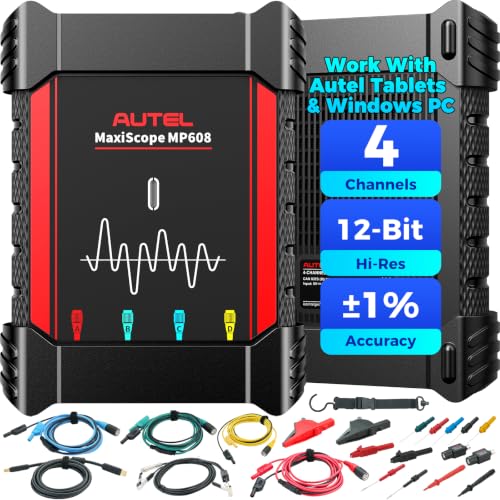
- 4-channel capture with 20 MHz bandwidth
- 12-bit resolution with guided presets
- Works with Autel tablets or Windows 10/11
Best For: Autel users who want advanced waveform diagnostics in a portable scope
3-in-1 Portable Tester

- Oscilloscope, multimeter, and waveform generator
- 40 MHz bandwidth with 2 channels
- Battery-powered handheld design
Best For: Hobbyists and technicians needing a compact all-in-one tester
Advanced Shop Scope Module
TOPDON Phoenix Scope 4 Channel Oscilloscope

- 4 channels with 50M memory depth
- Records, replays, and analyzes waveforms
- Works only with supported Phoenix tools
Best For: Phoenix diagnostic tool owners who want an add-on scope
Reference Guide for Scope Users
Automotive Oscilloscopes: Waveform Analysis
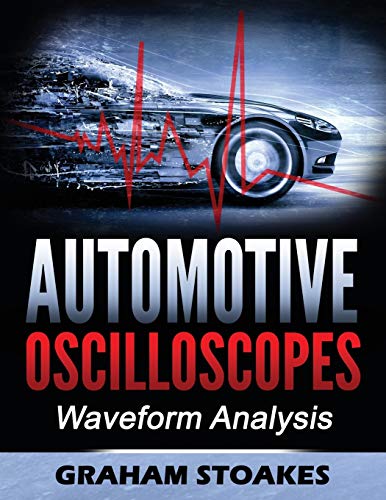
- Explains scope setup and waveform interpretation
- Covers common automotive waveforms
- Printed 200-page learning reference
Best For: Readers learning how to use and interpret automotive scope waveforms
Portable Touchscreen Scope

- 7-inch touchscreen with gesture control
- 2 channels, 100MHz bandwidth, 1GSa/s sampling
- Stores screenshots and waveform data
Best For: portable general-purpose signal checks with a large display
Android Automotive Tablet Scope
Micsig SATO1004 Portable Handheld

- 4 channels, 100MHz bandwidth, 1GSa/s sampling
- Supports ignition, sensors, networks, and pressure tests
- Android OS with Wi-Fi, LAN, HDMI, and app control
Best For: technicians wanting a diagnostic-focused automotive scope
PC-Connected Diagnostic Scope
Hantek 1008C 8CH Automotive Diagnostic Oscilloscope

- 8 analog channels for wider test coverage
- 80+ automotive diagnostic functions included
- Programmable signal generator with USB/Windows software
Best For: Windows users who need a PC-based automotive diagnostic scope with many channels
Portable 3-in-1 Handheld
FNIRSI 2C53P 50MHz 3-in-1 Oscilloscope

- Combines scope, multimeter, and DDS signal generator
- 50MHz bandwidth with 250MS/s sampling
- Touchscreen handheld design with built-in battery
Best For: Portable users who want a compact 3-in-1 automotive test tool
Dual-Mode Handheld Tester
3-in-1 50MHz Dual-Channel Automotive Oscilloscope

- Dual-channel scope with AUTO waveform recognition
- High-speed mode up to 50MHz and 280MSa/s
- Adds multimeter and waveform generator functions
Best For: Buyers who want a versatile handheld automotive oscilloscope with faster high-speed mode
Flagship 4-Channel Diagnostic Scope – Autel MP608 4-Channel Automotive Oscilloscope
If you want an automotive oscilloscope that can slot into a serious diagnostic workflow, the Autel MP608 is built around 4-channel capture, 20 MHz bandwidth, and 80 MS/s sampling. It can run with compatible Autel tablets or standalone on Windows 10/11, so it fits both shop setups and mobile troubleshooting.
Best For: Technicians who already use Autel tablets and want flagship-level waveform diagnostics without buying a separate full kit.
Pros:
- 4-channel simultaneous capture with 20 MHz bandwidth and 80 MS/s max sampling.
- 12-bit vertical resolution and about ±1% accuracy for detailed trace reading.
- Built-in presets, auto scale, waveform library, and custom probe support.
- Serial bus decoding, advanced triggers, math channels, XY, and spectrum views.
Cons:
- Designed for use with compatible Autel tablets or Windows 10/11, so it is not a universal standalone scope for every setup.
- Most useful to users who already work with advanced diagnostic workflows.
Overall, the MP608 is a strong choice if you need a portable automotive oscilloscope with deep diagnostic features and tight Autel ecosystem support. It is aimed at users who want more than basic wave capture and value guided testing tools.
3-in-1 Portable Tester – Hantek 2D42 Oscilloscope
The Hantek 2D42 is a compact automotive oscilloscope option for buyers who want an oscilloscope, multimeter, and waveform generator in one handheld tool. With 2 channels, 40 MHz bandwidth, and up to 250 MSa/s single-channel sampling, it covers general diagnostics, learning, and light repair work.
Best For: Hobbyists, students, and field technicians who want a portable 3-in-1 tester for basic automotive and electronics work.
Pros:
- Combines 2CH oscilloscope, DMM, and waveform generator in one unit.
- 40 MHz bandwidth with up to 250 MSa/s single-channel sampling.
- Built-in auto measurement, cursor measurement, storage, and reference waveform features.
- Small, lightweight, and battery powered for on-the-go use.
Cons:
- Only 2 oscilloscope channels, so it is less capable than 4-channel scopes for more complex diagnostics.
- Best suited to learning and general repair rather than flagship-level automotive scope work.
For buyers who want one handheld tool instead of separate instruments, the 2D42 is practical and flexible. It is especially appealing if you need a compact automotive oscilloscope for everyday troubleshooting, education, or field use.
Advanced Shop Scope Module – TOPDON Phoenix Scope 4 Channel Oscilloscope
The TOPDON Phoenix Scope is an automotive oscilloscope module designed to work with Phoenix Max, Smart, Elite, Lite 3, Lite 2, Plus, and Plus 2 diagnostic tools. It offers 4 channels, 50M memory depth, waveform recording and playback, plus advanced math analysis for deeper signal troubleshooting.
Best For: Phoenix tool owners who want a dedicated add-on scope for faster waveform analysis and recording.
Pros:
- 4-channel scope with up to 50M memory depth and fast waveform storage.
- Waveform recording, playback, and save/replay workflow for later analysis.
- Advanced math functions including add, subtract, multiply, divide, and FFT.
- 23 auto measurements, advanced triggering, and independent cursor control.
Cons:
- Works exclusively with select Phoenix diagnostic tools and does not operate independently.
- Not compatible with Phoenix Nano or XLink.
If you already own a supported Phoenix platform, this scope adds serious diagnostic depth without changing your ecosystem. Its recording, replay, and analysis tools make it a strong fit for technicians who want efficient circuit and waveform investigation.
Reference Guide for Scope Users – Automotive Oscilloscopes: Waveform Analysis
If you are learning automotive oscilloscope work, this book focuses on waveform analysis, setup, and interpretation for vehicle diagnostics. It explains why a scope can go beyond trouble codes and helps you build practical routines for reading common automotive waveforms.
Best For: Technicians, students, and DIYers who want a straightforward introduction to automotive waveform diagnosis.
Pros:
- Covers electrical principles, oscilloscope setup, and waveform interpretation.
- Explains common automotive waveforms with practical diagnostic tips.
- Written to be straightforward and uncomplicated for real-world use.
Cons:
- It is a printed reference book, not a diagnostic tool.
- Best for learning and review rather than hands-on measurement.
This is a helpful companion if you already own or plan to buy an automotive oscilloscope and want to improve your interpretation skills. It is especially useful for readers who prefer a clear, methodical approach to scope-based diagnosis.
Portable Touchscreen Scope – FNIRSI 1013D Plus 100MHz
If you want an automotive oscilloscope that stays portable without giving up a large display, the FNIRSI 1013D Plus is built around a 7-inch touchscreen and 2-channel, 100MHz capability. It suits general signal checks, basic vehicle diagnostics, and bench use where quick touch operation and on-device waveform review matter.
Best For: Technicians and hobbyists who want a large-screen, battery-powered oscilloscope for portable signal inspection.
Pros:
- 7-inch capacitive touchscreen with gesture control for fast operation
- 100MHz, 2-channel design with 1GSa/s sampling rate
- Built-in waveform manager with storage for screenshots and waveform data
- Includes trigger modes plus FFT and Lissajous display functions
Cons:
- Not marketed with vehicle-specific diagnostic software or guided automotive features
- Battery life is listed at about 4 hours, which may be limiting for long sessions
- Touch-first layout may not suit users who prefer physical controls
This model is a strong fit if you prioritize screen size, portability, and broad oscilloscope features over dedicated automotive workflow tools. For general automotive electrical troubleshooting, it offers plenty of core capability in a compact package.
Android Automotive Tablet Scope – Micsig SATO1004 Portable Handheld
For buyers focused on an automotive oscilloscope with vehicle diagnostic features, the Micsig SATO1004 stands out with Android-based operation, 4 channels, and optimized software for automotive testing. It is designed for work on ignition, sensors, actuators, communication systems, charging and starter circuits, and pressure testing.
Best For: Automotive technicians who want a feature-rich, portable scope with software and connectivity for diagnostics.
Pros:
- 4 channels with 100MHz bandwidth and 1GSa/s sampling rate
- Automotive diagnostic support for ignition, sensors, actuators, networks, and more
- Android OS plus physical button panel for smoother control
- Wi-Fi, LAN, HDMI, USB, and smartphone app connectivity
Cons:
- Higher feature set may be more than casual users need
- Wireless remote use depends on stable network conditions
- Larger tablet-style unit may be less pocketable than compact handheld scopes
This is the most automotive-focused option in the group, especially if you want a scope that supports common vehicle tests and file storage at a higher capacity. It is a practical pick for users who value workflow efficiency and connectivity.
3-in-1 Handheld Tester – FNIRSI 2C23T 3-in-1 Scope
If you want a compact automotive oscilloscope that also replaces two other tools, the FNIRSI 2C23T combines a 2-channel scope, multimeter, and DDS signal generator in one handheld unit. Its 10MHz bandwidth and battery-powered design make it a practical option for quick electrical checks, DIY work, and basic vehicle troubleshooting.
Best For: Users who want an all-in-one handheld tool for light automotive and electronics testing.
Pros:
- 3-in-1 design with oscilloscope, multimeter, and signal generator
- Built-in multimeter with 10,000-count display and common measurement functions
- Signal generator supports seven waveforms and up to 2MHz output
- Compact handheld body with built-in rechargeable battery and save/export function
Cons:
- 10MHz bandwidth is much lower than higher-end automotive scopes
- 2-channel scope is best suited to lighter diagnostic tasks
- Smaller 2.8-inch display offers less room for waveform viewing
The 2C23T makes sense if you want convenience and versatility more than top-end scope performance. It is especially appealing for users who need one portable tester for mixed electrical and automotive tasks.
PC-Connected Diagnostic Scope – Hantek 1008C 8CH Automotive Diagnostic Oscilloscope
Hantek 1008C PC USB 8CH Automotive Diagnostic Digital Oscilloscope | DAQ/Programmable Generator
Check Price On AmazonIf you want an automotive oscilloscope that leans toward broad diagnostic coverage, the Hantek 1008C is built around 8 channels and a mix of oscilloscope, automotive test, and signal-generation features. It is aimed at users who need to check ignition, sensors, bus systems, actuators, and starting/charging behavior from a Windows PC.
Best For: PC-based users who want an 8-channel automotive diagnostic oscilloscope with built-in signal generation.
Pros:
- 8 analog channels for broader diagnostic work than typical handheld units
- Includes more than 80 automotive diagnostic functions for common vehicle systems
- Built-in programmable signal generator can simulate crankshaft and camshaft signals
- USB 2.0 connection with PC software for Windows-based operation
Cons:
- Only works with Windows PCs, so it is not a standalone handheld scope
- Lower real-time sampling rate than higher-end handheld oscilloscopes
- Learning curve may be more involved for casual users
Overall, the Hantek 1008C makes the most sense if you want a computer-connected automotive oscilloscope with lots of channels and diagnostic coverage. It is a practical pick for technicians, electricians, and hobbyists who can work within its Windows-only setup.
Portable 3-in-1 Handheld – FNIRSI 2C53P 50MHz 3-in-1 Oscilloscope
The FNIRSI 2C53P is a compact automotive oscilloscope option for buyers who want a handheld tool that combines a scope, multimeter, and DDS signal generator in one device. With a 2-channel design, touch screen, and battery power, it is geared toward on-the-go troubleshooting and quick signal checks.
Best For: Technicians and hobbyists who want a battery-powered handheld automotive oscilloscope with multimeter and generator functions.
Pros:
- 3-in-1 design combines oscilloscope, multimeter, and DDS signal generator
- 50MHz bandwidth and 250MS/s sampling for general handheld testing
- 4.3-inch IPS touch screen makes navigation straightforward
- Built-in 4000mAh battery supports portable use
Cons:
- Only 2 channels, so it is less flexible than multi-channel options
- About 4 hours of battery life may be limiting for long sessions
- Best suited to general troubleshooting rather than heavy-duty lab work
As an automotive oscilloscope, this model stands out for portability and convenience more than raw channel count. It is a strong fit if you want one handheld device that can handle scope, meter, and signal-generator tasks without relying on a PC.
Dual-Mode Handheld Tester – 3-in-1 50MHz Dual-Channel Automotive Oscilloscope
This automotive oscilloscope is aimed at users who want a handheld dual-channel tool with multiple operating modes and strong flexibility for signal work. It combines oscilloscope, multimeter, and signal generator functions, plus a high-speed mode for higher bandwidth testing when needed.
Best For: Users who want a battery-powered dual-channel automotive oscilloscope with high-speed mode and built-in signal generation.
Pros:
- Dual-channel design with AUTO recognition for unknown waveforms
- High-speed mode reaches 50MHz bandwidth and 280MSa/s sampling
- Includes multimeter functions with 25000 counts
- Signal generator mode supports multiple waveform types and waveform storage
Cons:
- High-speed mode uses more power than normal mode
- Storage depth is 128K, which may be modest for some users
- Manual review is important because of the device’s many functions
For buyers comparing handheld automotive oscilloscope options, this model offers a useful mix of speed, flexibility, and extra test tools. It makes sense if you want a dual-channel device that can switch between efficiency and higher-performance measurement modes.
How We Picked the Best Automotive Oscilloscope Options
We focused on models that make real-world vehicle testing easier, not just those with the biggest spec sheets. Priority went to usable channel counts, clear waveform viewing, stable triggering, bundled accessories, and form factors suited to shop or field work. We also considered whether a unit is genuinely helpful for automotive diagnostics versus being a general-purpose scope with limited vehicle relevance.
Quick Comparison: What Matters Most
If you test only a few systems at a time, a compact 2-channel handheld or bench-style unit may be enough. If you diagnose CAN, injector, ignition, or synchronized sensor signals, a 4-channel Automotive Oscilloscope is often the better long-term choice. PC-based USB units can offer strong channel counts and value, while standalone handheld scopes usually win on portability and convenience.
Key Buying Factors for an Automotive Oscilloscope
Channel Count
Two channels cover many common checks, but four channels are much more flexible for comparing inputs and outputs simultaneously. For advanced diagnostics, more channels can reduce setup time and make cause-and-effect easier to see.
Bandwidth and Sampling
Enough bandwidth is essential for clean waveform detail, especially with ignition events, fast sensor transitions, and PWM signals. A higher sampling rate helps preserve shape and timing, but only if the software or display is responsive enough to interpret it.
Portability and Power
Handheld and USB-powered models are easier to use in tight engine bays or mobile service environments. Bench units can be excellent in a shop, but portability matters if you need to move between vehicles or work roadside.
Software, Triggering, and Accessories
The best Automotive Oscilloscope setups include solid probe leads, back-probe options, clamps, and a trigger system that makes repeatable captures easy. Software that stores, freezes, and compares waveforms is especially valuable when diagnosing intermittent faults.
Who Should Buy Which Automotive Oscilloscope?
If you are a professional technician, a 4-channel Automotive Oscilloscope is usually the most versatile choice for day-to-day diagnosis. DIY users and mobile techs may prefer a handheld or compact dual-channel model for simpler jobs and easier transport. If you already work at a laptop or want more channels for the money, a PC USB scope can be the best balance of capability and cost. For occasional testing, a 3-in-1 scope-meter-generator can be a practical all-around starter tool, though it may not replace a dedicated higher-end scope for demanding diagnostics.