The right seven-pin trailer wiring kit keeps your trailer’s running lights, turn signals, brakes, auxiliary power, and ground connections working reliably. The best choice depends on your trailer layout, required cord length, wiring access, and whether you need a complete junction-box setup or a replacement connector.
We compared 10 options ranging from compact 6- and 8-foot kits to 15- and 50-foot harnesses, focusing on installation flexibility, construction, compatibility, and everyday towing practicality.
Best 10 Seven Pin Trailer Wiring Kits Picks for 2026
Complete Kit Pick
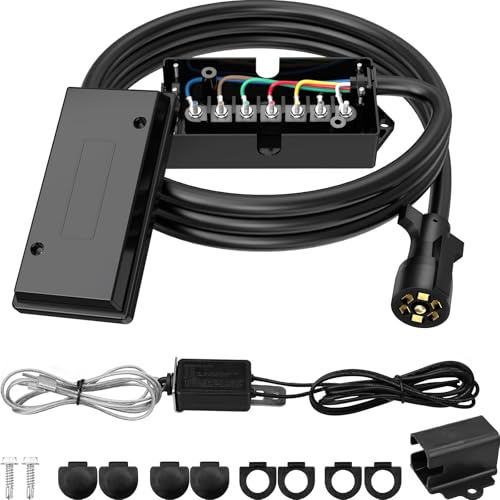
- Includes cord, junction box, breakaway switch, and plug holder
- Color-coded 100% copper wiring
- Weatherproof and flexible construction
Best For: Complete trailer wiring and breakaway-safety installations
Replacement Connector Pick

- Designed for trailer-side 7-way replacement
- Grip hooks simplify plugging and unplugging
- Concealed terminals help shield splice points
Best For: Replacing an existing 7-way RV blade connector
Easy-Wiring Kit Pick

- Includes an organized seven-terminal junction box
- Double-prong, weather-resistant trailer plug
- Detailed color-and-function wiring instructions
Best For: DIY 7-way wiring installations with a junction box
Long-Run Wire Pick

- 50-foot length suits custom and long trailer runs
- Seven SAE color-coded 14-gauge wires
- Flexible PVC jacket for road-use conditions
Best For: Custom trailer wiring where extra cable length is needed
Best Overall
CheeMuii 15FT 7-Way Harness Kit

- 15-foot 7-way cord with junction box
- Includes 12V breakaway switch
- Color-coded terminals and instructions
Best For: Complete trailer wiring replacements with safety components
Best for Long Runs
50FT Heavy-Duty 7-Way Trailer Wire

- 50 feet of seven-wire cable
- 14-gauge stranded CCA conductors
- Flexible, abrasion-resistant PVC jacket
Best For: Long DIY trailer wiring runs and replacement projects
Best Compact Option
6FT 7-Pin Junction Box Harness

- 6-foot 7-way harness
- Pure copper wiring and plug
- Includes screws and open grommets
Best For: Compact trailers and organized short-run wiring repairs
Best with Extra Features
CheeMuii 8 FT 7-Way Trailer Wiring Harness

- 8-foot cord with seven color-coded wires
- Double-prong, weather-resistant trailer plug
- Includes detailed wiring instructions
Best For: General trailer, RV, camper, and caravan wiring
Best With Junction Box
PlugSaf 8FT 7-Way Wiring Harness
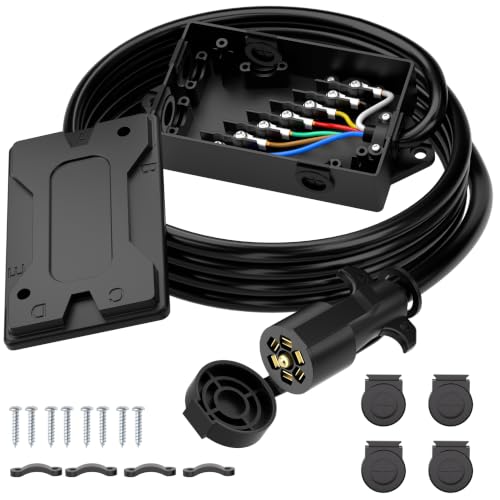
- Includes seven-terminal junction box
- Color-coded wires simplify matching
- PVC sheath is waterproof and wear-resistant
Best For: Organized trailer wiring installations
Best for Flexible Routing

- Flexible 8-foot PVC-covered cord
- Color-coded wiring for simpler connections
- Weather-resistant ABS junction box
Best For: Installations requiring extra cord-routing flexibility
Complete Kit Pick – RVGUARD 8-Foot 7-Way Cord Kit
For shoppers comparing seven pin trailer wiring kits, the RVGUARD kit stands out as a complete installation package. It combines an 8-foot, seven-way cord with a junction box, breakaway switch, and plug holder for organized trailer wiring.
Best For: Trailer owners wanting a more complete wiring and safety setup for RVs, campers, caravans, and other towed vehicles.
Pros:
- Includes the cord, seven-gang junction box, breakaway switch, and plug holder.
- Color-coded, 100% copper wires support easier installation.
- Weatherproof, corrosion-resistant construction and flexible PVC housing.
Cons:
- Color conventions can vary by trailer manufacturer, so the diagram must be checked.
- The complete kit may include more components than needed for a simple connector replacement.
This is a practical choice when you need both wiring organization and a breakaway safety component in one package. Verify compatibility and wiring functions before installation.
Replacement Connector Pick – CURT 58141 7-Pin RV Blade
Among seven pin trailer wiring kits and replacement parts, the CURT 58141 is a focused trailer-side connector for splicing into existing wiring. Its 7-way RV blade design supports common lighting, brake, reverse, turn-signal, and auxiliary-power connections.
Best For: Replacing a worn trailer-side 7-way RV blade connector without purchasing a full wiring harness.
Pros:
- Interchangeable with virtually any trailer-side 7-way RV connector.
- Ergonomic side hooks provide a better grip for plugging and unplugging.
- Concealed wire terminals help protect splice points from dirt, rain, and corrosion.
Cons:
- It is a connector only, not a complete cord or junction-box kit.
- Requires splicing into the trailer’s existing wiring.
The CURT is best suited to straightforward connector replacement jobs. Choose it when the existing wiring is usable and you only need a durable 7-way trailer-side plug.
Easy-Wiring Kit Pick – CheeMuii 8-Foot 7-Way Harness
The CheeMuii is a useful option for buyers comparing seven pin trailer wiring kits with an included junction box. Its 8-foot cord, double-prong plug, color-coded terminals, and detailed instructions are intended to simplify connections on trailers and RVs.
Best For: DIY installers who want an organized 7-way cord and junction box for standard trailer wiring applications.
Pros:
- Junction box includes seven color-coded terminals and wires.
- Double-prong plug and weatherproof outer material support a durable connection.
- Detailed wiring instructions help match wires by color and function.
Cons:
- The supplied color code may differ from some trailer manufacturers’ wiring schemes.
- It carries a six-month manufacturer warranty.
This kit balances installation organization with broad trailer compatibility. Read the included instructions carefully and confirm each wire’s function before making connections.
Long-Run Wire Pick – 50-Foot 14-Gauge 7-Way Cable
For long or custom trailer runs, this 50-foot cable offers a flexible alternative to shorter seven pin trailer wiring kits. It provides seven SAE color-coded 14-gauge stranded CCA wires that can be cut, stripped, and routed for a tailored installation.
Best For: Long trailers and custom wiring projects involving RVs, campers, horse trailers, utility trailers, boat trailers, or food trucks.
Pros:
- 50 feet of cable supports long runs without mid-run splicing.
- Seven SAE color-coded wires simplify connections to common trailer functions.
- Flexible PVC jacket resists moisture splashing and abrasion and remains flexible in cold conditions.
Cons:
- Uses copper-clad aluminum conductors rather than 100% copper.
- It is bulk wiring only and does not include a plug or junction box.
- Installation requires cutting, stripping, routing, and connecting the cable.
This cable is a strong fit when length and routing flexibility matter more than an all-in-one kit. Plan the run carefully and match each color to the correct trailer function.
Best Overall – CheeMuii 15FT 7-Way Harness Kit
For buyers comparing seven pin trailer wiring kits, the CheeMuii 15-foot harness stands out as a complete replacement setup. It combines a 7-way cord, waterproof junction box, breakaway switch, and plug holder for common trailer, RV, camper, caravan, and food-van applications.
Best For: Complete trailer wiring replacements that need a junction box and breakaway-switch connection.
Pros:
- Includes a 15-foot 7-way power cord and seven color-coded terminals.
- Waterproof, dust-resistant junction box helps support outdoor use.
- Includes a 12V breakaway switch for added towing safety.
- Detailed wiring instructions are provided.
Cons:
- Color codes should be checked against the trailer manufacturer’s wiring standard.
- A 15-foot cord may be more length than needed for compact trailers.
This is a practical all-in-one choice when you want both everyday trailer lighting connections and breakaway functionality in one kit.
Best for Long Runs – 50FT Heavy-Duty 7-Way Trailer Wire
Among seven pin trailer wiring kits, this 50-foot cable is aimed at installations where extra length matters. Its seven color-coded 14-gauge conductors are designed for standard 12V 7-pin trailer systems and can be used for RVs, campers, utility trailers, boats, and food trucks.
Best For: Long replacement runs and DIY wiring projects that need a generous length of cable.
Pros:
- Provides 50 feet of seven-wire trailer cable.
- Uses clearly marked colors intended to simplify connections.
- 14-gauge stranded CCA conductors support power delivery in 12V systems.
- Flexible PVC jacket is described as resistant to oil, moisture, and abrasion.
Cons:
- This is wire cable rather than a complete junction-box-and-switch kit.
- Copper-clad aluminum conductors are not pure copper.
- Extra cable may require trimming and securing during installation.
Choose this option when cable length and installation flexibility are more important than having preassembled safety hardware included.
Best Compact Option – 6FT 7-Pin Junction Box Harness
This compact seven pin trailer wiring kit pairs a 6-foot harness with a seven-gang junction box. The pure-copper wiring and color-marked terminals are intended to make connections for trailer lights, brakes, reverse lights, and turn signals easier to organize and troubleshoot.
Best For: Shorter trailer installations that benefit from a neat junction-box layout.
Pros:
- Includes a 6-foot 7-way harness and seven-pole junction box.
- Pure copper wire and plug are specified for conductivity.
- Color-coded terminals help identify wiring functions.
- Package includes screws and four open grommets.
Cons:
- The 6-foot cable may not suit trailers requiring a longer run.
- No breakaway switch is listed among the included components.
- Installation hardware is limited to the listed screws and grommets.
Its shorter cable and organized junction box make it a sensible fit for compact trailers or localized wiring repairs where excess cable is undesirable.
Best with Extra Features – CheeMuii 8 FT 7-Way Trailer Wiring Harness
For a straightforward seven pin trailer wiring kits option, the CheeMuii 8-foot harness combines a color-coded seven-wire cord with a double-prong plug. Its length and broad vehicle compatibility make it a practical choice for common trailer, RV, camper, caravan, and food-van wiring jobs.
Best For: Buyers who want a durable 8-foot harness with detailed wiring guidance and broad towing-vehicle compatibility.
Pros:
- Eight-foot cord provides useful installation reach.
- Seven color-coded wires and updated instructions help identify connections.
- Double-prong plug and weather-resistant outer material support outdoor use.
- Supports tail, brake, reverse, turn-signal, and auxiliary-power connections.
Cons:
- Wiring standards can vary by trailer manufacturer, so the instructions must be checked carefully.
- Includes one harness rather than a larger multi-pack.
The CheeMuii is a well-rounded seven pin trailer wiring kits pick when clear wire identification, an 8-foot reach, and a double-prong connector are priorities.
Best With Junction Box – PlugSaf 8FT 7-Way Wiring Harness
The PlugSaf harness stands out among seven pin trailer wiring kits for its included junction box. Seven color-coded terminals simplify wire matching, while the box is designed to protect connections from water and dust during outdoor towing use.
Best For: Installers who want an organized wiring setup with a junction box and clearly identified terminals.
Pros:
- Includes a junction box with seven color-coded terminals and wires.
- Junction box is described as waterproof and dustproof.
- Eight-foot cord suits many trailer and RV installations.
- PVC outer sheath is waterproof, wear-resistant, and corrosion-resistant.
Cons:
- Wire compatibility should be confirmed against the trailer’s wiring diagram before installation.
- The supplied notes do not specify the complete installation hardware or a warranty.
Choose the PlugSaf when connection organization is a priority. Its junction box can make wire identification and routing more manageable than a basic cord-only setup.
Best for Flexible Routing – WOLFWILL 8FT 7-Way Harness
Among seven pin trailer wiring kits, this WOLFWILL harness emphasizes flexible installation and tidy connections. The 8-foot cord, rugged PVC housing, and included junction box provide extra reach while helping organize lighting and auxiliary-power wiring.
Best For: Trailer owners who need extra routing flexibility and a weather-resistant junction box for a clean wiring setup.
Pros:
- Eight-foot cord offers extra length for routing from front to rear.
- Soft, rugged PVC housing is designed for flexible installation.
- Seven color-coded wires simplify connections for lighting and auxiliary power.
- ABS junction box is described as waterproof, dustproof, flameproof, and corrosion-resistant.
Cons:
- The wiring diagram should be followed carefully to avoid incorrect connections.
- The supplied notes do not list wire gauges or a warranty.
This WOLFWILL kit is a practical fit when cord flexibility and junction-box protection matter. Its feature set is suited to trailers, RVs, campers, caravans, and other towed vehicles.
How We Picked the Best Seven Pin Trailer Wiring Kits
We evaluated these Seven Pin Trailer Wiring Kits for the features that matter most during installation and towing: connector design, cord length, wire gauge, junction-box inclusion, color-coded conductors, weather resistance, and compatibility with standard RV-style seven-way blade sockets. Complete kits received particular attention because they can simplify replacing damaged wiring or building a new trailer harness.
We also considered use case. An 8-foot harness may suit many utility and travel trailers, while a 15-foot or 50-foot cable can be more practical for longer frames, unusual routing, or custom installations. A replacement connector may be the better value when the trailer’s existing wiring is still usable.
Quick Comparison
- Best for a complete standard installation: An 8-foot harness with a seven-gang junction box.
- Best for replacement work: A trailer-side seven-pin connector such as the CURT option.
- Best for long or custom frames: A 15-foot or 50-foot 14-gauge wiring harness.
- Best for compact trailers: A 6-foot kit with an integrated junction box.
- Best for organized installation: A kit with color-coded, clearly identified conductors and labeled junction terminals.
Key Buying Factors for Seven Pin Trailer Wiring Kits
Connector Compatibility
Confirm that your tow vehicle and trailer use the standard seven-way RV blade layout. Check the connector shape, terminal arrangement, locking feature, and weather protection before ordering. A seven-pin plug is not automatically interchangeable with every round or proprietary trailer connector.
Length and Routing
Measure the path from the trailer junction box to the vehicle socket, allowing enough slack for turning without letting the cord drag. Avoid choosing excessive length unless you need it for a long frame or custom routing, since loose cable can snag or contact hot and moving components.
Wire Gauge and Construction
Heavier 14-gauge cable is useful for longer runs and circuits carrying greater loads, especially brake and auxiliary-power circuits. Look for durable insulation, clearly identified wires, strain relief, and a flexible outer jacket suited to outdoor use.
Junction-Box Layout
A junction box creates a protected central point for connecting the trailer’s lighting, brakes, ground, and auxiliary circuits. Check that it has enough terminals, a secure cover, and room for the trailer wires you plan to connect.
Installation and Maintenance
Before wiring, disconnect the trailer battery or auxiliary power and verify each circuit with a wiring diagram or tester. Seal exposed connections, secure the harness along the frame, and leave appropriate slack near the tongue. Test running lights, brake lights, turn signals, electric brakes, reverse or auxiliary power, and ground continuity before towing.
Who Should Buy Which Seven Pin Trailer Wiring Kits?
Choose a complete 6- or 8-foot kit if you are replacing an ordinary trailer harness and want a manageable installation. Select a 15-foot kit when the junction box sits farther back or the frame requires a longer route. A 50-foot harness is better for custom builds, repairs requiring full-length cable, or trailers with extensive wiring runs, but it requires more planning and trimming.
If only the plug is damaged, a connector-only harness can avoid replacing usable wiring. For frequent towing, prioritize robust insulation, secure strain relief, corrosion-resistant connections, and a junction box that can be reopened for future troubleshooting.