Clean, dry compressed air is critical in a body shop, where moisture can ruin paint work, contaminate tools, and slow production. The right refrigerated dryer helps keep your air system consistent and your results professional.
Below, we’ve rounded up 10 of the best options for different shop sizes, airflow needs, and compressor setups so you can choose with confidence.
Best 10 Refrigerated Air Dryers for Body Shops Picks for 2026
Complete Drying Kit
Schulz 35 CFM Refrigerated Dryer with Pre-Filter

- 35 CFM non-cycling dryer with pre-filter kit
- Includes water separator and coalescing filter
- Auto drains and 41-degree dew point
Best For: Body shops needing a bundled air-drying and filtration setup
Sustainable Pick
Ingersoll Rand 25 CFM Non-Cycling Dryer

- 25 CFM non-cycling refrigerated dryer
- Low pressure drop and brazed aluminum exchanger
- R513A refrigerant with UL/CSA certifications
Best For: Smaller body shops wanting a dependable 25 CFM dryer
High-Capacity Option
MechMaxx 100 CFM Refrigerated Dryer

- 100 CFM capacity for larger systems
- 115V single-phase operation
- Intelligent freeze, temp, and voltage protection
Best For: Larger body shops needing high airflow drying capacity
Compact Industrial Choice
Ingersoll Rand 15 CFM Refrigerated Dryer

- 15 CFM non-cycling dryer for small systems
- 200 PSI max pressure with low pressure drop
- R513A refrigerant and UL/CSA certifications
Best For: Small body shops or dedicated lines with modest air demand
Shop-Sized 50 CFM Pick
MechMaxx 50CFM Refrigerated Air Dryer

- 50 CFM airflow for larger shop setups
- Anti-freezing protection and automatic temp control
- Low-noise, energy-saving refrigerated drying
Best For: Body shops needing higher-capacity refrigerated drying with automatic protection
Workshop-Ready 35 CFM Choice
Industrial Refrigerated Air Dryer with R134a Cooling

- 35 CFM dryer for workshop and garage use
- Removes water vapor, oil aerosols, and contaminants
- Auto-drain and easy-install fittings
Best For: Body shops and garages that need reliable moisture removal in a mid-size setup
Compact ISO Class 4 Option
RNC-0060 Refrigerated Air Dryer

- 60 CFM capacity with 38°F dew point
- ISO Class 4 performance details listed
- 115V AC with 3/4 in NPT connection
Best For: Shops wanting a spec-focused refrigerated dryer with common power and fitting requirements
High-Capacity Standalone Pick
SCHULZ 50 CFM Refrigerated Air Dryer

- 50 CFM for 10HP to 15HP compressors
- 41°F dew point at 100 PSI
- Needs 1 micron pre-filtration before use
Best For: larger body shops and industrial compressed air systems
Compact Paint-Shop Option
21.6 CFM Refrigerated Air Dryer
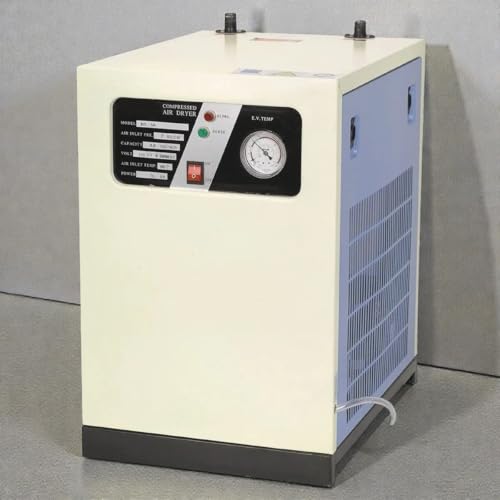
- 21.6 CFM for small to mid-size compressors
- Lowers dew point to about 36°F
- Steel housing with 1/2" NPT inlet
Best For: garages and body shops with moderate air demand
Larger-Shop Drying System
35 CFM Refrigerated Dryer System

- 35 CFM for compressors up to 30HP
- 2-10°C dew point range
- Includes 3 precision filters and adjustable drain
Best For: larger body shops with 220V compressor setups
Complete Drying Kit – Schulz 35 CFM Refrigerated Dryer with Pre-Filter
If you’re comparing refrigerated air dryers for body shops, this Schulz kit is built for shops that want a more complete moisture-control setup in one package. It is a non-cycling 35 CFM dryer paired with a stage 1 water separator and stage 2 coalescing filter, making it a practical fit for compressed air systems feeding spray work and other air tools.
Best For: Body shops needing a 35 CFM refrigerated dryer with built-in filtration for moisture and oil removal.
Pros:
- Complete kit includes a water separator and oil-removing coalescing filter.
- 35 CFM rating at 100 PSI suits 7.5 hp and 10 hp compressors.
- Built-in auto drains help remove collected moisture automatically.
- 41-degree dew point supports drier air for compressed air lines.
Cons:
- Compressed air piping is not included.
- Requires checking compressor output to stay within the stated pressure limits for the filters.
This is a strong option if you want a refrigerated dryer system with filtration already bundled in, rather than piecing together components separately. The 200 PSI max inlet on the dryer and industrial-rated filter stages make it a structured choice for shop air setups.
Sustainable Pick – Ingersoll Rand 25 CFM Non-Cycling Dryer
For buyers looking at refrigerated air dryers for body shops, this Ingersoll Rand model is a compact 25 CFM non-cycling unit focused on dependable moisture removal. Its low pressure drop and brazed aluminum heat exchanger make it a straightforward fit for shops that want efficient drying without unnecessary complexity.
Best For: Smaller body shops or air systems that need a 25 CFM refrigerated dryer from a trusted industrial brand.
Pros:
- 25 CFM capacity works for lighter compressed-air demands.
- Low pressure drop supports better energy efficiency.
- R513A refrigerant offers a lower-GWP design.
- UL and CSA safety certifications add reassurance.
Cons:
- Dryer only, with no added filtration accessories listed.
- Lower airflow capacity than larger shop models.
This model makes sense when you want a simpler, brand-name refrigerated dryer with efficiency-minded specs and safety certifications. It is best suited to smaller systems or body shops that do not need the output of a higher-CFM unit.
High-Capacity Option – MechMaxx 100 CFM Refrigerated Dryer
MechMaxx 100CFM Refrigerated Air Dryer 1Phase 115V For Air Compressor,Model M100AD115V
Check Price On AmazonIf your shop needs refrigerated air dryers for body shops with higher output, this MechMaxx unit stands out for its 100 CFM capacity and 115V single-phase operation. It uses refrigerated dehumidification technology, so it is aimed at quickly removing moisture from compressed air while keeping operation quiet.
Best For: Larger body shops or compressor setups that need a 100 CFM refrigerated dryer on 115V power.
Pros:
- 100 CFM airflow capacity supports larger compressed air systems.
- 115V single-phase power keeps installation more flexible.
- Includes intelligent anti-freezing, temperature, and voltage protection.
- Designed for quiet operation and moisture removal.
Cons:
- Maximum pressure is listed at 115, which may be limiting for some systems.
- Basic included components are limited to a filter and user manual.
This is the most capacity-focused choice in the group, so it is worth considering when airflow demand is the priority. The combination of digital controls and protection features adds practicality for busy shop environments.
Compact Industrial Choice – Ingersoll Rand 15 CFM Refrigerated Dryer
For smaller setups shopping refrigerated air dryers for body shops, this Ingersoll Rand 15 CFM unit is a compact non-cycling dryer focused on moisture removal and dependable operation. Its 115V power requirement and modest footprint make it a practical fit when you need dry air without stepping up to a larger system.
Best For: Small body shops or dedicated air lines that only need a 15 CFM refrigerated dryer.
Pros:
- 15 CFM rating is suitable for lighter-duty compressed air use.
- 200 PSI maximum pressure is generous for a compact dryer.
- Low pressure drop helps support efficient operation.
- R513A refrigerant and UL/CSA certifications add peace of mind.
Cons:
- Lower airflow capacity than the other options in this roundup.
- Dryer-only configuration, with no additional filtration kit included.
This model is a straightforward pick when your shop does not need a lot of airflow but still needs reliable drying. It offers the same efficiency and safety-oriented design language found in the brand’s larger unit, just in a smaller package.
Shop-Sized 50 CFM Pick – MechMaxx 50CFM Refrigerated Air Dryer
MechMaxx 50CFM Refrigerated Air Dryer 1Phase 115V For Air Compressor,Model M050AD115V
Check Price On AmazonIf you’re comparing refrigerated air dryers for body shops, this MechMaxx unit stands out for higher airflow and straightforward 115V operation. Its 50 CFM rating, intelligent anti-freezing protection, and fast refrigeration-based moisture removal make it a practical fit for keeping compressed air dry during painting and other shop tasks.
Best For: Body shops and general shop use that need a 50 CFM refrigerated dryer with automatic protection features.
Pros:
- 50 CFM capacity suits larger compressed-air setups.
- Intelligent anti-freezing protection and automatic temperature control add peace of mind.
- Advanced refrigeration dehumidification is designed to quickly remove moisture.
- Low-noise operation is helpful in a busy work environment.
Cons:
- Listed as a portable, general-use unit rather than a body-shop-specific model.
- Only basic included components are noted: filter and user manual.
- Maximum pressure is listed at 115, so it may not suit every setup.
This is a solid choice if your priority is higher airflow with built-in protection and energy-saving control features. It looks best suited to shops that want a larger refrigerated dryer without overcomplicating installation.
Workshop-Ready 35 CFM Choice – Industrial Refrigerated Air Dryer with R134a Cooling
Among refrigerated air dryers for body shops, this 35 CFM model is built around moisture removal and stable cooling for workshop use. It is designed to handle compressed air from 7.5 HP and 10 HP compressors while removing water vapor, oil aerosols, and contaminants for cleaner air at the tool or spray gun.
Best For: Workshops, garages, and body shops that want a 35 CFM refrigerated dryer for cleaner compressed air.
Pros:
- Removes water vapor, oil aerosols, and contaminants from compressed air.
- R134a cooling system is described as energy-efficient and stable.
- 35 CFM output fits industrial, automotive, and garage applications.
- Auto-drain and easy-install fittings help reduce maintenance hassle.
Cons:
- Capacity is lower than 50 CFM models if your shop has higher air demand.
- Noisy operation level is not specified in the supplied details.
- Uses 115V/60Hz, so it may not fit every electrical setup.
This is a practical middle-ground option if you need dry air for spray painting, pneumatic tools, or similar shop work. The feature set focuses on dependable moisture control more than extra bells and whistles.
Compact ISO Class 4 Option – RNC-0060 Refrigerated Air Dryer
If you’re shopping refrigerated air dryers for body shops and want a straightforward industrial spec sheet, this RNC-0060 model is built around 60 CFM capacity and a 38°F dew point. It runs on 115V AC with a 3/4 in NPT connection, making it a simple, spec-driven option for dry compressed air.
Best For: Shops that want a 60 CFM refrigerated dryer with ISO Class 4 performance details and standard 115V power.
Pros:
- 60 CFM capacity offers more airflow than many mid-size units.
- ISO Class 4 and 38°F dew point are clearly stated performance specs.
- 115V AC power makes it easier to match common shop setups.
- 3/4 in NPT connection is a familiar fitting size for air systems.
Cons:
- The supplied notes do not mention auto-drain or anti-freezing protection.
- No extra details are provided about noise, controls, or included accessories.
- It may be more machine-spec oriented than feature-rich for buyers wanting conveniences.
This model makes sense if you want to focus on airflow, dew point, and basic compatibility rather than added automation. It is a clean option for buyers who prefer clear industrial specs and standard electrical requirements.
High-Capacity Standalone Pick – SCHULZ 50 CFM Refrigerated Air Dryer
If you need refrigerated air dryers for body shops that can handle a larger compressor setup, this SCHULZ stand-alone unit is built around 50 CFM at 100 PSI and a 41°F dew point. It’s a practical fit for compressed air systems where moisture control matters for paint quality and tool performance, but it also relies on proper pre-filtration to protect the dryer itself.
Best For: Body shops and industrial garages using 10HP to 15HP compressors that want a stand-alone 50 CFM dryer with basic setup flexibility.
Pros:
- 50 CFM capacity suits larger shop air systems
- 41°F dew point helps reduce moisture in compressed air
- 115V, single-phase power keeps installation straightforward
- Compact stand-alone design with 1/2" NPT inlet and outlet
Cons:
- Requires at least a 1 micron filter / water separator before the dryer
- Best performance depends on proper pre-filtration, with a pre-filter kit recommended
- Heavier unit at 70 lbs
This is a solid option if your body shop needs a higher-capacity refrigerated dryer and you’re prepared to build in the right filtration ahead of it. The need for upstream water and oil removal is important, but once installed correctly, it’s aimed at dependable shop air drying.
Compact Paint-Shop Option – 21.6 CFM Refrigerated Air Dryer
For body shops that need refrigerated air dryers for body shops without jumping to a high-capacity industrial unit, this 21.6 CFM model is aimed at small to mid-size compressors. Its refrigerated drying system lowers the dew point to about 36°F and is designed to remove up to 90% of moisture, which makes it a strong fit for paint and pneumatic tool use.
Best For: Small to mid-size shops, garages, and workshops that need a compact dryer for paint guns and air tools.
Pros:
- 21.6 CFM capacity fits smaller shop compressor setups
- 36°F dew point and up to 90% moisture removal
- 1/4 HP refrigeration system for consistent cooling
- Industrial steel housing with 1/2" NPT inlet
Cons:
- 140 PSI max may be limiting for some higher-pressure systems
- Lower airflow than larger body shop compressor dryers
- Designed more for light industrial and workshop use than large production shops
This unit is a sensible middle-ground choice if your shop air demand is moderate and you want dry air for spray guns, sanders, and similar tools. It focuses on moisture removal and practical shop durability rather than oversized capacity.
Larger-Shop Drying System – 35 CFM Refrigerated Dryer System
This refrigerated air dryer is aimed at body shops and compressor setups that need more airflow, with a 35 CFM flow capacity rated for up to 30HP compressors. It uses a refrigerated drying system with a 2-10°C dew point range and includes three precision filters, making it a practical choice when you want dry air for spray painting equipment and pneumatic tools.
Best For: Larger shops using 220V compressors that want a 35 CFM dryer with included filters and adjustable drain timing.
Pros:
- 35 CFM flow capacity supports larger compressor systems
- 220V power and 600W operation fit industrial shop installs
- Includes 3 precision filters
- Adjustable drain time adds setup flexibility
Cons:
- Requires 220V power, so it is not a plug-in-anywhere option
- Installation notes mention tape or liquid sealant and clearance space around the unit
- Less compact than smaller shop dryers
For a shop that wants a higher-output dryer with filter support already included, this model checks a lot of practical boxes. It is built for larger compressor displacement and more demanding paint or tool setups, though installation planning matters.
How We Picked These Refrigerated Air Dryers for Body Shops
We focused on airflow capacity, operating voltage, dew point performance, and whether each unit fits a small collision shop or a larger production bay. We also considered ease of installation, compatibility with common compressor sizes, and whether the dryer is practical for daily shop use.
Quick Comparison: What Matters Most
Start by matching the dryer’s CFM rating to your compressor output. If the dryer is undersized, moisture can still pass through the line. If it’s oversized, you may spend more than you need to. Also check inlet/outlet size, electrical requirements, and whether the unit is non-cycling or designed for continuous operation.
Key Buying Factors for Refrigerated Air Dryers for Body Shops
Airflow Capacity
Choose a dryer rated at or above your system’s typical air demand. For intermittent use, some headroom is helpful; for heavier spray booth and tool use, prioritize a unit that can comfortably handle peak flow.
Dew Point and Moisture Control
A lower pressure dew point means less water in the air lines, which matters for paint prep and finishing. For body shops, consistent moisture removal is often more important than maximum peak flow alone.
Voltage and Power
Most shop dryers run on common shop power such as 115V or 220V. Confirm that the unit matches your electrical setup before buying, especially if you need a plug-and-play installation.
Installation and Filtration
Look for dryers that fit your plumbing without major modifications. Pre-filters, after-filters, and proper drainage help protect the dryer and improve air quality, especially in dusty repair environments.
System Size and Compressor Match
The best Refrigerated Air Dryers for Body Shops are sized to the compressor, not just the room. A 7.5 HP or 10 HP compressor may need a very different solution than a larger 15 HP or 30 HP setup.
Who Should Buy Which Refrigerated Air Dryers for Body Shops?
Smaller body shops and detail bays should focus on compact units with lower CFM ratings and straightforward electrical needs. Mid-size shops should look for balanced capacity and reliability. Larger collision centers or multi-bay operations should prioritize higher-CFM models with enough margin to support sustained use and multiple air tools.
If your top priority is paint quality, choose based on moisture control first. If your priority is shop-wide versatility, choose a dryer that comfortably exceeds your average compressed air demand.