Choosing the right gauge matters when you need reliable readings on aluminum body panels, repaints, or repair work. The best models balance accuracy, probe compatibility, and ease of use.
Below, we focus on tools that help you spot thin spots, confirm finish consistency, and make smarter buying or inspection decisions in 2026.
Best 10 Paint Thickness Gauges for Aluminum Panels Picks for 2026
Auto-Detect Inspection Gauge
CM-224 Auto Digital Coating Thickness Meter

- Auto-detects Fe, NFe, and Fe+Zn substrates
- Factory calibrated and ready after battery install
- 0.1 µm resolution for fast vehicle checks
Best For: Used-car checks on aluminum and mixed-metal panels
Wet Film Step Gauge
TCP Global 1-80 Mil Comb Gauge

- Checks wet film thickness right after application
- 1–80 mil notched scale for many coatings
- Simple comb-style tool for shop use
Best For: Wet coating checks during application
Workshop Scan Meter
CM-224Pro Automotive Coating Thickness Meter
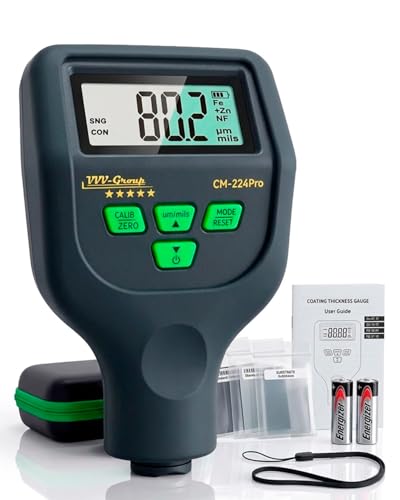
- Auto-detects aluminum, steel, and galvanized surfaces
- 0.1 µm resolution with a 0–1500 µm range
- Built for repeatable workshop inspections
Best For: Dealership and body-shop panel inspections
3-Pack Wet Film Gauge
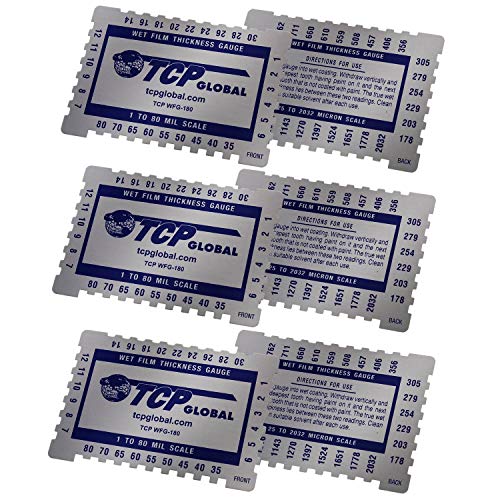
- Three comb gauges in one pack
- Checks wet film thickness immediately after coating
- 1–80 mil scale for many finishes
Best For: Multiple users or backup shop gauges
Dual-Mode Auto-Detect Gauge
CM-205FN Coating Thickness Meter

- Auto-detects Fe and NFe metals, including aluminum
- 0.1 μm resolution with ±(3%+2 μm) accuracy
- Single and continuous scan modes for faster inspections
Best For: Used-car checks and detailing on mixed steel and aluminum panels
Budget Used-Car Checker
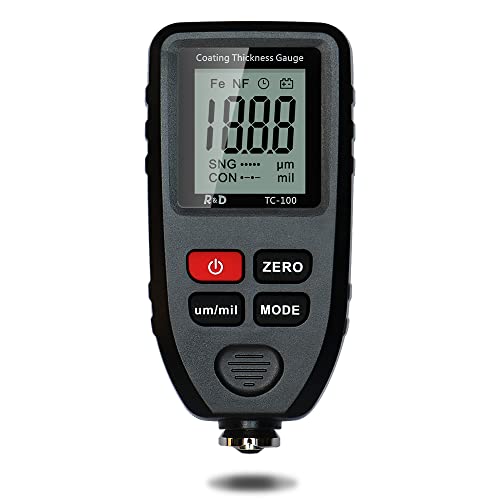
- Auto-detects steel and aluminum coatings
- Useful for spotting uneven used-car panel readings
- Includes battery, foils, bag, and substrate pieces
Best For: Affordable used-car inspections on metal body panels
Pro Data-Logging Meter

- Auto-detects Fe/NFe metals for steel and aluminum
- USB export plus average/min/max statistics
- Integrated ruby-tip probe for fast one-hand readings
Best For: Professional inspections that need measurement records
Feature-Rich Pick
ERAY Mil Thickness Gauge with Backlight and Data Storage

- Dual Fe/NFe probe works on coated aluminum panels
- Stores up to 320 readings in 4 groups
- Backlight LCD and PC export add convenience
Best For: Inspectors who want logging, alarms, and wider workflow support
Precision Value Pick
HW-300PRO Black Gauge with Auto Detection
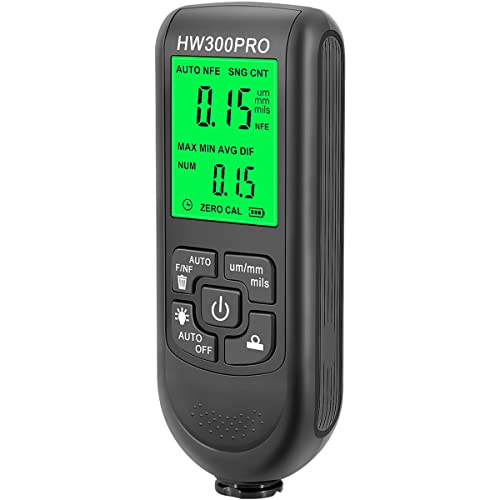
- Reads coatings on aluminum and copper surfaces
- Automatic substrate detection with Fe/NFe probe
- Stores up to 50 readings with stats
Best For: Routine aluminum panel checks with simple, accurate readouts
Best Simple Pick
HW-300PRO White Gauge with Auto Detection
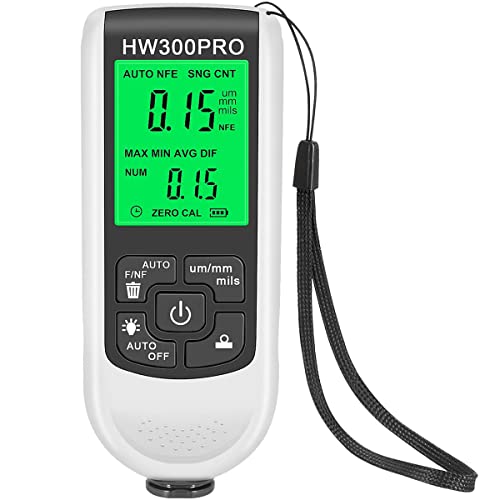
- Measures coatings on aluminum and anodized surfaces
- Large LCD shows mode, battery, and reading info
- Tracks average, max, min, and difference values
Best For: Shoppers who want the white version for everyday aluminum panel inspections
Auto-Detect Inspection Gauge – CM-224 Auto Digital Coating Thickness Meter
If you need paint thickness gauges for aluminum panels, the CM-224 Auto is built for quick automotive checks on aluminum, steel, and galvanized metal. Its automatic Fe/NFe/Fe+Zn detection and factory calibration make it especially practical for used-car inspections where you want fast, repeatable readings without setup.
Best For: Buyers, appraisers, and detailers who want a ready-to-use meter for mixed-metal vehicle inspections.
Pros:
- Automatically detects aluminum (NFe), steel (Fe), and galvanized steel (Fe+Zn)
- Factory-calibrated and ready to use after battery installation
- 0.1 µm resolution with a 0–1500 µm range
- Single and continuous measurement modes for spot checks or scanning panels
Cons:
- Designed only for metal substrates, not plastic or composite parts
- Advanced calibration is optional, but may not be needed for basic use
This is a strong choice if you want straightforward aluminum-panel readings with minimal learning curve. The automatic substrate recognition and clear backlit LCD make it easy to move from panel to panel during an inspection.
Wet Film Step Gauge – TCP Global 1-80 Mil Comb Gauge
For paint thickness gauges for aluminum panels in the wet stage, this TCP Global comb gauge gives a simple visual check immediately after application. It is made for measuring wet film thickness on coatings like paint, resin, lacquer, varnish, gel coat, and even powder coatings before curing.
Best For: Coating applicators who need a fast, low-cost wet film check on freshly coated panels.
Pros:
- Measures wet film thickness immediately after application
- 1–80 mil scale covers a wide coating range
- Works with paints, resins, lacquers, varnishes, gel coat, and powder coatings before curing
- Simple comb/notched design is easy to use
Cons:
- Measures wet film only, not cured coating thickness
- Manual gauge provides a basic reading rather than digital precision
This gauge is best when you want a quick go/no-go style check during application instead of a finished-coating inspection tool. It is a practical shop accessory for verifying coating build before the material sets.
Workshop Scan Meter – CM-224Pro Automotive Coating Thickness Meter
If you are comparing paint thickness gauges for aluminum panels, the CM-224Pro is aimed at structured vehicle inspections where repeatability matters. It automatically recognizes aluminum (NFe), steel (Fe), and zinc/galvanized surfaces, making it useful for modern cars with mixed body materials.
Best For: Dealerships, body shops, and inspection pros who want a compact meter for repeatable panel-by-panel checks.
Pros:
- Automatically detects Fe, NFe, and Zn substrates
- 0–1500 µm range with 0.1 µm resolution
- Designed for stable, repeatable contact during multi-point inspections
- Backlit display shows mils, µm, and mm for flexible reading
Cons:
- Built for professional workshop conditions, not casual consumer use
- Operating range is limited to controlled environments
The CM-224Pro focuses on efficient workflow and consistent readings across vehicle panels. If you need a portable inspection tool for aluminum and other body materials, it offers the right mix of detection, display clarity, and repeatable contact.
3-Pack Wet Film Gauge – TCP Global 1-80 Mil Comb Set
When you need multiple paint thickness gauges for aluminum panels in a busy shop, this TCP Global 3-pack keeps several comb gauges on hand for wet film checks. Each gauge is designed to measure coating thickness right after application on materials like paint, resin, lacquer, varnish, gel coat, and powder coatings before curing.
Best For: Shops or teams that want extra gauges for frequent wet coating inspections.
Pros:
- Includes three wet film gauges in one pack
- Measures coating thickness immediately after application
- 1–80 mil notched scale handles a broad range of coatings
- Simple metal comb design suits repeated shop use
Cons:
- Only measures wet film thickness, not cured paint
- Manual tool does not provide digital readouts
This 3-pack is a practical pick if you want backup gauges or need to equip multiple users. It is less about precision electronics and more about having a fast, durable method for checking wet coating build before curing.
Dual-Mode Auto-Detect Gauge – CM-205FN Coating Thickness Meter
If you need paint thickness gauges for aluminum panels, the CM-205FN is built to handle both steel and non-ferrous metal surfaces with automatic Fe/NFe detection. It uses magnetic induction and eddy current measurement, so you can move from steel doors to aluminum hoods without manual switching. The backlit display, factory calibration, and fast single or continuous readings make it practical for inspections where speed and consistency matter.
Best For: Used-car inspections, detailers, and appraisers checking mixed-metal body panels like aluminum hoods and steel doors.
Pros:
- Auto-detects Fe and NFe substrates, including aluminum.
- High 0.1 μm resolution with ±(3%+2 μm) accuracy.
- Single and continuous modes help with spot checks and panel scans.
- Factory calibrated and includes zero/multi-point calibration support.
Cons:
- Designed for metal substrates only, not plastic or composites.
- More feature-rich than a basic entry-level gauge.
This is a strong all-around choice if you want one gauge for routine vehicle paint checks and mixed-material body panels. Its automatic substrate detection and practical range make it easy to use on aluminum panels without sacrificing flexibility on steel parts.
Budget Used-Car Checker – RDINSCOS Paint Mil Gauge
For buyers comparing paint thickness gauges for aluminum panels, this RDINSCOS meter keeps things straightforward with automatic recognition of steel and aluminum coatings. It is aimed at used-car inspection and general metal surface checking, so you can quickly compare panels and look for uneven readings that may suggest repairs. The included battery, foil, and substrate pieces make it easy to start using right away.
Best For: Budget-minded used-car buyers who want a simple gauge for steel and aluminum panels.
Pros:
- Automatically recognizes ferrous and non-ferrous substrates.
- Works on steel and aluminum coatings without guesswork.
- Includes battery, storage bag, foil, and calibration pieces.
- Backed by a three-year replacement warranty.
Cons:
- Metal substrates only; not for plastic, fiberglass, or wood.
- Less focused on advanced data features than higher-end meters.
This model makes sense if you want a simple, affordable inspection tool rather than a data-heavy professional meter. Its main strength is fast, no-fuss checking on aluminum and steel body panels during pre-purchase evaluations.
Pro Data-Logging Meter – CM-208FN Industrial Gauge
If you want paint thickness gauges for aluminum panels with more reporting capability, the CM-208FN adds USB data export and measurement statistics to a high-precision coating meter. It automatically identifies Fe and NFe surfaces, so aluminum panels are handled with the correct eddy current method without manual switching. The integrated ruby-tip probe and multiple resolution ranges make it suitable for detailed inspections where documentation matters.
Best For: Technicians, inspectors, and serious buyers who want documented measurements on aluminum and steel panels.
Pros:
- Automatic Fe/NFe detection for steel and aluminum surfaces.
- USB data export supports reporting and workflow tracking.
- Displays average, minimum, maximum, and reading count.
- High-precision resolution ranges for finer inspection work.
Cons:
- Metal substrates only; not suitable for non-metal materials.
- More specialized than a basic quick-check gauge.
This is the most documentation-friendly option in the group, especially if you need to compare readings, save data, or produce inspection records. It balances aluminum-panel compatibility with more advanced analysis tools than a simple pocket meter.
Feature-Rich Pick – ERAY Mil Thickness Gauge with Backlight and Data Storage
If you want paint thickness gauges for aluminum panels that can also handle everyday automotive and shop work, the ERAY Mil Thickness Gauge is built around a dual Fe/NFe probe and a 0 to 2000 um range. It reads in um, mm, or mils, and the backlit LCD makes it easier to check measurements in lower-light settings. The built-in storage, alarm, and PC export features make it a practical choice when you need more than a basic handheld meter.
Best For: Buyers who want a feature-rich gauge for aluminum panels, automotive use, and basic data logging.
Pros:
- Dual Fe/NFe probe supports coated aluminum as well as ferrous surfaces
- Backlit LCD, low-battery indication, and error indication improve usability
- Stores up to 320 readings across 4 groups after power off
- High/low limit alarm plus USB and CD software support for analysis
Cons:
- Data-export workflow may be more than casual users need
- Uses 4 AA batteries, which adds maintenance compared with simpler designs
Overall, this ERAY model is the most software-oriented option here, so it makes sense if you value storage, alarms, and PC review alongside on-panel readings. For aluminum panel inspections where measurement tracking matters, it offers a solid mix of range and utility.
Precision Value Pick – HW-300PRO Black Gauge with Auto Detection
For buyers comparing paint thickness gauges for aluminum panels, the HW-300PRO focuses on straightforward measurement and automatic substrate detection. It uses Fe/NFe probing, shows readings in um, mm, or mils, and includes a large LCD that displays metal type, operating mode, battery status, and measurement data. With a 0 to 2000 um range and a stated accuracy of ±(3%+1 um), it covers the needs of routine coating checks without adding unnecessary complexity.
Best For: Users who want a compact, precise gauge for aluminum, automotive paint, and general coating inspection.
Pros:
- Automatically detects substrate properties with Fe/NFe probe support
- Measures paint and anodized coatings on aluminum and copper
- Large LCD shows readings plus battery and mode information
- Records average, max, min, and difference values for up to 50 readings
Cons:
- Does not include batteries according to the supplied details
- Only stores up to 50 data points, less than some competing models
This black HW-300PRO is a practical pick if you mainly need dependable measurements on aluminum panels and similar surfaces. It keeps the feature set focused on detection, display clarity, and simple data handling.
Best Simple Pick – HW-300PRO White Gauge with Auto Detection
This white HW-300PRO is the same practical style of tool for paint thickness gauges for aluminum panels, with automatic substrate detection and support for coated aluminum and anodized surfaces. It offers a 0 to 2000 um range, reads in um, mm, or mils, and uses a large LCD to show the metal type, operating mode, quantity, battery status, and measurement value. If you want a simple, portable gauge for shop, lab, or outdoor use, it keeps the essentials in one compact package.
Best For: Buyers who prefer a white gauge for aluminum coatings, automotive checks, and general non-destructive testing.
Pros:
- Fe/NFe probe automatically detects the substrate
- Suitable for aluminum, copper, and anodized coating measurements
- Large LCD makes readings and status information easy to follow
- Supports average, max, min, and difference statistics for up to 50 readings
Cons:
- Battery details are not included in the supplied notes
- 50-reading storage may be limiting for longer inspection runs
As a color variant of the black model, this version is best chosen for preference rather than different performance. It still gives you the same core tools for checking aluminum panel coating thickness in a compact, easy-to-read format.
How We Picked the Best Paint Thickness Gauges for Aluminum Panels
For Paint Thickness Gauges for Aluminum Panels, we prioritized non-ferrous measurement support, clear unit conversion, stable calibration, and readable displays. We also favored models that make it easier to move between steel and aluminum surfaces without confusion.
Because aluminum panels are non-magnetic, the most useful gauges are those with Fe/NFe or automatic substrate detection. That helps reduce false readings and makes the tool more practical for used-car inspections, refinishing checks, and general bodywork evaluation.
Quick Comparison
In simple terms, wet film combs are for measuring fresh coating application before curing, while electronic meters are for checking dry paint and clear coat thickness on finished panels. If you need to inspect repairs on aluminum, an electronic Fe/NFe gauge is usually the better choice.
Higher resolution can help with fine comparisons, but it should not outweigh real-world accuracy, repeatability, and proper calibration. For most buyers, a clear LCD, auto substrate detection, and a sensible measurement range matter more than extra features you may never use.
Key Buying Factors for Paint Thickness Gauges for Aluminum Panels
Non-Ferrous Compatibility
Make sure the gauge explicitly supports NFe or aluminum mode. A tool designed only for ferrous metal will not give dependable results on aluminum panels.
Measurement Range and Resolution
Common ranges such as 0–1500 µm or wider are enough for automotive use. Fine resolution can help, but the gauge still needs consistency across repeated readings.
Probe Type and Surface Contact
A stable probe with good tip control is important on curved fenders, doors, and edges. On aluminum, small changes in contact pressure can affect readings, so a steady hand and a well-designed probe both matter.
Calibration and Verification
Look for zeroing, calibration foils, or simple reference checks. A gauge that is easy to verify before use is more trustworthy, especially when inspecting repainted panels or comparing several vehicles.
Who Should Buy Which Paint Thickness Gauges for Aluminum Panels?
Used-car buyers should focus on straightforward Fe/NFe meters with auto detection and easy reading. Detailers and body shops may want higher consistency, broader range, and stronger calibration options. If you only need to verify fresh paint application, a wet film comb may be useful, but it will not replace an electronic gauge for finished aluminum panels.
If your main goal is evaluating repairs, original paint, or potential filler work on aluminum body panels, choose a dedicated electronic gauge over a simple comb tool. That gives you a much better view of the cured coating system and helps you make faster, more confident decisions.