If you’re checking a used car, a paint thickness gauge can quickly reveal bodywork, repaints, and filler where the factory finish should be uniform. For steel body panels, the right gauge makes that check faster and far more reliable.
Below, we focus on the best paint thickness gauges for steel body panels in 2026, with options that balance accuracy, ease of use, and value for buyers who want clearer answers before they purchase.
Best 10 Paint Thickness Gauges for Steel Body Panels Picks for 2026
Factory-Calibrated Auto Inspector

- Factory-calibrated for immediate use
- Detects Fe, NFe, and Fe+Zn substrates
- 0.1 µm resolution with backlit LCD
Best For: Used-car and body-panel checks on steel, aluminum, and galvanized metal
Rotating-Screen Data Checker
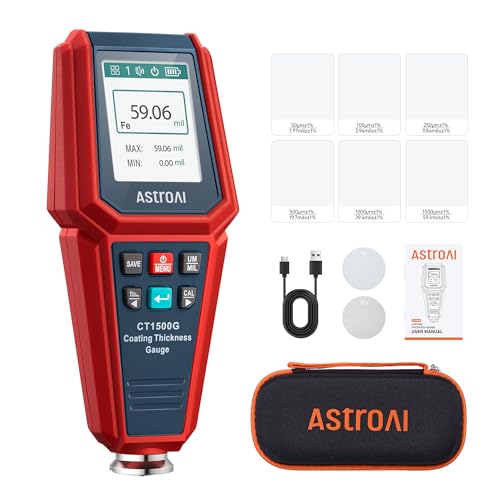
- Automatic F/NF substrate detection
- Four-way rotating screen for easy viewing
- Stores 256 readings with bar chart display
Best For: Used-car inspections that benefit from alarms, storage, and a rotating display
Fast Dual-Metal Inspector

- Factory-calibrated for quick setup
- Auto-detects Fe and NFe substrates
- SNG and CON modes for fast inspections
Best For: Quick paint checks on steel and aluminum body panels
Budget Used-Car Checker
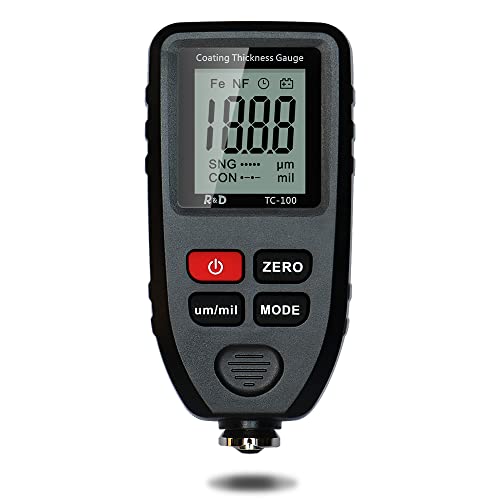
- Auto-detects steel and aluminum substrates
- Includes foils, bag, and substrate pieces
- Three-year replacement warranty
Best For: Affordable used-car inspections on metal body panels
Professional Automotive Inspection
CM-224Pro Paint Thickness Gauge
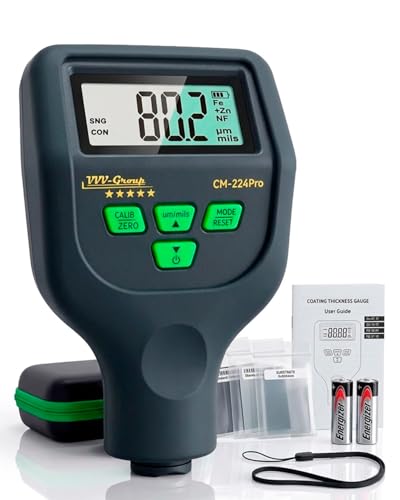
- 0-59.1 mils range with 0.01 mils resolution
- Auto-detects Fe, NFe, and Zn surfaces
- Backlit display with mils, µm, and mm
Best For: Dealership and body shop inspections
Data Logging Workshop Tool

- Fe/NFe dual probe for automotive metal surfaces
- Stores 320 readings across 4 groups
- USB export with PC software analysis
Best For: Teams that need logging and PC review
External Probe Access
2000 µm Coating Thickness Gauge
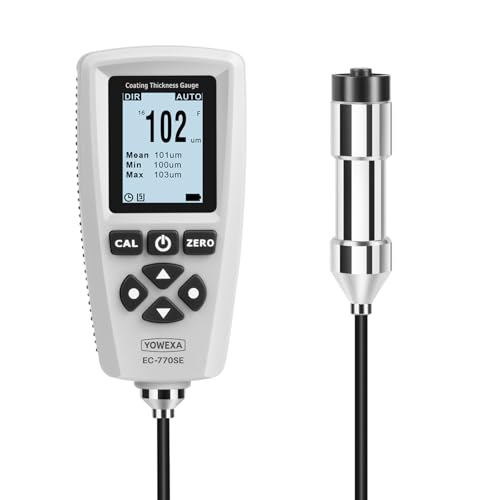
- External probe reaches curved and recessed areas
- ±2%+1 µm accuracy with Fe/NFe auto detection
- Stores 2000 readings with USB export
Best For: Hard-to-reach vehicle panel inspections
Portable Starter Pick
Digital Paint Thickness Meter for Steel and Aluminum

- 0 to 2000 um range with 1 um resolution
- Auto-detects FE and NFE substrates
- Large LCD and auto shutoff for easy carry
Best For: Quick, portable automotive paint checks on metal panels
Inspection-Focused Pick
CM-208FN Industrial Paint Thickness Meter

- Fine resolution and statistical readouts
- USB export for documentation and analysis
- Auto-detects Fe/NFe metal substrates
Best For: Car buyers, detailers, and inspectors who need documented measurements
Memory-Enabled Pick
HW-300PRO Paint Depth Gauge with 50-Reading Memory

- Stores up to 50 readings for statistics
- Shows average, max, min, and difference values
- Auto-detects FE/NFE substrates with large LCD
Best For: Panel comparisons and simple data tracking during vehicle checks
Factory-Calibrated Auto Inspector – CM-224 Auto
If you’re comparing paint thickness gauges for steel body panels, the CM-224 Auto is built for quick used-car checks right out of the box. It is factory calibrated, automatically detects Fe, NFe, and Fe+Zn substrates, and offers 0.1 µm resolution for spotting repainting, filler, and panel replacement on metal bodywork.
Best For: Used-car buyers, appraisers, and detailers who want a ready-to-use gauge for steel, aluminum, and galvanized panels.
Pros:
- Factory-calibrated and ready to use after battery installation
- Automatic Fe / NFe / Fe+Zn detection helps identify different body panels
- 0.1 µm resolution with single and continuous measurement modes
- Large backlit LCD makes readings easier to see
Cons:
- Designed only for metal substrates, not plastic or composites
- Advanced calibration features may be unnecessary for basic users
Overall, this model fits buyers who want fast, practical inspection of steel body panels without a complicated setup. Its Fe+Zn detection is especially useful when checking for non-original or replaced panels.
Rotating-Screen Data Checker – AstroAI Paint Gauge
For shoppers comparing paint thickness gauges for steel body panels, this AstroAI model focuses on clear readings and flexible viewing. It automatically identifies ferrous and non-ferrous metals, measures coatings on steel and other metal bases, and adds a four-way rotating screen plus limit alarms for faster inspection work.
Best For: Used-car buyers who want a high-resolution gauge with a rotating screen, storage, and alarm features.
Pros:
- Automatic detection for ferrous and non-ferrous substrates
- Four-way rotating screen improves readability from different angles
- 0.01 µm resolution and a 0 to 1500 µm range
- Stores up to 256 data points and shows a bar chart
Cons:
- More feature-heavy than a basic spot-check gauge
- Requires attention to calibration for the most accurate results
This is a strong pick if you want inspection data that is easy to read and easy to review later. The alarm and storage functions make it more useful when checking multiple steel panels on the same vehicle.
Fast Dual-Metal Inspector – CM-205FN
This CM-205FN is aimed at buyers who need a straightforward gauge for steel body panels and mixed-metal vehicles. It comes factory calibrated, auto-detects Fe and NFe substrates, and uses magnetic induction plus eddy current technology to measure painted metal surfaces with a clear backlit display.
Best For: Drivers, dealers, and mobile appraisers who need quick, reliable paint checks on steel and aluminum panels.
Pros:
- Factory calibrated and ready to use after installing batteries
- Auto-detects Fe and NFe substrates for mixed-material vehicles
- 0.1 µm resolution with ±(3%+2 µm) accuracy
- SNG and CON modes help with spot checks and panel scanning
Cons:
- Only works on metal surfaces, not plastic or composites
- Basic layout may feel plain compared with feature-rich models
As a practical inspection tool, this model covers the core needs of steel body panel checking without extra complexity. Its measurement range and dual technology make it a sensible all-around choice for everyday automotive use.
Budget Used-Car Checker – RDINSCOS Mil Gauge
If you want an affordable option among paint thickness gauges for steel body panels, this RDINSCOS model keeps the focus on simple used-car inspection. It automatically recognizes ferrous and non-ferrous substrates, measures coatings on metal surfaces, and includes the basics you need to compare panel readings across a vehicle.
Best For: Budget-minded used-car buyers who want a simple metal-only coating gauge.
Pros:
- Auto-detects steel and aluminum coatings with dual technology
- Useful for checking paint consistency across car panels
- Includes battery, storage bag, foils, and substrate pieces
- Backed by a three-year replacement warranty
Cons:
- Designed for metallic surfaces only, not plastic or fiberglass
- More basic than models with large displays or storage functions
This is a sensible pick if your priority is value and straightforward accident-repair screening. It covers the essentials for steel body-panel checks without adding advanced display or logging features.
Professional Automotive Inspection – CM-224Pro Paint Thickness Gauge
If you need paint thickness gauges for steel body panels, the CM-224Pro is built for structured vehicle inspections where consistency matters. It measures coating thickness across doors, hood, roof, and other body panels to help compare surfaces and spot variation that may point to refinishing or prior repair.
Best For: Dealership inspections, body shop evaluations, and professional used-car checks on mixed-material vehicles.
Pros:
- 0-59.1 mils range with fine 0.01 mils (0.1 µm) resolution for detailed comparisons
- Fe/NFe/Zn auto detection supports steel, aluminum, and galvanized panels without manual switching
- Professional probe design is intended for stable, repeatable contact during multi-point checks
- Backlit multi-unit display shows readings in mils, µm, and mm for easier shop use
Cons:
- Designed for controlled workshop temperatures rather than harsh outdoor conditions
- Best suited to professional evaluation workflows, not casual one-off checks
This model stands out when you want a compact inspection tool for repeatable panel-to-panel measurements. Its automatic substrate recognition and workshop-oriented design make it a practical fit for buyers focused on identifying coating inconsistencies on steel body panels.
Data Logging Workshop Tool – ERAY Mil Thickness Gauge
For paint thickness gauges for steel body panels, this ERAY meter focuses on measurement logging and review as much as the reading itself. It covers Fe/NFe surfaces, includes a backlit LCD, and adds storage plus PC export, which is useful when you need to document panel measurements across a vehicle.
Best For: Workshops, labs, and inspection teams that want stored readings and PC analysis.
Pros:
- Fe/NFe dual probe supports coating checks on common automotive metal surfaces
- Stores up to 320 readings across 4 groups for later recall or deletion
- USB connection and included software support data transfer and analysis on a PC
- High/low alarm function helps flag readings that fall outside set limits
Cons:
- Uses 4 AA batteries, which adds an ongoing power management step
- Resolution and calibration details are less specific than some higher-end inspection models
This is a practical pick if your workflow includes reporting, storage, or review after the inspection. The alarm and export features make it more than a basic gauge, especially for teams that track readings over time.
External Probe Access – 2000 µm Coating Thickness Gauge
If you’re comparing paint thickness gauges for steel body panels, this model is aimed at hard-to-reach spots as well as standard flat panels. It measures Fe and NFe coatings up to 2000 µm, uses auto detection modes, and adds an external probe for curved or recessed areas where a standard body may be awkward.
Best For: Inspectors who need access to recessed, curved, or awkward metal surfaces during vehicle checks.
Pros:
- External probe helps measure curved, recessed, and hard-to-reach surfaces
- ±2%+1 µm accuracy with Fe/NFe auto detection for metal coating checks
- Stores up to 2000 readings in four groups with statistics and USB export
- Zero and four-point calibration plus unit switching support flexible shop use
Cons:
- Not suitable for wet film or non-metal surfaces like plastic or wood
- Bulkier than simple entry-level gauges at 1.34 pounds
This gauge is strongest when access is the challenge, not just raw measurement range. The external probe, large storage capacity, and calibration options make it a solid fit for detailed inspection work on vehicle panels and other metal coatings.
Portable Starter Pick – Digital Paint Thickness Meter for Steel and Aluminum
If you need paint thickness gauges for steel body panels that are simple to carry and quick to read, this digital meter is a practical entry point. It measures coating thickness on metal surfaces with automatic substrate detection, a large LCD, and units in um, mm, or mils for straightforward checks on used cars, shop jobs, and field inspections.
Best For: Buyers who want a compact, easy-to-use gauge for general automotive paint checks and non-destructive metal coating measurement.
Pros:
- Measures coatings from 0 to 2000 um with 1 um resolution
- Automatic detection for FE and NFE substrates
- Large LCD display with battery indicator
- Includes 7 calibration films and a lanyard
Cons:
- Batteries are not included
- Accuracy is listed as ±(3%+1 um), which may not suit high-end inspection workflows
- Designed for metal surfaces only
This model fits buyers who want a lightweight gauge for quick paint-depth checks without a complicated setup. Its main strengths are portability, auto-detection, and broad metal-coating compatibility, while the basic feature set keeps it focused on everyday use rather than advanced reporting.
Inspection-Focused Pick – CM-208FN Industrial Paint Thickness Meter
Among paint thickness gauges for steel body panels, the CM-208FN stands out for buyers who want more inspection detail and data handling. It combines Fe/NFe auto detection, fine resolution across the measuring range, a built-in probe for one-hand use, and USB data export for documenting readings during car inspections or workshop work.
Best For: Detailers, inspectors, and car buyers who need documented readings and better control over coating evaluation.
Pros:
- Fine resolution across the range, including 0.001 mil readings at the low end
- Automatic Fe/NFe identification reduces manual switching
- Built-in ruby-tip probe supports quick one-hand measurements
- USB data export helps with reporting and analysis
Cons:
- Only works on metal substrates
- Bulkier than pocket-style gauges
- May be more tool than a casual user needs
This gauge is a strong fit if you care about repeatable readings and record-keeping, not just a quick spot check. The statistical readout, export capability, and automatic substrate detection make it especially useful for inspection workflows where evidence matters.
Memory-Enabled Pick – HW-300PRO Paint Depth Gauge with 50-Reading Memory
If you want paint thickness gauges for steel body panels that can store and summarize readings, this HW-300PRO is built around practical inspection data. It measures metal coatings on FE/NFE substrates, shows the metal type and measurement value on a large LCD, and records average, maximum, minimum, and difference values for up to 50 readings.
Best For: Users who want a compact gauge with onboard statistics for checking panel consistency and coating condition.
Pros:
- Supports average, max, min, and difference readings
- Stores up to 50 data points for statistics
- Automatic substrate detection for FE/NFE metals
- Large LCD shows units, battery status, and mode information
Cons:
- Auto power-off timing is only 3 minutes when enabled
- Designed for metal surfaces only
- Feature set is practical, but not as reporting-focused as a USB-export model
This is a good middle-ground option if you want more than a basic checker without stepping up to a heavier inspection tool. The memory and summary functions make it easier to compare panels and spot irregular paint work, especially on used vehicles.
How We Picked the Best Paint Thickness Gauges for Steel Body Panels
We prioritized Paint Thickness Gauges for Steel Body Panels that offer clear Fe/NFe detection, enough measurement range for automotive paint work, and practical features like calibration support, backlit displays, and limit alarms. We also looked for models that are easy for first-time used-car buyers to read, while still being useful for more experienced inspectors.
Quick Comparison
In this category, the main differences are measurement precision, probe design, and coating compatibility. Basic meters are fine for checking whether a steel panel appears factory-painted, while higher-spec units are better if you want to distinguish thin refinishing from heavier body repair or compare readings across multiple panels.
Key Buying Factors for Paint Thickness Gauges for Steel Body Panels
Steel Compatibility
Choose a gauge that clearly supports Fe readings. Steel panels are magnetic, so Fe mode is the core function you need. Some gauges also add NFe support for aluminum, which is useful if the vehicle uses mixed body materials.
Resolution and Accuracy
Higher resolution helps spot small differences in coating thickness, but accuracy matters more than display precision alone. For used-car inspection, a stable reading with repeatable results is more valuable than a flashy number that drifts.
Measurement Range
Most automotive paint readings fall well within standard ranges, but a wider span can help when checking resprays, thicker refinishing, or unusually heavy coatings. If you inspect many vehicles, a broader range offers more flexibility.
Probe and Display Features
A small probe tip and a clear LCD make it easier to read curved steel panels, door edges, and roof sections. Backlighting, auto-rotation, and limit alarms can also improve speed when inspecting in poor light or comparing several panels at once.
Who Should Buy Which Paint Thickness Gauges for Steel Body Panels?
If you want a simple tool for occasional used-car checks, a straightforward digital gauge with Fe detection is usually enough. If you inspect vehicles often, buy, resell, or verify body repairs professionally, step up to a model with stronger accuracy, better calibration options, and more detailed Fe/NFe handling.
For most shoppers, the best choice is the gauge that combines reliable steel-panel readings, a readable screen, and a measurement range that comfortably covers common automotive finishes. That keeps the tool practical without paying for features you may never use.