Choosing the right saw can make panel removal cleaner, safer, and far less exhausting. For auto body work, precision and control matter just as much as cutting speed.
This roundup of panel cutting saws for auto body repair focuses on tools that handle sheet metal, fiberglass, plastics, and trim work with practical shop-ready performance.
Best 10 Panel Cutting Saws for Auto Body Repair Picks for 2026
Precision Electric Panel Cutter

- Cuts steel, aluminum, plastic, and rigid materials
- Adjustable depth up to 3/8 inch
- Lightweight 600W corded design
Best For: Clean, controlled electric cutting on body panels and light-gauge metal.
High-Speed Air Reciprocating Saw

- 10,000 strokes per minute with reduced vibration
- Cuts plastic, fiberglass, aluminum, and sheet metal
- Very light pneumatic tool with blade guide
Best For: Professional shop work that needs a lightweight, high-speed pneumatic saw.
Body Shop Saber Saw
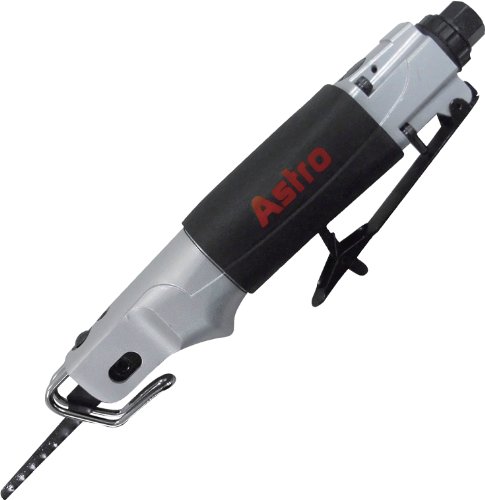
- Cuts aluminum, plastic, fiberglass, and sheet metal
- Built for tight curves and intricate shapes
- Adjustable blade guide with 5 blades included
Best For: Intricate body shop cuts and curved panel work.
Low-Vibration Air Saw

- Low-vibration pneumatic saw for better control
- 360-degree swivel inlet helps in tight spaces
- Cuts plastic, fiberglass, composites, aluminum, and sheet metal
Best For: Detailed cutting in cramped areas with a smoother feel.
Eastwood Pick
Reciprocating Pneumatic Metal Saw for Curves

- Cuts curves in metal, plastic, fiberglass, and composites
- Runs at 5,000 strokes per minute with low air demand
- Includes 6 replaceable blades for ongoing use
Best For: Detailed body repair cuts and light panel trimming
Safety Pick
Lightweight Pneumatic Body Saw with Blade Guard

- Cuts up to 1.6 mm steel and 2 mm aluminum
- Lightweight, compact design for tight spaces
- Includes adjustable blade guard and safety trigger
Best For: Technicians wanting a compact, safety-focused air body saw
Versatile Combo
Air Reciprocating File and Saw Combo
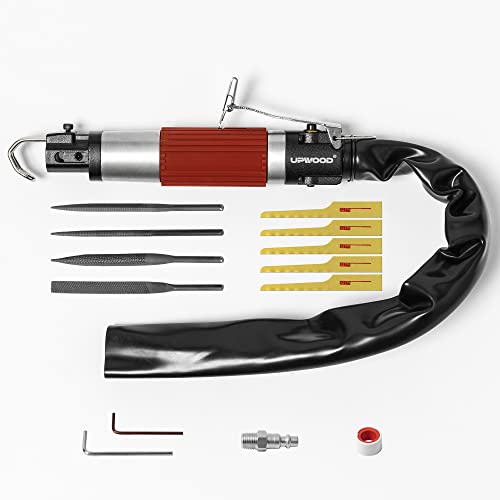
- Combines an air saw and air file in one tool
- Includes 5 blades, 4 files, and work guides
- Rear exhaust and air regulator support control
Best For: Shops needing cutting and finishing in one pneumatic tool
Compact Air Body Saw
Lightweight 1/4 Inlet Thread Air Saw for Tight Cuts

- 8,500/min speed for steel and aluminum sheet cutting
- Lightweight, compact build for narrow spaces
- Safety trigger, blade guard, and low vibration
Best For: Auto body repair in tight spaces with light, controlled sheet cutting
Heavy-Duty Pneumatic Body Saw
9000 SPM Sheet Metal Cutter with Blade Kit

- 9000 strokes per minute for fast cutting
- Safety-focused blade guard and trigger
- Includes blades, wrenches, and air nipple
Best For: Auto body and exhaust work with thin sheet metal
Alloy Body Saw Kit
9000 RPM Pneumatic Cutter for Auto Body Work

- 9000 strokes per minute with low vibration
- Aluminum alloy body for durability
- Includes 6 blades, wrenches, and air nipples
Best For: Durable small-space cutting for auto body repair
Precision Electric Panel Cutter – Kett KS-426
If you want panel cutting saws for auto body repair that handle more than just sheet metal, the Kett KS-426 is a compact electric option worth a look. It cuts cold-rolled mild steel up to 16 gauge, aluminum up to .100 inch, plastic, and other rigid materials, while the adjustable depth of cut helps you stay controlled on repair panels.
Best For: Clean, controlled electric cutting on body panels and light-gauge metal.
Pros:
- Cuts mild steel, aluminum, plastic, and rigid materials.
- Adjustable depth of cut up to 3/8 inch for more precise work.
- Lightweight, ergonomic design helps reduce fatigue.
- 600-watt corded motor with up to 2500 RPM.
Cons:
- Corded electric design limits mobility compared with air tools.
- Best suited to light-duty material thicknesses, not heavy fabrication.
The KS-426 makes sense if you prefer an electric panel saw with a compact footprint and straightforward depth control. For auto body repair, it offers a practical mix of versatility and maneuverability without complicating the cut.
High-Speed Air Reciprocating Saw – Ingersoll Rand 429
For panel cutting saws for auto body repair, the Ingersoll Rand 429 is aimed at fast, accurate work on flat and curved materials. Its 10,000 strokes per minute, reduced vibration, and inline pneumatic design make it a strong fit when you need a nimble air saw for sheet metal, aluminum, fiberglass, or plastic.
Best For: Professional shop work that needs a lightweight, high-speed pneumatic saw.
Pros:
- 10,000 strokes per minute for quick cutting.
- Works on flat and curved plastic, fiberglass, aluminum, and sheet metal.
- Positive blade retainer and adjustable blade guide support accuracy.
- Very light at 1.3 lbs with reduced vibration.
Cons:
- Requires compressed air, so it is not a standalone tool.
- Inline configuration may not suit every grip preference.
This is a good choice when speed, reach, and control matter more than cordless convenience. The included blades and low weight make it especially appealing for body shop users who already run pneumatic tools.
Body Shop Saber Saw – Astro Pneumatic 930
Astro Pneumatic Tool 930 Air Body Saber Saw with 5pc 24 Teeth per Inch Saw Blades, Black, Silver
Check Price On AmazonThe Astro Pneumatic 930 is built for panel cutting saws for auto body repair, especially when you need to cut tight curves and intricate shapes. Its adjustable blade guide, 4 CFM air consumption spec, and included 24 TPI blades make it suited to body shop repair, muffler work, and exhaust work on aluminum, plastic, fiberglass, and sheet metal.
Best For: Intricate body shop cuts and curved panel work.
Pros:
- Cuts aluminum, plastic, fiberglass, and sheet metal.
- Designed for tight radius curves and intricate shapes.
- Adjustable blade guide helps extend blade life.
- Includes five 24 TPI saw blades.
Cons:
- Requires an air supply to operate.
- Best for detailed cutting, not heavy stock removal.
If your repair work involves curved panels or detailed trimming, this saber saw is a practical pneumatic pick. It is clearly aimed at shop use where control and blade guidance matter as much as cutting speed.
Low-Vibration Air Saw – Ingersoll Rand 529
Among panel cutting saws for auto body repair, the Ingersoll Rand 529 stands out for tight-space access and curved-surface cutting. Its low-vibration pneumatic design, 360-degree swivel inlet, and included six blades make it a useful option for plastics, fiberglass, composites, aluminum, and sheet metal.
Best For: Detailed cutting in cramped areas with a smoother feel.
Pros:
- Cuts flat and curved surfaces in plastic, fiberglass, composites, aluminum, and sheet metal.
- Low-vibration design helps improve control.
- 360-degree swivel inlet improves access in tight spaces.
- Includes 6 blades and a guide that increases blade life.
Cons:
- Needs compressed air, so it is shop-dependent.
- Not intended for heavy-duty cutting applications.
This model makes sense if you value maneuverability and smoother operation in close quarters. For body repair work that mixes curved cuts with awkward access, the 529 is a very practical pneumatic saw.
Eastwood Pick – Reciprocating Pneumatic Metal Saw for Curves
If you need panel cutting saws for auto body repair that can handle tight curves and detailed trimming, this Eastwood pneumatic body saw is built for that kind of work. It cuts aluminum, sheet metal, plastic, fiberglass, and composites, and its compact reciprocating action is aimed at body, exhaust, and muffler jobs.
Best For: Detailed body repair cuts, curved trimming, and light-duty panel work in mixed materials.
Pros:
- Cuts intricate shapes and curves in aluminum, sheet metal, plastic, fiberglass, and composites
- Uses a pneumatic design with 5,000 strokes per minute for fast cutting
- Requires only 3.5 CFM at 90 PSI, which is modest for an air tool
- Includes 6 replaceable blades to help maintain cutting performance
Cons:
- Maximum material thickness is limited to 1/16 in. (1.5 mm)
- Requires an air compressor and 1/4 in. FNPT inlet
- Best suited to trimming and light cutting rather than heavy stock removal
For shop users who want a straightforward air body saw for precise automotive cutting, this Eastwood model offers a practical mix of speed, material versatility, and low air demand.
Safety Pick – Lightweight Pneumatic Body Saw with Blade Guard
Among panel cutting saws for auto body repair, this lightweight air reciprocating saw stands out for narrow-space work and controlled cutting. It is rated for fast cutting through 1.6 mm steel or 2 mm aluminum, and its adjustable metal blade guard, safety trigger, and reduced vibration design make it easier to manage in a shop setting.
Best For: Auto body technicians who want a compact pneumatic saw with added safety features and a fast cutting rate.
Pros:
- High-speed operation at 8,500/min for efficient cutting
- Handles 1.6 mm steel and 2 mm aluminum according to the product notes
- Lightweight, compact body is easier to use in narrow spaces
- Includes an adjustable metal blade guard and safety trigger
Cons:
- Needs an air supply and 1/4″ NPT connection
- Blade and cut specifications are better suited to sheet work than thick material
- Mixed-use design includes wood and PVC cutting, which may be more than some body shops need
This is a sensible choice if you want a small, fast air saw for controlled auto body cutting and value extra safety features during extended use.
Versatile Combo – Air Reciprocating File and Saw Combo
If your panel cutting saws for auto body repair need to do more than just cut, this 2-in-1 pneumatic tool combines an air saw and an air file in one setup. It is designed for body shop repair, sunroof installation, muffler and exhaust work, and related finishing tasks like deburring, grinding, rust removal, and sawing.
Best For: Shops that want a versatile air tool for cutting, filing, and finishing in one compact package.
Pros:
- Combines an air saw and air file in one tool
- Includes 5 saw blades, 4 files, exhaust hose assembly, air plug, and work guides
- Rear exhaust and supplied hose assembly are designed for quieter operation
- Built-in air regulator and safety throttle lever support controlled use
Cons:
- Lower stroke speed at 3,500 SPM than some dedicated body saws
- More of a multi-function tool than a pure cutting specialist
- Uses a 3/8 in. stroke, which may feel different from standard body saw setups
This model makes sense if you want one pneumatic tool that can handle both cutting and finishing work during body repair, instead of carrying separate saw and file tools.
Compact Air Body Saw – Lightweight 1/4 Inlet Thread Air Saw for Tight Cuts
If you’re comparing panel cutting saws for auto body repair, this air reciprocating saw is built for fast, controlled cutting in tight spaces. It runs at 8,500 strokes per minute and is designed for sheet metal, aluminum, plastic, and even wood, making it a practical choice for shop tasks that need a compact tool with a steady feel.
Best For: Auto repair work where a lightweight pneumatic saw is needed for narrow spaces and delicate sheet cutting.
Pros:
- High-speed cutting at 8,500/min for 1.6 mm steel or 2 mm aluminum.
- Lightweight, compact body helps in narrow work areas.
- Metal blade guard and safety trigger help reduce accidental starts.
- Low vibration and quieter operation support more controlled cuts.
Cons:
- Pneumatic design requires an air setup.
- Includes 6 blades, so larger blade assortments may require extras.
This is a straightforward pick if you want a compact body saw focused on maneuverability and clean control rather than maximum feature count. For auto body repair, it stands out as a practical air tool for detailed cutting in confined areas.
Heavy-Duty Pneumatic Body Saw – 9000 SPM Sheet Metal Cutter with Blade Kit
For buyers focused on panel cutting saws for auto body repair, this pneumatic body saw emphasizes speed, safety, and included accessories. It cuts at 9,000 strokes per minute and is described as suitable for 1.5 mm sheet metal, with a lightweight design that should be easier to handle during extended workshop use.
Best For: Auto body and exhaust work where you want a fast, lightweight air saw with extra blades and accessories.
Pros:
- 9000 strokes per minute for quick sheet metal cutting.
- Adjustable metal blade guard and safety trigger support safer use.
- Low vibration and reduced noise improve control and comfort.
- Includes 4 blades, 2 additional blades, wrenches, blade guard, and air nipple.
Cons:
- Needs an air compressor to operate.
- Best suited to thinner sheet metal rather than heavy material.
This kit is a solid option if you want a ready-to-use air body saw with useful extras out of the box. It leans toward practical shop versatility, especially for auto repair and installation jobs where compact access matters.
Alloy Body Saw Kit – 9000 RPM Pneumatic Cutter for Auto Body Work
If you’re shopping panel cutting saws for auto body repair, this air reciprocating saw offers a simple, durable setup for shop use. It runs at 9,000 strokes per minute, is built with an aluminum alloy body, and is intended for small spaces and 1.5 mm sheet metal, which makes it a useful fit for auto body and exhaust work.
Best For: Users who want a durable pneumatic saw kit for small-space auto body and metal cutting jobs.
Pros:
- 9000 strokes per minute for efficient cutting.
- Aluminum alloy body is built for durability and long service life.
- Low vibration and less than 96 dB noise support easier control.
- Includes 6 blades, wrenches, air nipples, and a user manual.
Cons:
- Requires connection to a compressor.
- Designed for 1.5 mm sheet metal, so it is not aimed at heavier stock.
This model is a practical choice when you want a basic pneumatic body saw with a durable metal build and a complete accessory package. It focuses on the essentials, which makes it appealing for straightforward auto repair tasks.
How We Picked the Best Panel Cutting Saws for Auto Body Repair
We prioritized saws that fit real body shop use: enough stroke speed for clean cuts, manageable vibration for control, and blade options that match common materials such as sheet metal, aluminum, fiberglass, and plastic. We also looked at weight, air inlet compatibility, and overall versatility for repair work.
Quick Comparison
For fast trimming and tighter cuts, lighter air saws with higher stroke rates are usually easier to steer. If you want more versatility, choose a model that includes both cutting blades and file accessories. Low-vibration designs are especially helpful when working along seams, spot welds, and finished edges where accuracy matters.
Key Buying Factors for Panel Cutting Saws for Auto Body Repair
Stroke Speed and Control
Higher strokes per minute can speed up cutting, but too much aggressiveness can make the tool harder to guide. A balanced speed helps you stay on line without chewing up surrounding metal.
Stroke Length and Blade Style
Shorter strokes are often better for detailed trimming, while longer strokes can help with more efficient straight cuts. Make sure the saw supports the blade type you need for the materials you cut most often.
Vibration and Weight
In bodywork, fatigue affects accuracy. Lighter tools and low-vibration designs are easier to control during extended cutting, especially on overhead or awkward panels.
Air Requirements and Shop Setup
Most pneumatic panel cutting saws need a compressor and the right inlet fitting. Check air consumption and hose compatibility so the tool performs well in your actual shop setup.
Blade and Accessory Support
Look for kits that include multiple blade tooth counts or file attachments if you work across metal, plastic, and finishing tasks. Better accessory support adds value and reduces downtime.
Who Should Buy Which Panel Cutting Saws for Auto Body Repair?
If you want a dependable general-purpose choice, look for a balanced air body saw with solid blade support and good ergonomics. If you cut frequently and value comfort, prioritize low vibration and lighter weight. If your work varies between sheet metal, fiberglass, and trim, choose one of the more versatile Panel Cutting Saws for Auto Body Repair with a broader accessory kit. For occasional DIY repair, a straightforward model with included blades is usually the best starting point.