Restoring a classic car often means working around thin panels, old seams, and delicate bodywork that demands control more than brute force. The right welder helps you attach studs, pull dents, and make clean repairs without adding unnecessary heat.
Below, we focus on practical choices for hobbyists and restoration shops looking for dependable spot welders for classic car restoration in 2026. The goal is simple: find the machine that fits your panel thickness, workflow, and budget.
Best 10 Spot Welders for Classic Car Restoration Picks for 2026
Complete Dent-Pulling Kit
VEVOR 5500 Stud Welder Dent Repair Kit

- Includes slide hammer, electrodes, pads, and 1,000 nails.
- Thermal protection supports longer repair sessions.
- Touch-trigger operation keeps dent pulling simple.
Best For: Complete stud-welding dent repair on classic-car body panels
Portable Sheet-Metal Spot Welder
Stark USA 1/8" Handheld Spot Welder

- High 6,750A output for spot welding sheet metal.
- Comes with extra replacement tips.
- Portable lever-style gun is easy to use.
Best For: Portable steel sheet-metal spot welding on restoration projects
High-Efficiency Dent Puller
VEVOR 3KW Spot Welder Dent Puller
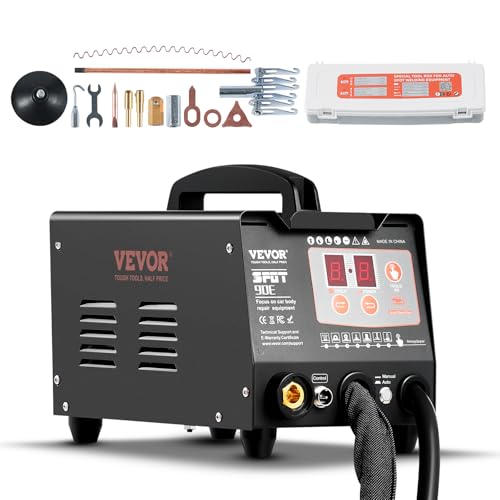
- Two welding guns improve dent-repair efficiency.
- Seven modes plus manual/auto settings add control.
- Toolbox storage keeps accessories organized and portable.
Best For: Faster steel-panel dent repair with dual-gun workflow
Simple Portable Spot Welder
VEVOR Handheld Spot Welder for 1/8" Steel

- Built for steel sheets up to 1/8 inch thick.
- Delivers up to 6,500A maximum output.
- Compact handheld design is easy to carry.
Best For: Compact steel-sheet spot welding on classic car projects
Best for Versatile Panel Repair
BELEY 4200A 6-Mode Dent Puller Kit

- Manual and automatic modes for controlled dent repair
- Six welding functions for varied bodywork tasks
- Built-in overheat protection for safer sessions
Best For: Restorers needing a flexible dent puller for classic car panel work
Best for Handheld Simplicity
Stark USA 110V Portable Spot Welder
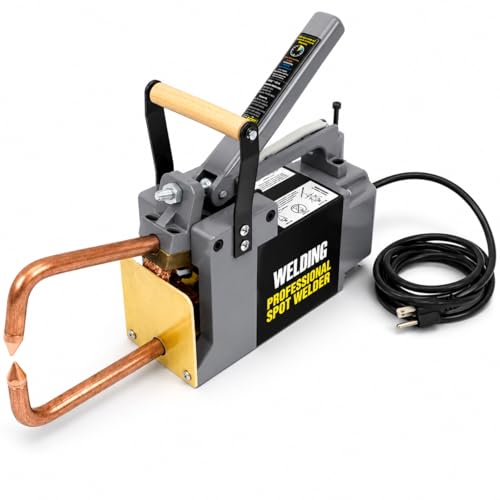
- Handheld design for easy portability
- 5500A max output for efficient spot welding
- 6-inch throat depth helps access sheet metal
Best For: Users wanting a simple portable spot welder for general automotive sheet-metal repair
Best for Complete Kit Value
VEVOR 3KW Stud Welder Dent Repair Kit

- Six modes for dents, curves, and flat areas
- Automatic contact welding for consistent results
- Includes 16 accessories in a portable toolbox
Best For: Restorers wanting an accessory-packed dent repair kit for automotive bodywork
Heavy-Duty Choice

- 3500W / 4200A output for strong pulling power
- 6 welding modes and 16 accessories included
- Auto/manual operation with overheat protection
Best For: Steel-panel restorations needing higher power and flexible repair modes
Portable Shop Pick

- 7 welding modes with adjustable power
- Toolbox storage keeps accessories organized
- Ceramic insulation and side vents help manage heat
Best For: Portable steel-panel dent repair in a garage or small workshop
High-Current Value

- 3800A current and 2000W power for strong dent pulling
- 6 welding modes and 16 accessories included
- Auto/manual welding with adjustable power control
Best For: Classic steel-body dent repair needing strong output and versatility
Complete Dent-Pulling Kit – VEVOR 5500 Stud Welder Dent Repair Kit
If you want spot welders for classic car restoration that can handle dent repair work, this VEVOR stud welder kit is built around practical pull-style body correction. It pairs a touch-trigger weld gun with a slide hammer and a large accessory set, making it a straightforward option for pulling out dents on steel body panels.
Best For: Classic car owners and DIY bodyworkers who want a complete stud-welding dent puller kit with included hammer and consumables.
Pros:
- Comes with a heavy-duty slide hammer and quick-release chuck for pulling welded studs securely.
- Includes a broad accessory pack with nails, pads, electrodes, and a portable toolbox.
- Thermal protection helps the machine manage long repair sessions more safely.
- One-handed trigger operation keeps the welding process simple for basic dent repair.
Cons:
- Designed for auto body dent repair rather than general-purpose welding tasks.
- At 28.5 pounds, it is not the lightest option to move around a shop.
- The notes emphasize steel-style dent work, so it is not the most versatile material specialist.
This kit makes sense if your restoration work centers on dent removal and body straightening with a bundled, ready-to-use setup. Its main strength is convenience: the welder, puller, and accessories are all in one package.
Portable Sheet-Metal Spot Welder – Stark USA 1/8" Handheld Spot Welder
For spot welders for classic car restoration, this Stark USA handheld machine is a compact choice for sheet-metal joining work. It is aimed at metal fabrication and auto body welding, with a high output rating and a simple lever-style operation that suits smaller repair jobs and controlled spot welds.
Best For: Restorers who want a portable handheld spot welder for steel sheet work and general body fabrication.
Pros:
- Rated up to 6,750A output for efficient spot welding performance.
- Includes extra welding tips for replacement and repeated use.
- Portable handheld design is easier to move between job sites.
- Simple lever operation makes it approachable for novice users.
Cons:
- Listed for 220V input, so power compatibility needs to match your setup.
- Intended for metal sheet spot welding, not dent pulling.
- Notes focus on carbon steel and aluminum sheet, so it is less specialized for full restoration accessory kits.
This model fits better as a portable spot-welding tool than as a full body repair station. If your classic car project needs straightforward sheet-metal spot welding and you already have the rest of your workflow covered, it is a practical pick.
High-Efficiency Dent Puller – VEVOR 3KW Spot Welder Dent Puller
When classic car restoration calls for a faster dent repair workflow, this VEVOR spot welder dent puller stands out for its dual-gun setup and multiple welding modes. It is designed for steel car body panels and gives you manual and automatic control, which is useful when you move between tight, detailed repairs and larger dent areas.
Best For: Users who want a more efficient dent-pulling system with two guns and multiple welding modes for body-panel repair.
Pros:
- Two welding guns let you work with two studs without frequent setup changes.
- Seven default welding modes help match different stud and repair needs.
- Manual and automatic modes offer more control over detailed and larger dents.
- Includes a complete accessory set stored in a toolbox for portability.
Cons:
- Listed at 47.3 pounds, so it is relatively heavy for a portable repair machine.
- Built for steel car body panels, not aluminum or broad-purpose welding.
- The 220V specification may require matching shop power before use.
This is the most workflow-focused option in the group, especially if you are trying to speed up panel repair on a restoration build. The dual-gun design is the standout feature for anyone doing repeated dent work.
Simple Portable Spot Welder – VEVOR Handheld Spot Welder for 1/8" Steel
If you need spot welders for classic car restoration and want a simple handheld tool for steel sheet work, this VEVOR portable unit is focused on the basics. It is built for carbon steel up to 1/8 inch thick, with a lightweight form factor, strong output, and a straightforward lever action for fast, repeatable welding.
Best For: Restorers who want a compact handheld spot welder for steel sheet fabrication and body repair tasks.
Pros:
- Designed for steel sheets up to 1/8 inch thick.
- Rated at 6,500A maximum output for efficient welding.
- Lightweight, compact build makes it easier to carry to job sites.
- Simple lever-and-press operation keeps use straightforward.
Cons:
- Not suitable for aluminum or stainless steel.
- Included accessories are basic compared with full dent-puller kits.
- Focused on spot welding rather than pulling dents.
This is a sensible pick if your classic car work is centered on steel sheet joining and you do not need a dedicated dent-pulling bundle. It trades extra accessories for a simpler, more portable welding setup.
Best for Versatile Panel Repair – BELEY 4200A 6-Mode Dent Puller Kit
If you’re comparing spot welders for classic car restoration, this BELEY kit stands out for dent repair work that needs flexibility across panel shapes and repair styles. Its manual and automatic modes, plus six welding functions, make it useful when you’re dealing with older bodywork and want controlled weld placement with minimal weld traces.
Best For: Restorers who want a multi-mode dent puller for varied classic car panel repairs, especially where precision matters.
Pros:
- Manual and automatic modes let you fine-tune weld placement on complex dents
- Six welding modes cover spot pull, meson pull, triangular pull, wave line welding, single-sided spot welding, and carbon rod fire closing
- Designed for iron sheet metal with minimal weld tracks
- Automatic pulse system and high current output are built for fast, strong welding spots
Cons:
- Heavy at 45.6 pounds, so it is less convenient to move around frequently
- Best fit is limited to single-side welding thickness from 0.6 to 1.6 mm
- Primarily focused on body repair and dent work rather than broader fabrication tasks
For classic car panels that need careful dent pulling and controlled spot welding, this BELEY unit offers a practical mix of modes and output. The overheat protection is also a useful safeguard during longer restoration sessions.
Best for Handheld Simplicity – Stark USA 110V Portable Spot Welder
For classic car restoration jobs that call for a straightforward portable unit, this Stark USA spot welder is built around simple handheld operation. It is a practical option among spot welders for classic car restoration when you want a compact tool with a strong output rating and a long throat depth for access to sheet-metal areas.
Best For: DIYers and shop users who want a compact handheld spot welder for basic automotive sheet-metal work.
Pros:
- Handheld design makes it easy to move between job sites
- Rated input capacity of 1.5KVA with a maximum output current of 5500A
- 6-inch throat depth helps reach into sheet-metal areas
- Copper welding tips are designed for durability and reliable welds
Cons:
- Single-phase handheld format may be less specialized than dedicated dent puller kits
- Product details emphasize general metal sheet welding more than restoration-specific features
- No multi-mode dent-pulling functions listed
If you want a simple, portable welder for sheet-metal repairs on older vehicles, this Stark USA model keeps the setup uncomplicated. It is best viewed as a no-frills spot welding tool for accessible, general-purpose bodywork.
Best for Complete Kit Value – VEVOR 3KW Stud Welder Dent Repair Kit
If you’re shopping spot welders for classic car restoration and want a kit with a lot of included tools, this VEVOR stud welder is built for structured dent repair work. It combines six welding modes, automatic contact welding, and a full accessory set, making it well suited to restoring panels with different dent shapes and material types.
Best For: Restorers who want an accessory-rich dent repair kit for consistent automotive bodywork.
Pros:
- Six functional modes support pointed shapes, deep dents, curves, and flat areas
- Automatic contact welding helps deliver consistent timing and repeatable results
- Works on carbon steel, stainless steel, iron, and galvanized sheet metals
- Includes 16 types of welding accessories in a portable toolbox
Cons:
- Maximum single-side welding thickness is limited to 1.2 mm
- At 50.6 pounds, the kit is fairly heavy
- Best suited to automotive repair rather than broader welding applications
For classic car panels that need a kit-driven approach, this VEVOR package offers a lot of practical value. The combination of modes, accessory count, and overheat protection makes it a strong all-in-one option for repeated body repair work.
Heavy-Duty Choice – 3.5KW Auto/Manual Dent Puller
If you want spot welders for classic car restoration that can handle heavier pull work, this 3.5KW dent puller welder is built around high current output and multiple repair modes. It’s aimed at steel body panels and combines welding and pulling in one tool, which can help streamline dent repair on older vehicles.
Best For: Restorers who want a high-power, all-in-one dent puller for steel body repairs.
Pros:
- Up to 3500W / 4200A output for stronger welding and stable pulling force
- 6 welding modes cover triangular, round, OT, wave line, single-sided spot welding, and carbon rod use
- Auto and manual welding modes add control for different repair situations
- Built-in cooling and overheat protection help protect the machine during longer sessions
Cons:
- Designed for iron only, not galvanized sheet or aluminum
- Single-sided welding thickness is limited to 0.6-1.6mm
- More machine than you may need for light cosmetic dents
This is a strong fit if your restoration work involves dent repair on steel panels and you value higher output plus multiple functions. The included accessories and puller/welder setup make it practical for mixed bodywork tasks, but material compatibility is limited.
Portable Shop Pick – VEVOR 7-Mode Stud Welder Kit
For spot welders for classic car restoration, this VEVOR stud welder is a straightforward dent repair kit focused on steel body panels. It pairs 7 welding modes with adjustable power and a complete accessory set, making it a practical option for shops and home garages that want controlled dent pulling.
Best For: DIYers and mechanics looking for a portable dent repair kit with simple controls.
Pros:
- 7 default welding modes support different welding studs and repair tasks
- Adjustable power helps adapt the tool to various dent sizes
- Complete accessory kit comes stored in a toolbox for portability
- Ceramic insulation and side vents support cooler operation and automatic shutoff at high temperature
Cons:
- Lower wattage than the higher-output options in this group
- Designed for steel car body panels, not other materials
- Listed weight suggests it may not be the lightest option to move around
This model makes sense if you want a manageable stud welder for dent removal without extra complexity. Its toolkit-style packaging and basic mode selection make it easy to keep on hand for restoration work where portability matters.
High-Current Value – 3800A 6-Mode Stud Welder
If you’re comparing spot welders for classic car restoration, this 2000W stud welder stands out for its 3800A high-current output and broad accessory set. It’s designed for steel body repair, with auto and manual modes plus six welding functions that can help you handle a range of dent sizes and shapes.
Best For: Restoration projects that need strong current, multiple modes, and a full accessory kit.
Pros:
- 3800A output supports tight welds for dent pulling on iron panels
- 6 welding modes handle triangular, round, OT, wave line, single-sided spot welding, and carbon rod work
- 16 accessories and both welding gun and dent puller functions add flexibility
- Auto and manual welding modes plus adjustable power expand control
Cons:
- Not suitable for galvanized sheet, aluminum, or other non-iron materials
- Single-sided welding thickness is limited to 1-2mm
- Cooling protection is useful, but the machine still needs downtime when overheated
This is a balanced pick for restoration work where you want more output than a basic kit but still need a versatile setup. The combination of current, modes, and accessories makes it well suited to mixed dent repair tasks on classic steel bodywork.
How We Picked the Best Spot Welders for Classic Car Restoration
For Spot Welders for Classic Car Restoration, we looked for models that balance output, control, and ease of use on sheet metal. Priority went to adjustable power, multiple welding modes, compatible gun styles, and setups that make dent repair or light bodywork more manageable on older vehicles.
We also favored machines that are practical for garage use: standard 110V input, clear controls, and enough flexibility to handle common restoration tasks such as stud welding, dent pulling, and patch preparation. Features like manual and automatic triggering matter because classic car panels often require different approaches from job to job.
Quick Comparison
In this group, some units are better suited to dent pulling and stud welding, while others lean more toward general spot welding on thin sheet metal. Higher-amperage or higher-wattage machines can offer more headroom, but that only helps if the controls let you dial output down for fragile panels.
If you want maximum versatility, look for kits with multiple welding modes and accessory sets. If your work is focused on straightforward body repair, a simpler machine with reliable power and easy handling may be the better fit.
Key Buying Factors for Spot Welders for Classic Car Restoration
Power and Output Control
Classic body panels can be thin, rusty, or previously repaired, so controllable output is more important than raw power alone. Adjustable settings help reduce burn-through and improve consistency on older steel.
Modes and Trigger Control
Manual and automatic modes give you flexibility. Manual control can be useful for delicate areas, while automatic modes speed up repetitive dent repair work. Multiple modes can also help when switching between studs, pull pins, and spot weld tasks.
Gun Design and Reach
An ergonomic gun, comfortable grip, and usable reach can make a big difference on tight quarters like quarters, fenders, and door skins. For classic car restoration, hand fatigue and awkward angles are common, so tool balance matters.
Compatibility with Thin Sheet Metal
Make sure the machine is appropriate for automotive sheet metal and not just general metal fabrication. The best Spot Welders for Classic Car Restoration should handle thin gauges cleanly while minimizing distortion.
Accessories and Serviceability
Useful kits may include pulling accessories, multiple tips, and replacement consumables. Those extras can save time and reduce the cost of keeping the machine in regular use.
Who Should Buy Which Spot Welders for Classic Car Restoration?
Choose a higher-feature model if you restore cars regularly, want more control, or expect to work on a range of panel conditions. Pick a simpler, lower-cost unit if your projects are occasional and mostly limited to basic dent repair or light spot welding.
If you are new to bodywork, start with a machine that offers clear settings and straightforward operation. If you are doing larger restorations, prioritize versatility, accessory support, and stable performance over the smallest price tag.