Choosing the right adhesive matters as much as the repair itself. For bonded panel work, you need the right mix of strength, cure time, gap-filling ability, and compatibility with metal or composites.
This roundup focuses on the best structural adhesive for car body panels in 2026, with options that suit collision repair, rust repair, and professional-grade panel bonding.
Best 10 Structural Adhesive for Car Body Panels Picks for 2026
OEM panel bonding epoxy
3M Panel Bonding Adhesive 08115

- OEM-recommended two-part epoxy
- Bonds steel, aluminum, SMC, and fiberglass
- 90-minute work time, 24-hour cure
Best For: Panel replacement jobs needing careful alignment and flexible bonding options
Fast-set plastic repair syringe
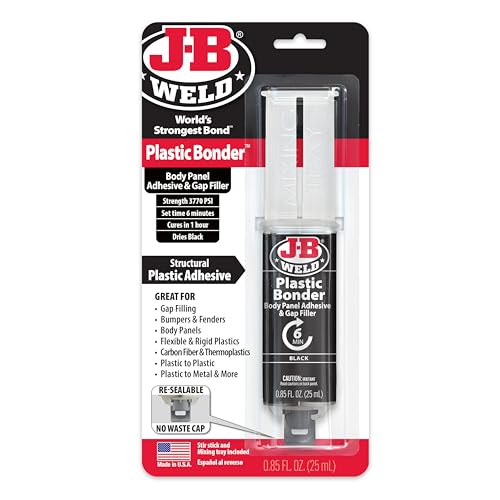
- Quick-set 2-part urethane adhesive
- Sets in 15 minutes; sandable in 30
- Works on plastics, composites, and coated metals
Best For: Small, fast repairs and gap filling on plastic or composite parts
OEM-style seam sealing pick
3M Heavy-Bodied Seam Sealer 08308
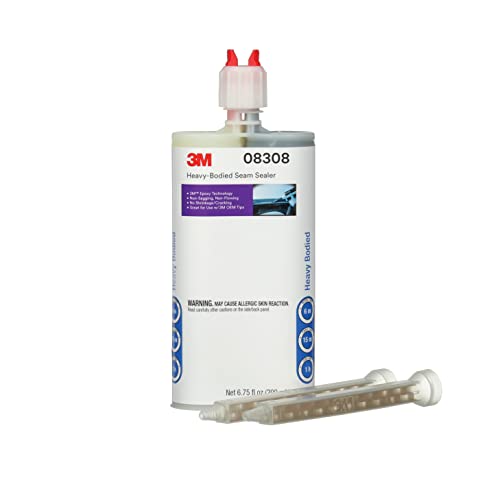
- Self-mixing two-part cartridge
- Non-flowing paste for vertical seams
- Matches OEM seal appearance
Best For: Sealing automotive seams with a factory-style finish
Weld-replacement panel adhesive

- Two-part urethane for steel and aluminum
- Made for quarter panels, roofs, and door skins
- Self-sealing with 24-hour cure
Best For: Weld-replacement style panel bonding on steel and aluminum
Black Seam Sealer
Professional Grade High Strength Waterproof Automotive Adhesive

- Bonds to primed, painted, or bare metal
- Paintable in about 30 minutes
- Waterproof and flexible for all-weather use
Best For: Body panel seams, rust prevention, and quick paintable repairs
Panel Bond
Multi-Purpose Two-Part Epoxy Adhesive

- Bonds steel, aluminum, SMC, and fiberglass
- Non-sag formula with long working time
- 24-hour full cure for panel bonding
Best For: Bonding body panels and composite materials with a high-strength epoxy
White Seam Sealer
Professional Grade Waterproof Adhesive

- Bonds fiberglass, metal, and plastic
- Paint-ready in about 30 minutes
- Low-VOC, waterproof, and durable
Best For: Fast, paintable sealing on body panels, seams, and mixed-material repairs
OEM-Style Heavy Duty
Buck Panel Bonding Adhesive, Two-Part Epoxy

- Replacement for 3M 08115-style panel bonding
- Bonds steel, aluminum, plastic, fiberglass, and composites
- Cures at room temperature and resists chemicals, water, corrosion
Best For: Large automotive panel repairs needing durable epoxy bonding
Long Set Alignment
Panel Bonding Adhesive for Auto Body Panel Repair

- 90-minute working time for careful alignment
- Bonds metal, plastics, SMC, and fiberglass
- Corrosion-resistant with 24-hour full cure
Best For: Precision body panel repairs where extra working time helps
High-Capacity Repair
Panel Bonding Adhesive, Two-Part Epoxy 400 mL

- Large 400 mL cartridge for bigger repair jobs
- 90-minute working time for panel alignment
- Bonds metal, plastics, SMC, and fiberglass
Best For: Bigger body panel projects needing more cartridge volume
OEM panel bonding epoxy – 3M Panel Bonding Adhesive 08115
If you need a structural adhesive for car body panels that’s built for panel replacement work, this 3M panel bonding epoxy is a strong fit. It’s designed for properly prepared steel, aluminum, SMC, and fiberglass, and its long working time helps you line up quarter panels, roof sections, and door skins before it sets.
Best For: Technicians and DIYers replacing body panels who want an OEM-recommended two-part epoxy with a generous work window.
Pros:
- OEM-recommended formula for non-structural body panel repairs
- Bonds metal and composites, including steel, aluminum, SMC, and fiberglass
- 90-minute working time with 4-hour clamp time for careful alignment
- Can be weld-bonded or rivet-bonded during the working time
Cons:
- Requires a standard applicator gun, which is not included
- Only works well on properly prepared surfaces
- Full cure takes 24 hours at room temperature unless heat is used
Overall, this is a solid choice when you want a proven panel bonding adhesive with flexible installation options and enough working time for precise body repairs.
Fast-set plastic repair syringe – J-B Weld Plastic Bonder 25 ml
J-B Weld 50139 Plastic Bonder Body Panel Adhesive and Gap Filler Syringe - Black - 25 ml
Check Price On AmazonFor smaller repair jobs where you want a quick-setting structural adhesive for car body panels and related materials, this J-B Weld Plastic Bonder is easy to use and fast to cure. The 1:1 syringe format keeps mixing simple, and the black finish makes it a practical gap filler for repairs on thermoset plastics, thermoplastics, carbon fiber composites, and coated metals.
Best For: Quick repairs and gap filling on plastic or composite body parts where speed matters.
Pros:
- Quick-set 2-part urethane adhesive system
- Simple 1:1 mixing ratio in an easy syringe format
- Sets in 15 minutes and can be sanded after 30 minutes
- Works on composites, thermoplastics, coated metals, and more
Cons:
- 25 ml size is best for smaller jobs
- Not as panel-focused as dedicated auto body panel bonding adhesives
- Faster set time leaves less room for repositioning
This is a handy option when you need a fast, permanent repair and want a product that doubles as a gap filler without a complicated mixing process.
OEM-style seam sealing pick – 3M Heavy-Bodied Seam Sealer 08308
If your structural adhesive for car body panels job also needs a clean seam finish, this 3M heavy-bodied seam sealer is built for matching OEM-style seals. The self-mixing dual cartridge helps avoid messy hand mixing, while the non-flowing paste stays in place on vertical or horizontal seams.
Best For: Sealing automotive seams with an OEM-like appearance after panel repair or replacement.
Pros:
- Two-part self-mixing cartridge reduces mixing mess
- Heavy-bodied, non-flowing formula tools well on seams
- Works on vertical and horizontal applications
- Designed to match OEM seal appearance
Cons:
- It is a seam sealer, not a panel bonding adhesive
- Industrial/occupational use only
- Best suited to metal seam sealing rather than multi-material bonding
In short, this is the right product when the structural work is done and you need a durable, controllable seam finish that behaves like a factory seal.
Weld-replacement panel adhesive – Polymix Metal Panel Bond 60
Polymix Metal Panel Bond 60 Adhesive 200ml Cartridge & Two Application Mixing Nozzles
Check Price On AmazonWhen you’re shopping for a structural adhesive for car body panels that can replace welding on common panel jobs, this Polymix two-part urethane is built for steel and aluminum bonding. It’s aimed at quarter panels, roofs, box sides, van sides, utility vehicle sides, and door skins, and the cartridge format comes with two mixing nozzles for application.
Best For: Panel replacement projects on steel or aluminum where you want adhesive bonding instead of traditional welding.
Pros:
- Two-part urethane formulated to bond steel and aluminum
- Made for common panel replacement areas like roofs and door skins
- Self-sealing adhesive, so no sealer is needed on the bonded area
- 24-hour full cure with strong tensile strength
Cons:
- Not water resistant, according to the product details
- Low-viscosity cartridge may not suit every seam or fill application
- No need for welding, but the product is still best used on prepared automotive repair work
This is a practical pick if you want a weld-replacement style adhesive for body panel swaps and prefer a self-sealing formula that keeps the repair process simpler.
Black Seam Sealer – Professional Grade High Strength Waterproof Automotive Adhesive
If you need a structural adhesive for car body panels that also handles seams, gaps, and leak prevention, this black automotive seam sealer is built for broad repair use. It bonds to primed, painted, or bare metal and cures quickly enough to be paint-ready in about 30 minutes, making it a practical choice for fast turnaround work.
Best For: Body panel seams, rust prevention, and quick paintable repairs on cars, trucks, boats, and RVs.
Pros:
- Bonds to primed, painted, or bare metal surfaces
- Fast curing and paintable in about 30 minutes
- Waterproof, flexible, and designed not to shrink or crack
- Works on cars, boats, trucks, and RVs
Cons:
- More of a seam sealer than a dedicated panel-bond epoxy
- Single-tube format may not suit larger structural jobs
- Best results still depend on proper application for gap filling
For general body repair work where sealing and adhesion matter, this is a versatile option with a low-prep, paintable workflow. It looks especially useful when you want a durable seal on panels and seams without waiting long for the next step.
Panel Bond – Multi-Purpose Two-Part Epoxy Adhesive
When the job calls for a structural adhesive for car body panels, this two-part panel bond epoxy is aimed at steel, aluminum, SMC, and fiberglass. Its non-sag formula and long working time make it a solid pick for panel bonding where control and impact strength matter more than speed.
Best For: Bonding body panels and composite materials where a high-strength, non-sag epoxy is preferred.
Pros:
- Bonds steel, aluminum, SMC, and fiberglass panels
- Non-sag formula helps it stay in place during application
- Offers superior impact strength and long working time
- No external primer required according to the product notes
Cons:
- 24-hour full cure time is slower than sealant-style products
- Two-part epoxy requires mixing before use
- Better suited to panel bonding than quick sealing tasks
This is the most clearly panel-bond-oriented option in the group, especially if you want a true epoxy for body panel attachment. It stands out for material compatibility and a controlled application profile.
White Seam Sealer – Professional Grade Waterproof Adhesive
If you want a structural adhesive for car body panels that also doubles as a fast sealant, this white seam sealer is designed for automotive, marine, and RV repair work. It bonds to fiberglass, metal, and plastic, and its low-viscosity formula cures quickly, with paint readiness in about 30 minutes.
Best For: Fast, paintable sealing on body panels, seams, and mixed-material repairs.
Pros:
- Bonds to fiberglass, metal, and plastic
- Fast curing with a 30-minute paint-ready time
- Waterproof, durable, and flexible
- Low-VOC and solvent-free formula
Cons:
- More focused on sealing and gap filling than heavy structural bonding
- Low-viscosity liquid may be less convenient for some vertical applications
- White finish may not suit every repair or color match
For repair jobs that need quick sealing across different substrates, this product offers a strong mix of flexibility and speed. It is a practical fit when the priority is leak prevention and paintable body work rather than a dedicated panel-bond epoxy.
OEM-Style Heavy Duty – Buck Panel Bonding Adhesive, Two-Part Epoxy
If you need a structural adhesive for car body panels that can handle demanding repair work, this two-part epoxy is built for panel bonding jobs where strength and durability matter. It’s positioned as a replacement for 3M Panel Bonding Adhesive 08115 and is designed for use on steel, aluminum, plastic, fiberglass, and composite panels.
Best For: Bonding door skins, roof skins, quarter panels, box sides, and bumper covers.
Pros:
- Two-part epoxy formula is made for both structural and non-structural panel bonding.
- OEM-oriented design with compatibility across metal, plastic, fiberglass, and composite materials.
- Cures at room temperature with no added heat required.
- Resists chemicals, water, and corrosion for durable repairs.
Cons:
- Requires a standard dispensing tool for cartridge use.
- Supplied with 3 static mixing nozzles, so ongoing use may need replacements.
This is a practical choice for body panel repairs when you want an adhesive aimed at long-lasting, professional-style bonding. The 400 ml cartridge format also makes it a solid pick for larger panel jobs.
Long Set Alignment – Panel Bonding Adhesive for Auto Body Panel Repair
For shoppers comparing structural adhesive for car body panels, this two-part epoxy stands out for its long working time and straightforward repair use. It’s intended for auto body panel repair on quarter panels, roofs, door skins, roof skins, and van sides, with bonding support for steel, aluminum, plastics, polycarbonate, polystyrene, SMC, and fiberglass.
Best For: Precise alignment on non-structural metal body panels and mixed-material repairs.
Pros:
- 90-minute working time gives extra room for careful positioning.
- Corrosion-resistant formula is suited to automotive repair conditions.
- Works on a broad set of materials, including metal, plastics, and fiberglass.
- 24-hour full cure at 77°F or above, with heat cure available to speed things up.
Cons:
- Not recommended for PP, PE, or POM.
- Requires a 1:1 200 ml epoxy gun, which is not included.
- Best results depend on proper cartridge equalizing and nozzle mixing.
This is a good fit when you want more time to align body panels before clamp-up. The 200 mL size is more compact than bulkier cartridges, making it useful for targeted repair work.
High-Capacity Repair – Panel Bonding Adhesive, Two-Part Epoxy 400 mL
This structural adhesive for car body panels is geared toward the same style of auto body repair as smaller cartridges, but with a larger 400 mL format for bigger jobs. It’s described for quarter panels, roofs, door skins, roof skins, and van sides, and it bonds steel, aluminum, plastics, polycarbonate, polystyrene, SMC, and fiberglass.
Best For: Larger auto body panel projects that need more adhesive on hand.
Pros:
- 400 mL cartridge is well suited to bigger panel repair tasks.
- 90-minute working time supports careful fit-up and alignment.
- Corrosion-resistant two-component epoxy for automotive use.
- Compatible with metal, plastic, fiberglass, and composite materials.
Cons:
- Not recommended for PP, PE, or POM.
- Requires checking epoxy gun size before buying.
- Full cure still takes 24 hours at 77°F or above unless heat cured.
If you want a larger cartridge for repeat panel work, this option keeps the same broad material compatibility and working characteristics. It makes sense for users who expect to cover multiple repairs or larger surfaces.
How We Picked the Best Structural Adhesive for Car Body Panels
We focused on products commonly used for structural and semi-structural body repairs, prioritizing bond strength, vehicle-material compatibility, cartridge size, mixing style, and whether the formula is better suited to panel bonding or sealing. For Structural Adhesive for Car Body Panels, OEM-style two-part epoxies and non-sag formulas were given the most weight.
Quick Comparison
In broad terms, larger cartridges are better for full panel work, while smaller syringes suit spot repairs and smaller plastic or trim jobs. Two-part self-mixing cartridges are usually the easiest choice for consistent results, while seam sealers are more appropriate for leaks, joints, and moisture protection than for primary structural bonding.
Key Buying Factors for Structural Adhesive for Car Body Panels
Bond Type
Choose a true panel-bonding adhesive when the repair needs load-bearing strength. If the job is mainly sealing seams, blocking moisture, or preventing rust, a seam sealer is the better fit.
Material Compatibility
Make sure the adhesive is rated for the substrates you are joining. Many body panel adhesives are designed for metal and composites, while some formulas are better for plastics, molding compounds, or mixed-material repairs.
Open Time and Cure Speed
Longer working time helps with alignment on larger panels. Faster cure can be useful for small repairs, but it may leave less room for adjustment. Match the cure profile to the complexity of the job.
Gap Filling and Sag Resistance
For body panel work, non-sag formulas help keep adhesive where it belongs on vertical seams and edges. If the surfaces are not perfectly matched, a product with good gap-filling ability can improve fit and finish.
Cartridge Size and Dispensing
Small cartridges and syringes are practical for limited repairs, while 200 mL and 400 mL cartridges are more efficient for larger panels or repeated use. Also consider whether you need a separate mixing gun and nozzles.
Who Should Buy Which Structural Adhesive for Car Body Panels?
DIY users doing small fixes may prefer a compact adhesive or gap-filling formula that is easy to dispense and control. Restorers and collision-repair users should lean toward OEM-style panel bonding epoxies with larger cartridges and strong metal-to-metal performance. If your priority is rust prevention, leak repair, or sealing joints rather than bonding a structural panel, choose a heavy-bodied seam sealer instead of a panel adhesive.
For most buyers, the best Structural Adhesive for Car Body Panels is the one that matches the job size, material type, and cure speed you can work with confidently. When in doubt, favor a product designed specifically for automotive panel bonding rather than a general-purpose glue.