Choosing the right dust-control sander can make a big difference in finish quality, cleanup time, and shop safety. For auto body work, the best systems balance strong dust extraction, smooth control, and the right orbit for the job.
Below, we focus on vacuum sanding systems for auto body repair that help reduce airborne dust while supporting consistent results on filler, primer, and finish prep.
Best 10 Vacuum Sanding Systems for Auto Body Repair Picks for 2026
Electric Precision Pick
Mirka Deros 6" Dust-Free Sander
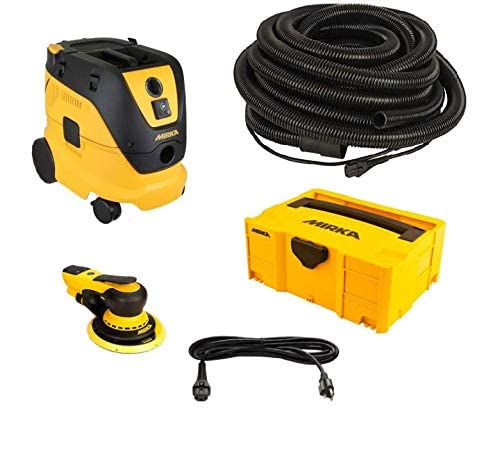
- Variable speed with separate on/off switch
- Brushless motor reduces maintenance downtime
- Low weight and vibration reduction system
Best For: Detail-oriented bodywork sanding where control and comfort matter
Airflow Shop Workhorse
3M Xtract 6" Vacuum Ready Sander

- Vacuum ready for central or portable extraction
- 209W air motor is precision-balanced
- Lightweight 3.4 lb design for shop use
Best For: Professional shops that already use central vacuum extraction
Integrated Heavy-Duty Choice
220V Auto Grinding and Vacuum Machine

- Integrated grinding and vacuuming design
- 50L dust bag with easy zipper cleaning
- 1600W motor with 3900L/min max flow
Best For: Busy repair shops wanting a high-capacity dust-free grinding station
Classic Vacuum Ready Pick
Ingersoll Rand 6" Orbital Sander

- Vacuum-powered 6-inch random orbital sander
- Hook-and-loop pad for quick disc changes
- Built for durability in tough job conditions
Best For: Shops needing a proven, durable orbital sander for dust-managed work
Dust-Control Manual Sander
Hyde 09170 Dust-Free Vacuum Sander

- Connects to wet/dry vacuums with included hose adapters
- Easy Clamp system speeds sanding screen changes
- Lightweight manual design for dust-reducing prep work
Best For: Hand sanding jobs that need basic dust control
Electric Low-Profile Extractor
3M Xtract 6-Inch Random Orbital Sander
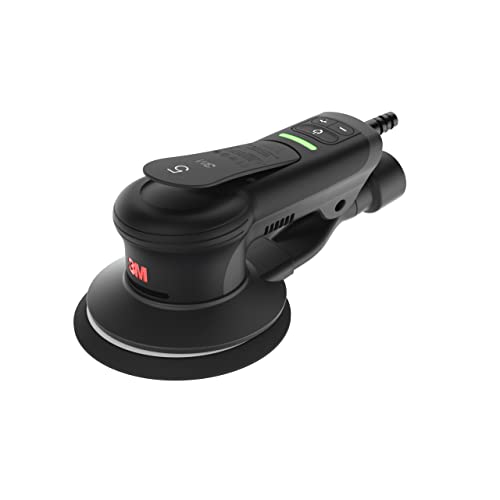
- Central-vacuum compatible sanding with 3M Xtract extraction
- Can remove up to 97% of dust with matching discs
- Lightweight 3 lb body with ergonomic vibration-reducing grip
Best For: Professional dust extraction in a lightweight electric sander
Pneumatic Vacuum Palm Sander
5-Inch Dual Action Auto Body Sander

- Air-powered dual action sander for auto body work
- Built-in regulator adjusts speed up to 12,000 rpm
- Includes vacuum bag and pipe for dust collection
Best For: Air-tool users needing compact sanding with dust collection
Ultra-Light Detail Reach
Mirka LEROS 9" Vacuum-Ready Sander

- 7.1 lb lightweight body for longer use
- 180° rotating 9-inch head for reach
- Dual suction ports support dust capture
Best For: Lightweight, vacuum-ready sanding with extended reach
Compressed-Air Speed Pick

- Up to 13,000 RPM for rapid sanding
- Lightweight 1 kg pneumatic design
- Adjustable speed and vacuum-ready setup
Best For: Air-compressor users needing fast, lightweight sanding
Balanced Body-Shop Workhorse

- 350W brushless motor for steady output
- Includes dust hose and vacuum adapter
- Uses 5mm orbit with 6 speed settings
Best For: Versatile auto body prep with vacuum dust capture
Electric Precision Pick – Mirka Deros 6" Dust-Free Sander
If you want vacuum sanding systems for auto body repair that stay light in the hand and easy to control, the Mirka Deros MID650-912-5 is built for detailed sanding work. Its variable speed control, low profile, and vibration reduction system make it a practical fit when you need a cleaner finish with less fatigue.
Best For: Technicians who want a corded electric dust-free sander with strong control and low vibration for bodywork finishing.
Pros:
- Variable speed control with a separate on/off switch for easier handling
- Brushless motor helps reduce downtime by avoiding brush changes
- Vibration reduction system supports more comfortable sanding sessions
- Low weight and low profile design help with control on detailed work
Cons:
- Limited to a corded electric setup
- 3/16" (5.0mm) orbit may not suit every sanding stage
Overall, this Mirka model is a strong option if your priority is smooth control, reduced vibration, and reliable dust-free sanding in the shop.
Airflow Shop Workhorse – 3M Xtract 6" Vacuum Ready Sander
For vacuum sanding systems for auto body repair that need shop-ready airflow and a clean sanding setup, the 3M Xtract Random Orbital Sander is designed to work with a central vacuum system or the 3M Xtract Portable Dust Extrator. Its 209W air-powered motor and lightweight build make it a practical choice for long sanding sessions.
Best For: Shops using central vacuum extraction and 3M Xtract net discs for cleaner industrial sanding.
Pros:
- Vacuum ready for central vacuum systems or the 3M Xtract Portable Dust Extrator
- Precision-balanced 209W motor is designed for smoother running
- Works with 3M Xtract Clean Sanding Solutions and dust extraction
- At 3.4 pounds, it stays relatively light for shop use
Cons:
- Air-powered design requires the right shop setup
- Intended for industrial/occupational use only
It is a focused choice for professional environments where vacuum compatibility and reliable sanding performance are the main priorities.
Integrated Heavy-Duty Choice – 220V Auto Grinding and Vacuum Machine
If your priority is a larger integrated machine among vacuum sanding systems for auto body repair, this 220V automobile grinder combines sanding and vacuuming in one metal-bodied setup. With dual grinding heads, a 50L dust collection bag, and synchronized automatic start/stop behavior, it is built for higher-output work.
Best For: Repair environments that want an integrated electric grinding and vacuuming machine with large dust collection capacity.
Pros:
- Integrated grinding and vacuuming design with a metal body
- Double grinding heads can support multi-station work and efficiency
- 50L dust collection bag offers large capacity and easy zipper cleaning
- 1600W pure copper motor and 3900L/min max flow rate provide strong suction
Cons:
- 220V/50Hz power requirement limits where it can be used
- At 84 pounds, it is far less portable than handheld sanders
This is best viewed as a dedicated shop machine for cleaner dry grinding rather than a compact handheld sander.
Classic Vacuum Ready Pick – Ingersoll Rand 6" Orbital Sander
For buyers comparing vacuum sanding systems for auto body repair, the Ingersoll Rand 4151-HL is a straightforward vacuum-powered random orbital sander with a 6-inch hook-and-loop pad. It is built for tough job conditions and offers a high maximum speed for sanding tasks that need durability and consistency.
Best For: Users who want a durable vacuum-powered 6-inch orbital sander for demanding shop or field work.
Pros:
- Vacuum-powered design fits dust-managed sanding setups
- 6-inch pad with hook-and-loop attachment for easy disc changes
- Maximum speed up to 12,000 RPM
- Built for durability and tough jobs
Cons:
- Vacuum-powered operation depends on compatible equipment
- Basic feature set compared with newer variable-control models
It makes sense when you want a proven, no-frills orbital sander that is meant to hold up in real-world shop conditions.
Dust-Control Manual Sander – Hyde 09170 Dust-Free Vacuum Sander
If you’re comparing vacuum sanding systems for auto body repair, the Hyde 09170 is a simple dust-control option for hand sanding and prep work. It connects to a wet/dry vacuum with included hose adapters, helping keep sanding dust out of the work area while you shape filler, feather edges, or clean up surfaces.
Best For: Shop users who want a manual dust-free sanding setup for basic prep and cleanup tasks.
Pros:
- Attaches to any wet/dry vacuum and includes adapters for 1-3/4″, 1-1/2″, and 2-1/2″ hose sizes
- Easy Clamp system makes sanding screen replacement quick and simple
- Designed to reduce dust on nearby furniture, floors, electronics, and in the breathing zone
- Compact, lightweight build at 1.9 pounds
Cons:
- Pole is not included
- Manual operation only, so it is not a powered sanding solution
- Best suited to screening and hand sanding rather than heavy material removal
Overall, this Hyde setup makes sense if you need a straightforward vacuum-assisted sander rather than a full electric or pneumatic system. It is a practical choice for dust control, but it depends on your existing wet/dry vacuum and a separate pole if you need extended reach.
Electric Low-Profile Extractor – 3M Xtract 6-Inch Random Orbital Sander
For buyers focused on vacuum sanding systems for auto body repair, the 3M Xtract 88764 is a corded electric random orbital sander built for cleaner, longer shop-floor use. It pairs with central vacuum and 3M Xtract Net Discs to extract up to 97% of dust created during sanding, while keeping a compact, low-profile shape for control.
Best For: Professional users who want a lightweight electric sander with strong dust extraction support.
Pros:
- Works with central vacuum and 3M Xtract dust extraction for cleaner sanding
- Can extract up to 97% of sanding dust when used with the matching discs and system
- Lightweight 3 lb design with ergonomic grip material to help reduce vibration
- Whisper-quiet, precision-balanced motor and 5-minute stand-by safety function
Cons:
- Industrial/occupational use only, not for consumer sale or use
- Requires the right vacuum and compatible Xtract discs to get the full dust-control benefit
- 6-inch format may not be ideal if you prefer smaller body-shop sanding pads
This is a strong choice when dust extraction performance matters as much as sanding feel. It is aimed at professional environments, and its best results depend on building the system around the sander with the correct vacuum and consumables.
Pneumatic Vacuum Palm Sander – 5-Inch Dual Action Auto Body Sander
If you want vacuum sanding systems for auto body repair with an air-powered setup, this 5-inch dual action palm sander is built for bodywork, polishing, and general surface prep. It includes a vacuum bag and vacuum pipe for dust collection, plus a built-in regulator to adjust speed during different sanding tasks.
Best For: Auto body users who want a compact pneumatic sander with basic vacuum dust collection.
Pros:
- Air-powered dual action design suited to auto body work and surface prep
- Built-in regulator supports speed control up to 12,000 rpm
- Includes vacuum bag and vacuum pipe for dust collection
- Compact 5-inch pad size for controlled sanding
Cons:
- Requires compressed air, with 90 PSI working pressure and 4 CFM air consumption
- Vacuum setup is accessory-based rather than a full integrated extraction system
- Best for lighter to medium sanding tasks rather than aggressive material removal
For shops already running air tools, this is a practical budget-friendly way to add dust collection to a dual action palm sander. It offers useful speed control and compact handling, but the performance depends on your air supply and how you manage the vacuum bag system.
Ultra-Light Detail Reach – Mirka LEROS 9" Vacuum-Ready Sander
If you want vacuum sanding systems for auto body repair that also handle larger prep jobs, the Mirka LEROS stands out for its lightweight feel, long-reach control, and dust capture setup. It is built around a 9-inch orbital head with 180° rotation, plus a vacuum-ready dual-port design that helps keep sanding dust under control while you work on broad surfaces and awkward angles.
Best For: Technicians who want a lightweight, vacuum-ready sander for precise sanding on hard-to-reach panels and prep surfaces.
Pros:
- Only 7.1 lb, which helps reduce fatigue during longer sanding sessions
- 180° rotating 9-inch head improves reach on edges, corners, and high areas
- 350W brushless motor supports steady sanding power
- Dual suction ports connect to a vacuum or dust collector for cleaner work
Cons:
- Primarily designed for walls, ceilings, and other large surfaces rather than dedicated body-panel detailing
- Corded operation limits mobility compared with cordless options
For buyers who value dust extraction and low fatigue over compact panel-only use, this Mirka model is a practical fit. Its strength is controlled, consistent sanding with vacuum support, not ultra-small spot work.
Compressed-Air Speed Pick – 5" Air Sander with Vacuum
For vacuum sanding systems for auto body repair that prioritize fast material removal, this pneumatic 5-inch sander brings high RPM and a vacuum-compatible setup in a compact air-powered tool. With an unloaded speed up to 13,000 RPM, it is aimed at quick sanding on auto body surfaces, metal, woodworking, and polishing tasks where a lightweight pneumatic tool is preferred.
Best For: Users with a suitable air compressor who want a fast, lightweight vacuum-ready sander for general auto body and shop work.
Pros:
- Up to 13,000 RPM for fast sanding and material removal
- Lightweight 1 kg design helps reduce fatigue
- Adjustable speed switch adds control across different materials
- Vacuum-compatible setup supports cleaner sanding
Cons:
- Requires compressed air, so it is not a standalone electric tool
- Recommended for a 15-gallon-plus compressor, which may limit some setups
This is a straightforward option if your shop already runs air tools and you want speed in a small footprint. It is less about premium refinement and more about efficient, practical sanding with vacuum support.
Balanced Body-Shop Workhorse – S&F 5"/6" Vacuum Sander
If you need vacuum sanding systems for auto body repair that balance control, dust capture, and broader panel coverage, this S&F random orbital sander is the most shop-ready of the group. Its 350W brushless motor, 5mm orbit, six-speed range, and included vacuum hose make it a strong fit for paint removal, body filler leveling, fiberglass prep, and panel work.
Best For: Auto body prep users who want a vacuum-ready electric sander with adjustable speed and both 5-inch and 6-inch pad options.
Pros:
- 350W brushless motor is built for stable, low-maintenance performance
- 5mm orbit and six speeds support both removal and smoother finishing
- Includes dust hose and 28/35mm vacuum adapter for cleaner sanding
- Works with both 5-inch and 6-inch backing pads for flexible coverage
Cons:
- Corded electric design may be less convenient than cordless tools
- Best suited to sanding and prep, not heavy-duty grinding
For most auto body users, this model offers the best mix of dust control and versatility. The ability to switch pad sizes makes it easier to move from smaller repair areas to larger panels without changing tools.
How We Picked the Best Vacuum Sanding Systems for Auto Body Repair
We looked for Vacuum Sanding Systems for Auto Body Repair that combine effective dust collection, usable ergonomics, and sanding performance suited to body shop tasks. Priority went to models with reliable vacuum attachment options, low vibration, and orbit sizes appropriate for paint prep and surface leveling.
We also considered power source, pad size, speed control, and whether the tool is better suited to detail work, panel sanding, or heavier material removal.
Quick Comparison
In general, electric units are best for consistent power and cleaner, easier setup, while pneumatic sanders appeal to shops already running compressed air. Smaller 5-inch tools are often better for tight areas and spot work, while 6-inch models speed up larger panels. Longer-reach or larger-format sanders can be a strong choice for hoods, doors, and roofs.
Key Buying Factors for Vacuum Sanding Systems for Auto Body Repair
Dust Collection Performance
A vacuum sanding system should capture fine paint and filler dust at the source. Look for secure hose connections, compatible vacuum ports, and a design that keeps the pad area clear without adding too much drag.
Orbit Size and Finish Quality
Smaller orbits generally leave a finer scratch pattern and work well for final prep. Larger orbits remove material faster, which can help on rougher surfaces but may require more follow-up sanding.
Size and Ergonomics
Weight, grip comfort, and vibration control matter during long sessions. A lighter sander can reduce fatigue, especially on vertical panels or overhead work.
Power Type
Choose electric if you want portability and simple operation. Choose pneumatic if your shop already has air infrastructure and you prefer a lighter tool in hand. Either can work well if dust extraction is consistent.
Pad Size and Access
Six-inch pads suit large panels and faster coverage. Five-inch pads offer better control in tighter spaces. For large curved panels or extended surfaces, consider whether the tool’s shape supports even contact.
Who Should Buy Which Vacuum Sanding Systems for Auto Body Repair?
Body shops doing frequent panel prep will usually want a 6-inch electric or pneumatic option with strong dust extraction. Detailers and technicians working edges, spot repairs, or smaller panels may prefer a lighter 5-inch sander. If you need maximum reach or broad-surface efficiency, a larger-format vacuum-ready model can be worth the tradeoff in maneuverability.
If your top priority is cleaner working conditions and less post-sanding cleanup, Vacuum Sanding Systems for Auto Body Repair are a smart upgrade over standard sanders. Match the tool to your panel size, workload, and dust-collection setup for the best results.