A dependable car inverter can turn your vehicle’s 12-volt outlet into a convenient source of household-style power for road trips, commuting, camping, and roadside emergencies.
We’ve selected 10 12-volt car inverters across several power levels, from compact USB-focused models to higher-output units with multiple AC outlets. Use the guide below to match capacity, ports, and safety features to your equipment.
Best 10 12 Volt Car Inverters Picks for 2026
Best Overall Compact Inverter
300W BESTEK Car Power Inverter

- 300W continuous and 700W peak output
- Two AC outlets plus two 4.8A USB ports
- Compact aluminum housing with multi-protection
Best For: Road trips, work travel, camping, and everyday device charging
Best High-Power Option
TWING 1000W Vehicle Power Inverter

- 750W continuous and 1,000W peak output
- Dual AC outlets with QC 3.0 and 30W USB-C PD
- Supports lighter-socket or direct-battery connection
Best For: Trucks, camping, emergency use, and higher-power electronics
Best Budget-Friendly Choice
PiSFAU 200W Car Power Inverter

- 200W output with two AC outlets
- Four USB charging ports in a compact design
- Quiet cooling and multiple safety protections
Best For: Everyday charging of phones, tablets, laptops, and small electronics
Best USB-C Charging

- 400W continuous and 800W peak output
- 65W USB-C PD and 18W USB-A QC ports
- Two AC outlets and a 30-inch cord
Best For: Road trips and charging USB-C laptops, tablets, and phones
Best Compact Pick
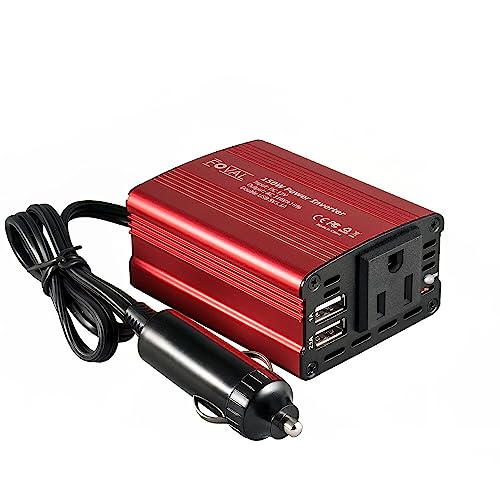
- Compact aluminum housing weighs about 8 ounces
- One AC outlet and two USB charging ports
- Multiple built-in safety protections
Best For: Everyday road-trip charging and lower-power electronics
Best High-Output Pick

- 1000W continuous and 2000W peak output
- LCD status and protection-code display
- Includes battery clips and cigarette-lighter cable
Best For: Camping, trucks, and higher-power compatible electronics
Best Midrange Pick
BESTEK 400W Car Power Inverter

- 400W output with two AC outlets
- 30W USB-C PD and USB-A QC 3.0
- Compact, ETL-certified design
Best For: Multi-device travel charging and moderate-power accessories
Best Compact 300W Pick

- 300W output with two AC outlets
- 65W USB-C charges compatible laptops
- LCD battery-voltage display
Best For: Road trips, camping, and emergency charging
Best Ultra-Portable Option

- 150W continuous, 300W peak output
- Compact credit-card-size design
- AC and dual USB charging ports
Best For: Lightweight travel and modest electronic loads
Best Multi-Port Value
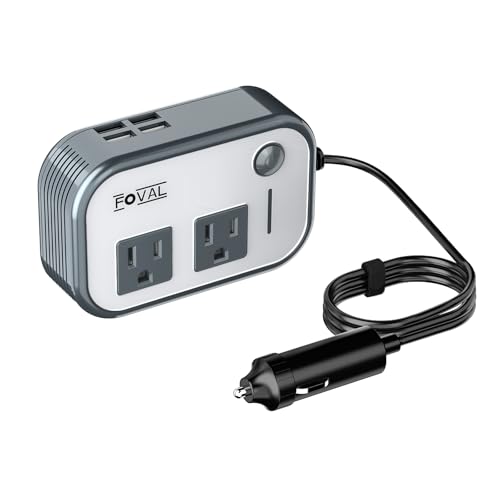
- Two AC sockets and four USB ports
- Multi-protection system with smart fan
- Compact, lightweight travel design
Best For: Families and road trips needing many charging ports
Best Overall Compact Inverter – 300W BESTEK Car Power Inverter
For drivers who want versatile 12 volt car inverters without taking up much cabin space, the BESTEK 300W model is a well-rounded choice. It provides 300 watts of continuous power, two AC outlets, and two 4.8A USB ports in a compact aluminum housing. Its 11–17V compatibility also makes it suitable for a range of vehicles, including Tesla models noted by the manufacturer.
Best For: Road trips, work travel, camping, and charging laptops, tablets, phones, and cameras.
Pros:
- Offers two AC outlets and two fast-charging USB ports.
- Compact, lightweight design with a 32-inch vehicle plug cord.
- Includes protection against overheating, voltage issues, overloads, and short circuits.
- Has an aerospace aluminum housing and a five-year replacement warranty claim.
Cons:
- Uses a modified sine wave output.
- Its 300W continuous rating is not intended for high-demand appliances.
- The product notes contain differing warranty durations.
The BESTEK is a practical all-around option when portability, multiple charging ports, and established safety features matter more than maximum output.
Best High-Power Option – TWING 1000W Vehicle Power Inverter
Among 12 volt car inverters, the TWING model stands out for drivers who need more capacity than a typical cigarette-lighter adapter provides. It is listed with 750 watts of continuous power and 1,000 watts of peak power, along with dual AC outlets, QC 3.0 USB charging, and a 30W USB-C PD port. The included cables allow connection directly to a 12V battery for higher-demand or emergency use.
Best For: Trucks, camping, emergency preparedness, and powering several moderate-demand electronics.
Pros:
- Provides dual AC outlets and QC 3.0 and USB-C PD charging.
- Can connect through a vehicle lighter socket or directly to a 12V battery.
- Includes a digital display, cooling fan, and multiple protection systems.
- ABS construction is described as impact-resistant and electrically insulated.
Cons:
- Its modified sine wave output may not suit every AC device.
- The vehicle cigarette-lighter connection has a stated surge limitation, so higher loads require the battery cables.
- It is larger and heavier than compact plug-in models.
This TWING inverter offers the strongest output in the group, but users should follow the connection instructions and avoid exceeding the limits of the vehicle socket or inverter.
Best Budget-Friendly Choice – PiSFAU 200W Car Power Inverter
The PiSFAU 200W is a straightforward pick for shoppers comparing 12 volt car inverters for everyday charging. Its compact cigarette-lighter design combines two AC outlets with four USB ports, including USB-A/C charging, while the 200W output is suited to smaller electronics rather than high-wattage appliances.
Best For: Charging phones, tablets, laptops, cameras, and small electronics during commutes, road trips, and camping.
Pros:
- Combines two AC outlets with four USB charging ports.
- Compact, lightweight body is approximately cellphone-sized.
- Designed with heat dissipation and quiet operation in mind.
- Includes protection against overheating, voltage problems, overloads, and short circuits.
Cons:
- Its 200W rating limits use with larger appliances.
- Uses a modified sine wave output.
- The one-year warranty is shorter than some competing options listed here.
Choose the PiSFAU when you need plenty of charging ports in a small package and your devices have modest power requirements.
Best USB-C Charging – Pro Chaser 400W Car Inverter
The Pro Chaser 400W is a useful choice among 12 volt car inverters if modern USB-C charging is a priority. It delivers 400 watts of continuous power, dual AC outlets, an 18W USB-A QC port, and a 65W USB-C PD port. Its compact body and 30-inch cord make it convenient for front- or back-seat charging on longer drives.
Best For: Road trips and vehicle users charging laptops, tablets, phones, cameras, and other USB-C devices.
Pros:
- Includes a high-output 65W USB-C PD port and USB-A QC port.
- Provides two AC outlets with 400W continuous and 800W peak output.
- Compact, cellphone-sized design with a 30-inch cord.
- Built-in fuse and automatic cooling fan support safer operation.
Cons:
- Uses a modified sine wave output.
- The listing advises connecting only one high-power device at a time.
- Using the USB-C PD port together with an AC socket may exceed the vehicle socket’s limit.
The Pro Chaser is especially appealing for USB-C users, provided they follow the manufacturer’s guidance about combined loads and vehicle-socket capacity.
Best Compact Pick – FOVAL 150W Car Power Inverter
If you need a small, straightforward option among 12 volt car inverters, the FOVAL 150W model is designed for everyday vehicle charging. It provides one AC outlet, two USB ports, and 150 watts of continuous output in a compact aluminum housing.
Best For: Road trips, phone and tablet charging, laptops, and other lower-power electronics.
Pros:
- Compact 3.2-by-2.5-by-1.5-inch design weighs about 8 ounces.
- Offers one AC outlet plus dual USB ports with up to 3.1A total output.
- Includes protection against overheating, over- and undervoltage, short circuits, overloads, and overcharging.
- Built-in cooling fan and durable metal housing support quieter, portable use.
Cons:
- 150W continuous output limits it to relatively low-power devices.
- Uses a modified sine wave output.
- Its vehicle plug is intended for standard cigarette-lighter use rather than higher-power battery connections.
The FOVAL is a sensible choice when portability and simple charging matter more than high wattage. Its 150W capacity works well for common electronics, but shoppers needing to run larger appliances should consider a higher-output inverter.
Best High-Output Pick – OLTEANP 1000W Power Inverter
For shoppers comparing 12 volt car inverters for more demanding loads, the OLTEANP 1000W model offers substantially more capacity than a basic plug-in adapter. It includes 1000 watts of continuous power, two AC outlets, an LCD display, and both USB-C and USB charging.
Best For: Car camping, truck use, outdoor work, and powering compatible electronics or small appliances from a 12V battery.
Pros:
- Provides 1000W continuous output and 2000W peak surge capacity.
- Includes two AC outlets, a 36W USB-C port, and a 5V/3A USB port.
- LCD displays input voltage, output voltage, battery status, and protection codes.
- Includes both alligator clips and a cigarette-lighter cable for flexible installation.
Cons:
- The cigarette-lighter socket supports up to 150W; higher loads require direct battery connection.
- Its modified sine wave output is not recommended for refrigerators, microwaves, air conditioners, laser printers, or sensitive medical devices.
- At about 1.2 kg, it is less compact than low-wattage plug-in inverters.
This model is the more versatile pick for users who understand the difference between a cigarette-lighter connection and direct battery wiring. The display and protection indicators add useful visibility, while the modified sine wave design means device compatibility should be checked before purchase.
Best Midrange Pick – BESTEK 400W Car Power Inverter
The BESTEK 400W is a practical middle ground among 12 volt car inverters, pairing enough output for select laptops and small accessories with fast USB charging. Its two AC outlets, USB-C PD port, and USB-A QC 3.0 port make it useful when several devices need power at once.
Best For: Travelers who need to charge phones, tablets, cameras, laptops, breast pumps, or similar moderate-power devices.
Pros:
- Delivers 400W of DC-to-AC output through two 110V AC outlets.
- Features 30W USB-C PD and USB-A QC 3.0 fast-charging ports.
- Compact design is about the size of an iPhone and fits standard vehicle cigarette-lighter sockets.
- ETL-certified and backed by a 12-month replacement warranty.
Cons:
- Its 400W output is not intended for high-demand appliances.
- Uses a vehicle cigarette-lighter connection rather than a higher-capacity direct battery setup.
- The supplied details do not specify a peak-wattage rating.
The BESTEK offers a useful balance for everyday travel: more AC capacity than a compact 150W adapter without moving into the size and installation considerations of a 1000W inverter. Its strongest advantage is the combination of dual AC outlets and modern fast-charging USB ports.
Best Compact 300W Pick – 65W USB-C Car Inverter
If you want a versatile option among 12 volt car inverters, this compact 300W model combines two AC outlets with USB-C and USB-A charging. Its 65W USB-C port can charge compatible laptops, while the built-in display helps you monitor vehicle battery voltage.
Best For: Road trips, camping, and emergency charging when you need laptop and mobile-device support in a compact package.
Pros:
- Two AC outlets plus two USB-C and two USB-A ports support several devices at once.
- 65W USB-C port is designed to charge compatible laptops.
- LCD shows real-time car battery voltage.
- Overload, short-circuit, overheat, and low-voltage protection are built in.
Cons:
- Uses a modified sine wave output.
- Compatibility should be confirmed for a 12V vehicle outlet; it is not compatible with Tesla vehicles using 16V low-voltage systems.
This is a strong all-around choice if port variety and USB-C laptop charging matter more than maximum output capacity. Its plug-and-play design and quiet fan also suit everyday vehicle use.
Best Ultra-Portable Option – 150W Vehicle Power Inverter
This 150W model is one of the more portable 12 volt car inverters, measuring about credit-card size and weighing roughly 8 ounces. It provides a 110V AC outlet setup and two USB ports for common travel electronics and smaller powered devices.
Best For: Drivers who want a lightweight inverter for laptops, tablets, CPAP machines, game consoles, lights, and other modest loads.
Pros:
- Provides 150W continuous power and up to 300W peak power.
- Compact 3.4-by-2.5-by-1.5-inch design is easy to carry.
- Includes AC outlets and two USB charging ports.
- Smart-chip and fuse protection help guard against common electrical faults.
Cons:
- Lower continuous capacity than many larger vehicle inverters.
- Modified sine wave output may not suit every sensitive electronic device.
Choose this PiSFAU inverter when portability is the priority. Its protection features and 300W peak rating add flexibility, but the 150W continuous output makes it better suited to smaller devices than high-power appliances.
Best Multi-Port Value – FOVAL 200W Car Inverter
For shoppers comparing 12 volt car inverters with lots of charging points, the FOVAL 200W model offers two AC sockets and four USB ports. Its compact vehicle-focused design is useful for charging several phones, tablets, and other smaller devices while traveling.
Best For: Families and road-trip users who need multiple AC and USB connections from one 12V car outlet.
Pros:
- Two AC sockets and four USB ports provide six charging connections.
- Supports up to 200W according to the supplied specifications, with a stated 180W practical use recommendation.
- Built-in protection covers short circuit, low voltage, overcharge, overvoltage, overload, and overheating.
- Smart cooling fan adjusts as the inverter gets warmer.
Cons:
- Designed only for DC 12V vehicles, not 24V systems or airplanes.
- Not intended for high-power equipment such as hair dryers or electric heaters.
- Uses modified sine wave output.
The FOVAL stands out for connection capacity and a 24-month warranty. It is a practical passenger-compartment charger, but users should stay within its stated limits and avoid high-wattage appliances.
How We Picked the Best 12 Volt Car Inverters
We compared the selected models by advertised continuous wattage, outlet and USB-port configuration, vehicle compatibility, portability, and practical safety features. We also considered how easily each inverter fits common use cases, including charging personal electronics, powering laptops, and running small household devices from a car or truck.
Rated wattage is only one part of the decision. A useful inverter should provide appropriate overload, short-circuit, and overheat protection, while its plug, cable, ventilation, and controls should suit the way you plan to use it.
Quick Comparison
| Power class | Best suited for | Typical advantage |
|---|---|---|
| 150W | Phones, tablets, cameras, and small chargers | Compact and efficient for everyday use |
| 200W–300W | Laptops, small electronics, and multiple devices | Good balance of capacity and portability |
| 400W | Several devices or moderately demanding loads | More headroom for simultaneous charging |
| 1000W | Higher-demand equipment when properly connected | Greater output potential, but higher vehicle and wiring demands |
Key Buying Factors for 12-Volt Car Inverters
Continuous Wattage and Startup Demand
Choose an inverter based on continuous output, not just a short-term peak rating. Add the wattage of everything you expect to run at once, then leave a safety margin. Motors, compressors, and some power supplies can draw substantially more current during startup.
Outlet and Charging Options
Check whether you need one or two AC outlets, standard USB ports, USB-C, or a combination. USB-C is especially useful for newer phones, tablets, and laptops, but verify the port’s actual power-delivery rating before relying on it for fast charging.
Vehicle Compatibility and Connection Method
Lower-powered models are commonly designed for a 12-volt accessory socket. Higher-output inverters may exceed what that socket or its fuse can safely provide and may require direct battery connections. Follow the manufacturer’s instructions, and never exceed your vehicle’s outlet or wiring limits.
Safety, Ventilation, and Noise
Look for overload, over-temperature, short-circuit, and low-voltage protection. Keep vents unobstructed, place the unit on a stable surface, and avoid using it where heat can build up. Fans may become audible under heavier loads, so placement matters in a quiet cabin.
Who Should Buy Which 12 Volt Car Inverters?
For Basic Everyday Charging
A 150W model is a sensible choice for phones, tablets, cameras, and small chargers. It is typically easier to store and less demanding on a vehicle accessory socket.
For Laptops and Several Personal Devices
Choose a 200W or 300W inverter if you regularly charge a laptop while also powering smaller electronics. These models offer useful headroom without being as demanding as high-output units.
For More Devices or Heavier Loads
A 400W inverter may suit users who need multiple outlets or additional capacity for moderate loads. Confirm the combined wattage before plugging in equipment.
For High-Power Vehicle Setups
Consider a 1000W model only when you understand the required battery connection, cable size, fuse protection, ventilation, and vehicle limitations. It is not automatically appropriate for a standard dashboard outlet.
Whichever of these 12 Volt Car Inverters you choose, match its real capacity to your equipment and use it only while the vehicle’s electrical system can safely support the load.