Choosing the right adhesive can make the difference between a clean, lasting repair and a fix that fails early. For trim, panels, emblems, and mixed-material bodywork, bond strength and compatibility matter just as much as convenience.
Our roundup of the best automotive plastic panel adhesive options in 2026 focuses on practical performance, cartridge size, cure behavior, and real-world usability for DIY and pro-level repairs.
Best 10 Automotive Plastic Panel Adhesive Picks for 2026
Quick-Set Gap Filler
J-B Weld Plastic Bonder Syringe
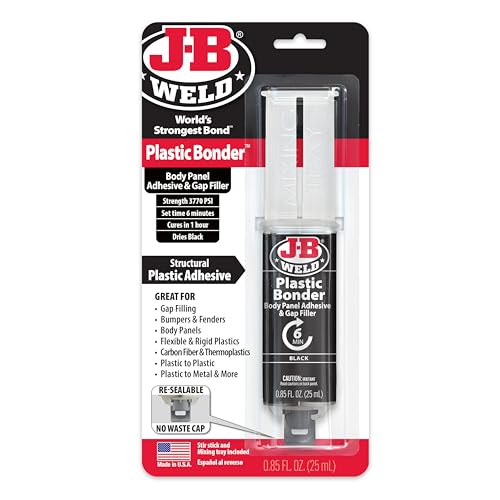
- 15-minute set time for fast repairs
- Works as adhesive and gap filler
- Cures black and can be sanded
Best For: Fast plastic panel touch-ups and small gap-filling repairs
Long-Working Panel Bond
SEM Multi-Purpose Panel Adhesive

- Long working time for careful alignment
- Spacer beads help consistent bond line thickness
- Bonds fiberglass and metal surfaces
Best For: Panel repairs that need extra time for positioning
Two-Pack Plastic Repair
J-B Weld Plastic Bonder Black 2 Pack
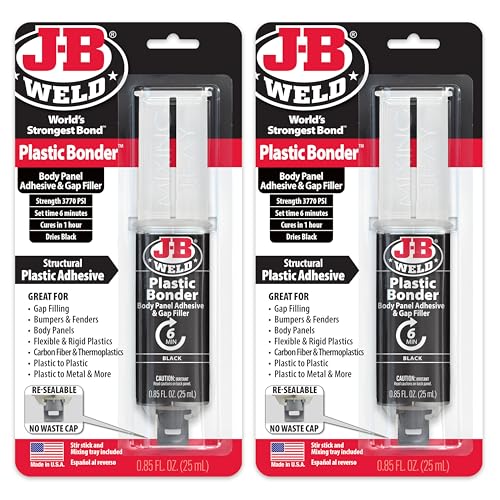
- Two 25 ml syringes for repeat repairs
- Quick 15-minute set time
- Made for plastic, bumper, and dent repairs
Best For: DIYers who want a spare supply for multiple small fixes
OEM-Style Body Panel Bond
3M Panel Bonding Adhesive 08115

- OEM-recommended for auto body panel repair
- 90-minute working time for alignment
- Can be weld-bonded or rivet-bonded
Best For: Body panel repairs needing OEM-style two-part epoxy bonding
High-Strength Repair Pick
J-B Weld AutoWeld for Trim and Panels

- 3770 PSI cured strength
- Sands and paints in about 30 minutes
- Works on plastic, metal, rubber, and fiberglass
Best For: Fast repairs on bumpers, trim, dashboards, and mixed-material panels
Panel Bond Specialist
Polymix Metal Panel Bond for Structural Body Panels

- Two-part urethane for steel and aluminum
- Self-sealing adhesive for panel replacement
- Includes two application mixing nozzles
Best For: Replacing larger bonded metal body panels like quarter panels and door skins
Clear-Bond Option
3M Plastic and Emblem Adhesive for Trim and Badges
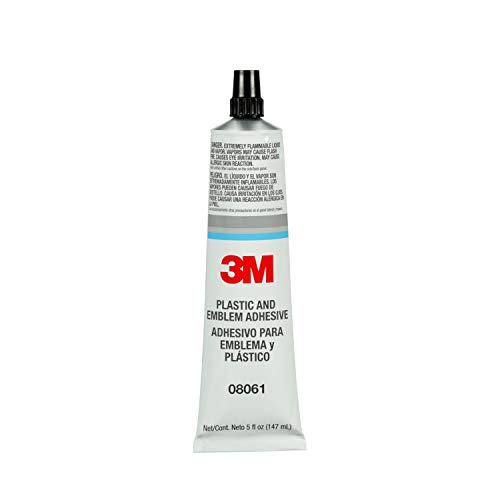
- Bonds cured paint and plastic
- Dries clear for visible repairs
- Sets in about 15 minutes
Best For: Emblems, trim, and painted parts where a clean, clear finish matters
Heavy-Duty Panel Bond Choice
Maxi-Bond Multi-Purpose Panel Adhesive

- Two-part epoxy with high strength and impact resistance
- Non-sag formula helps during panel placement
- Bonds steel, aluminum, SMC, and fiberglass without external primer
Best For: Automotive and transportation panel bonding on compatible metal and composite surfaces
OEM-Style Multi-Material Binder

- OEM-recommended replacement for 3M 08115
- Bonds steel, aluminum, plastic, fiberglass, and composites
- 400 ml cartridge includes 3 mixing nozzles
Best For: Versatile automotive panel repairs that need broad material compatibility
Extended-Work-Time Repair Option
Panel Bonding Adhesive for Auto Body Panel Repair

- 90-minute working time for careful alignment
- Bonds metal, plastics, polycarbonate, polystyrene, SMC, and fiberglass
- Corrosion-resistant two-part epoxy for auto body repairs
Best For: Non-structural auto body panel repairs that need longer working time
Quick-Set Gap Filler – J-B Weld Plastic Bonder Syringe
J-B Weld 50139 Plastic Bonder Body Panel Adhesive and Gap Filler Syringe - Black - 25 ml
Check Price On AmazonIf you need an automotive plastic panel adhesive that sets fast and can also fill gaps, this J-B Weld Plastic Bonder is built for quick repairs. The 1:1 mix ratio, black finish, and sandable cure make it practical for bumper work, panel touch-ups, and other plastic or composite fixes where speed matters.
Best For: Fast plastic repairs, gap filling, and black-finish touch-ups on automotive parts.
Pros:
- Sets in 15 minutes and can be sanded after 30 minutes.
- Works on plastics, PVC, composites, coated metals, concrete, and more.
- Functions as both an adhesive and a gap filler.
- Cures to a hard, permanent black bond.
Cons:
- Small 25 ml syringe is better for spot repairs than large jobs.
- Requires mixing before use.
For small, time-sensitive repairs, this is a strong option when you want a tough bond without waiting on a long cure cycle.
Long-Working Panel Bond – SEM Multi-Purpose Panel Adhesive
This automotive plastic panel adhesive is a good fit when alignment time matters more than speed. SEM 39747 offers a long working time, spacer beads for consistent bond line thickness, and a black finish, making it useful for panel bonding jobs on fiberglass and metal.
Best For: Panel bonding projects that need more open time for careful positioning.
Pros:
- Long working time helps with careful alignment.
- Spacer beads help maintain a consistent bond line thickness.
- Compatible with fiberglass and metal surfaces.
- Water resistant and designed for interior or exterior use.
Cons:
- Full cure time is 24 hours.
- Not a fast fix if you need immediate handling strength.
If you want a panel adhesive that gives you room to position parts correctly, this SEM formula leans more toward controlled repair work than quick patching.
Two-Pack Plastic Repair – J-B Weld Plastic Bonder Black 2 Pack
For buyers who want a small backup supply of automotive plastic panel adhesive, this two-pack of J-B Weld Plastic Bonder is a practical choice. It uses the same quick-setting 1:1 syringe system and black finish as the single pack, so it suits repeat plastic repairs, dent filling, and bumper work.
Best For: Repeated DIY plastic repairs where having two syringes is more convenient.
Pros:
- Two 25 ml syringes provide extra material on hand.
- Sets in 15 minutes and cures to a hard bond.
- Designed for plastic repairs, dent filling, and bumper repairs.
- Black color blends well on many repair areas.
Cons:
- Not water resistant according to the supplied details.
- Small syringe size limits use on larger panel jobs.
This is a sensible pick if you expect more than one small repair and want the convenience of a resealable syringe format.
OEM-Style Body Panel Bond – 3M Panel Bonding Adhesive 08115
When the job calls for a professional automotive plastic panel adhesive for body repair, 3M 08115 is aimed at panel bonding rather than general-purpose patching. It is designed for properly prepared steel, aluminum, SMC, and fiberglass, with a long working time that helps during alignment and clamping.
Best For: Auto body panel repairs that need OEM-style bonding and longer working time.
Pros:
- OEM-recommended two-part epoxy for auto body panel repair.
- 90-minute working time allows precise alignment.
- Can be weld-bonded or rivet-bonded during the work window.
- Creates a durable, rust-resistant bond on prepared surfaces.
Cons:
- Requires a standard applicator gun, which is not included.
- Best results depend on proper surface preparation.
This is the most specialized option here for panel bonding, making it a strong pick if you want a repair method designed around body shop workflows.
High-Strength Repair Pick – J-B Weld AutoWeld for Trim and Panels
If you need an automotive plastic panel adhesive that can also handle mixed-material repairs, J-B Weld AutoWeld is built for quick bodywork fixes. It mixes 1:1, sets fast, and can be sanded and painted after about 30 minutes, which makes it practical for bumpers, grills, dashboard trim, and body or door panels.
Best For: Fast repairs on bumpers, trim, dashboards, and other plastic or mixed-material auto parts.
Pros:
- High-strength formula rated at 3770 PSI once cured
- Fast set time of about 15 minutes with sanding and painting in 30 minutes
- Works on fiberglass, metal, plastic, and rubber
- Static mixer helps simplify application
Cons:
- Small 25 ml syringe limits larger repairs
- Best suited to repairs that benefit from a paste/putty-style adhesive
- Requires equal parts mixing before attaching the static mixer
Overall, AutoWeld is a strong choice when speed and durability matter more than large coverage. Its quick turnaround and broad material compatibility make it a handy pick for common plastic panel and trim fixes.
Panel Bond Specialist – Polymix Metal Panel Bond for Structural Body Panels
Polymix Metal Panel Bond 60 Adhesive 200ml Cartridge & Two Application Mixing Nozzles
Check Price On AmazonFor larger bodywork jobs where an automotive plastic panel adhesive is not enough, this Polymix panel bond is designed for steel and aluminum panel replacement. It is a two-part urethane with a low-viscosity cartridge format, aimed at quarter panels, roofs, box sides, van sides, utility vehicle sides, and door skins.
Best For: Bonding replacement metal body panels and other larger automotive refinishing jobs.
Pros:
- Made for bonding steel and aluminum in body panel replacement work
- Self-sealing adhesive reduces the need for separate sealers
- Low-viscosity cartridge format with two mixing nozzles included
- High tensile strength listed at 3335.86 PSI
Cons:
- 24-hour full cure is slower than quick-setting repair adhesives
- Not water resistant
- Focused on metal panel bonding rather than small trim repairs
This is a specialized panel adhesive for bigger structural-style body repairs, not a general-purpose trim glue. If your project is replacing bonded metal panels, its no-weld approach and self-sealing design are the main advantages.
Clear-Bond Option – 3M Plastic and Emblem Adhesive for Trim and Badges
If you want an automotive plastic panel adhesive for badges, trim, and painted parts, 3M Plastic and Emblem Adhesive is a simple, quick-acting option. It is designed to bond fully cured automotive paints and plastic for interior and exterior applications, and it dries clear for a cleaner finish on visible parts.
Best For: Bonding emblems, plastic trim, and painted automotive parts where a clear finish matters.
Pros:
- Bonds cured automotive paints and plastic
- Dries clear for transparent or translucent plastics
- Sets in about 15 minutes with full cure in 24 hours
- Waterproof and intended for interior and exterior use
Cons:
- Tube format may be less convenient for larger panel jobs
- Not designed as a structural panel bond adhesive
- Best suited to small, detailed applications
3M’s adhesive is a practical choice when appearance matters as much as adhesion. For emblem work and smaller plastic repairs, its clear-drying formula and quick set time make it easy to use.
Heavy-Duty Panel Bond Choice – Maxi-Bond Multi-Purpose Panel Adhesive
If you need an automotive plastic panel adhesive for metal-backed bodywork and composite repairs, this Maxi-Bond two-part epoxy is built for strength and control. It bonds steel, aluminum, SMC, and fiberglass panels, and its non-sag formula helps it stay where you place it during panel work.
Best For: Bonding steel, aluminum, SMC, and fiberglass panels on automotive and transportation repairs.
Pros:
- Two-part epoxy with high strength and superior impact resistance
- Non-sagging formula helps with vertical or awkward panel applications
- No external primer required for listed compatible materials
- Long working time gives more room for alignment
Cons:
- Not aimed at general household use; it is focused on automotive/transportation panel bonding
- Requires proper epoxy mixing and application
This is a strong fit if you want a panel adhesive that prioritizes structural-style bonding and working time over convenience features. For compatible metal and composite panels, it offers a practical balance of hold, control, and durability.
OEM-Style Multi-Material Binder – Buck Panel Bonding Adhesive
This automotive plastic panel adhesive is a good pick when you want an OEM-style panel bond that can handle metal, plastic, fiberglass, and composite panels. The two-part epoxy formula is designed for durable repairs, and the 400 ml cartridge format makes it practical for larger jobs like door skins and quarter panels.
Best For: Automotive panel repairs that need a versatile adhesive for steel, aluminum, plastic, fiberglass, and composite panels.
Pros:
- OEM-recommended replacement for 3M Panel Bonding Adhesive 08115
- Bonds multiple materials, including metal and plastic panels
- Room-temperature cure simplifies the repair process
- Comes with 3 static mixing nozzles for easier application
Cons:
- Designed as a cartridge system, so you need compatible dispensing tools
- Fast 45-minute full cure leaves less time than slower-curing options
For repair work that needs broad material compatibility and a professional-style cartridge setup, this is a solid option. It is especially appealing if you are replacing an OEM panel bond adhesive and want a cleaner, more controlled application.
Extended-Work-Time Repair Option – Panel Bonding Adhesive for Auto Body Panel Repair
For buyers looking for an automotive plastic panel adhesive with extra working time, this two-part epoxy is built for careful alignment on body panels and multi-material surfaces. It bonds metal, plastic, polycarbonate, polystyrene, SMC, and fiberglass, while its corrosion resistance adds value for repair work that needs lasting durability.
Best For: Aligning and bonding non-structural auto body panels and mixed-material surfaces with a longer work window.
Pros:
- 90-minute working time allows more precise positioning
- Bonds a wide range of materials, including plastics and fiberglass
- Corrosion-resistant epoxy formula supports durable repairs
- Heat cure can speed up the process when needed
Cons:
- Not recommended for PP, PE, or POM
- Requires a 1:1 cartridge epoxy gun, which is not included
This is the most layout-friendly choice in the group if you want extra time to line up panels before clamp and cure. It makes the most sense for non-structural repair work where material compatibility and working time matter most.
How We Picked These Automotive Plastic Panel Adhesive Options
We prioritized adhesives that are commonly used for auto body and trim repairs, with attention to bonding performance on plastic, composites, metal, and mixed substrates. We also looked at cure time, gap-filling ability, application control, and whether the product format makes sense for small fixes or larger panel jobs.
Quick Comparison
Smaller syringes and tubes are usually better for fast trim repairs, emblem work, and spot bonding. Larger two-part cartridges are better for panel attachment, reinforcement, and repeated use. If you need a versatile Automotive Plastic Panel Adhesive, choose based on the size of the repair first, then match the adhesive type to the materials involved.
Key Buying Factors for Automotive Plastic Panel Adhesive
Material Compatibility
Check whether the adhesive is intended for plastic, metal, composites, molding compounds, or all of the above. Not every product that says “panel” is ideal for every trim piece or bumper material.
Bond Strength and Flexibility
Strong structural bonds matter for load-bearing panel repairs, while a bit of flexibility can help on parts exposed to vibration, temperature swings, and road stress.
Working Time and Cure Speed
Short working times are convenient for quick fixes, but larger repairs may benefit from a longer open time so you can position parts accurately before the adhesive sets.
Application Format
Syringes are easy for small, precise jobs. Dual-cartridge systems with mixing nozzles are better for consistent two-part mixing and higher-volume repairs. If you expect multiple jobs, a larger cartridge can offer better value.
Finish and Cleanup
Some adhesives are better for invisible repairs, while others are built for strength and gap filling. Consider whether the bond line will be hidden, painted, or exposed.
Who Should Buy Which Automotive Plastic Panel Adhesive?
DIY users fixing emblems, trim, and small plastic parts will usually be happiest with compact syringes or tube adhesives. Body shop users and advanced DIYers working on panels, reinforcements, or composite-to-metal repairs should lean toward two-part panel bonding systems with stronger structural performance. If you need one versatile Automotive Plastic Panel Adhesive for several repair types, choose a multipurpose formula that supports both precise application and durable bonding.
In short, match the adhesive to the repair size, substrate, and stress level. That will get you a stronger result than choosing by brand name alone.