Choosing the right paint thickness gauge can make a big difference when inspecting a used car, checking repairs, or confirming factory finish quality. The best models give fast, reliable readings across steel, aluminum, and coated panels.
Below, we focus on the best paint thickness gauges for car detailing in 2026, balancing accuracy, ease of use, and value for buyers who want clearer answers before they buy or detail.
Best 10 Paint Thickness Gauges for Car Detailing Picks for 2026
Used-Car Buyer Pick
Auto-Detection Paint Mil Gauge
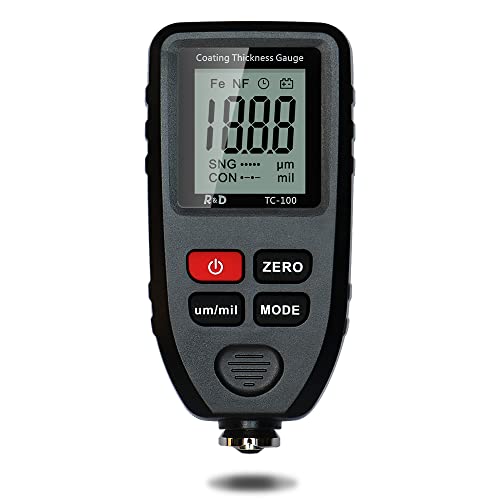
- Auto-detects steel and aluminum
- Helps spot repainting and repair work
- Includes 3-year replacement warranty
Best For: Used-car buyers checking metal panels for prior repairs
Precision Detailer Choice

- 0.1 μm resolution and backlit LCD
- Auto Fe/NFe detection with dual tech
- Factory calibrated with calibration options
Best For: Detailers and shoppers who want precise metal-panel readings
Feature-Rich Inspector
Rotating Screen Coating Tester
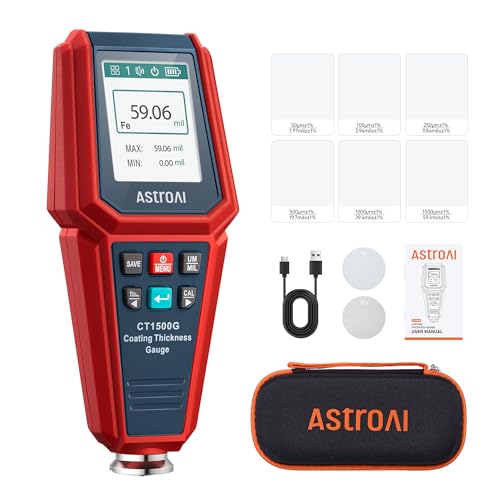
- Four-way rotating display
- Stores 256 readings with bar chart
- Includes limit alarm and calibration
Best For: Inspectors who want easier viewing and data tracking
Automotive Inspection Favorite

- Ready to use after battery install
- Detects Fe, aluminum, and Fe+Zn
- Large backlit LCD with simple controls
Best For: Quick automotive inspections, especially where galvanized panels matter
Precision Body-Filler Check
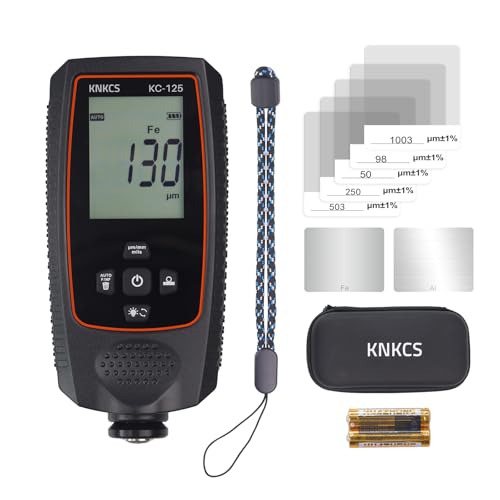
- ±(3% +1μm) accuracy with 0.1μm resolution
- 0-2000μm range with continuous measurement
- Recognizes iron, aluminum, zinc, and body filler
Best For: Used car buyers, body shops, and detailing pros needing precise filler and coating checks
Workshop-Ready Panel Scanner
CM-224Pro Paint Thickness Gauge
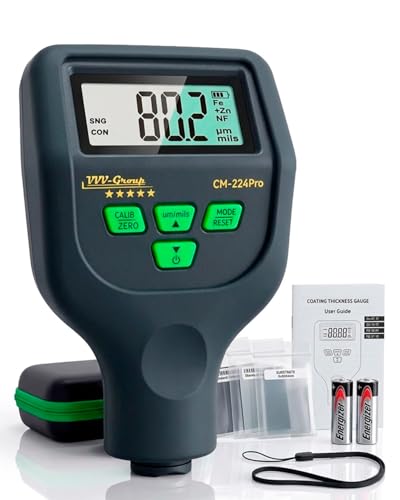
- 0-59.1 mils range with 0.01 mils resolution
- Auto-detects Fe, NFe, and Zn substrates
- Backlit display and protective case for workshop use
Best For: Dealerships and workshop inspectors needing repeatable panel-by-panel readings
Easy Used-Car Inspector
RDINSCOS ET330 Paint Mil Gauge

- 0-1500μm range with ±(3%+2μm) accuracy
- Auto-detects Fe/NF/ZN substrates
- Spot and continuous measurement modes
Best For: Used car buyers and retailers who want simple, non-destructive paint checks
Precision Auto-Detection Gauge
CM-206X Automotive Coating Thickness Meter

- Auto-detects Fe, NFe and Zn substrates
- Measures 0–59.1 mils with 0.001 mil resolution
- Ruby probe and backlit display for field inspections
Best For: Vehicle walkarounds, dealers and mobile inspectors
Data-Logging Value Pick
HW-300PRO Paint Thickness Gauge Meter

- Stores average, max, min and difference readings
- Supports up to 50 data points
- Automatic Fe/NFe detection with large LCD
Best For: Detailers and buyers who want logged measurements
High-Precision Report Tool
CM-208FN Industrial Paint Thickness Meter

- High-resolution measurement across multiple ranges
- USB export for reporting and analysis
- Automatic Fe/NFe detection with statistical readouts
Best For: Inspectors and detailers who need exportable data
Used-Car Buyer Pick – Auto-Detection Paint Mil Gauge
If you need paint thickness gauges for car detailing with a strong focus on used-car checks, this RDINSCOS meter keeps the basics simple. It auto-detects steel and aluminum, measures only on metal surfaces, and is aimed at spotting repainting or repair work by comparing panel readings.
Best For: Buyers who want an affordable metal-surface gauge for quick used-car paint checks.
Pros:
- Automatically recognizes ferrous and non-ferrous substrates.
- Useful for checking paint consistency across car panels.
- Includes a 3-year replacement warranty.
- Comes with batteries, foils, and substrate plates for setup.
Cons:
- Works only on metal substrates.
- Not suitable for plastic, fiberglass, or wood.
For shoppers mainly focused on identifying prior repairs before buying, this gauge offers a straightforward, no-frills approach. Its value is in fast, automatic metal detection and the ability to compare panels without guesswork.
Precision Detailer Choice – CM-205FN High-Accuracy Meter
Among paint thickness gauges for car detailing, the CM-205FN stands out for users who want high-resolution readings and automatic substrate detection. It covers Fe and NFe metals, uses a backlit LCD, and is factory calibrated for quick use on painted metal panels.
Best For: Detailers, appraisers, and used-car shoppers who want a high-accuracy meter with simple operation.
Pros:
- 0.1 μm resolution with stated ±(3%+2 μm) accuracy.
- Automatically detects Fe and NFe substrates.
- Supports single and continuous measuring modes.
- Includes zero and multi-point calibration options.
Cons:
- Designed only for metal surfaces.
- Not suitable for plastic bumpers, carbon fiber, or fiberglass.
This is a strong fit if you want a more technical meter for repeatable inspection work. The combination of factory calibration, wide range, and dual-tech measurement makes it useful for both quick checks and more careful panel-by-panel evaluation.
Feature-Rich Inspector – Rotating Screen Coating Tester
If you want paint thickness gauges for car detailing with extra inspection features, this AstroAI model is built to be easy to read and easy to scan. It automatically detects ferrous and non-ferrous metals, measures coating thickness on metal surfaces, and adds a rotating screen plus data storage for more organized checks.
Best For: Users who want a flexible, high-visibility gauge for detailed used-car inspections.
Pros:
- Four-way rotating screen improves readability from different angles.
- Stores up to 256 data points across 8 sets.
- Includes limit alarm and bar chart display.
- Supports zero-point and multi-point calibration.
Cons:
- Designed for metal surfaces only.
- Bulkier than simpler, no-frills gauges.
This model makes sense for anyone who wants more than just a basic readout. The rotating display and data management features are especially helpful when you’re checking multiple panels or comparing readings across a whole vehicle.
Automotive Inspection Favorite – CM-224 Auto Paint Gauge
For paint thickness gauges for car detailing that prioritize quick setup, the CM-224 Auto is designed to be ready right after battery installation. It automatically detects Fe, aluminum, and Fe+Zn substrates, which makes it especially useful for checking car panels where galvanized steel identification can matter.
Best For: Car buyers, detailers, and body shops that want a ready-to-use inspection tool with galvanized steel detection.
Pros:
- Factory calibrated and ready to use out of the box.
- Detects Fe, NFe aluminum, and Fe+Zn substrates.
- Supports single and continuous measurement modes.
- Includes a large backlit LCD for easy reading.
Cons:
- Designed exclusively for metal substrates.
- Not suitable for plastic or composite parts.
This is a practical choice if you want quick automotive inspections without extra setup. The Fe+Zn detection adds a helpful layer for spotting non-original panels, while the factory calibration keeps everyday use straightforward.
Precision Body-Filler Check – KC-125 Paint Thickness Gauge
If you’re comparing paint thickness gauges for car detailing, this one is geared toward buyers and shops that need a more technical read on coatings and filler. The KC-125 offers ±(3% +1μm) accuracy, 0.1μm resolution, and a 0-2000μm range, so it’s built for detailed inspection work on mixed-material body panels.
Best For: Used car buyers, auto body shops, and detailing pros who want precise coating and body filler checks.
Pros:
- High-accuracy readings with 0.1μm resolution for detailed inspection work
- Supports iron, aluminum, zinc, and body filler recognition
- Continuous measurement mode helps speed up repeat checks across panels
- Wide 0-2000μm range covers many automotive coating scenarios
Cons:
- More specialized than a basic entry-level paint meter
- Best suited to users who need precise measurement, not just quick spot checks
The KC-125 stands out if your workflow includes detecting hidden repairs, comparing panel readings, or checking filler presence. Its support for multiple substrates and continuous measurement makes it a strong option for professional-grade evaluations.
Workshop-Ready Panel Scanner – CM-224Pro Paint Thickness Gauge
For paint thickness gauges for car detailing, the CM-224Pro is aimed at structured panel-by-panel inspections. It measures from 0-59.1 mils (0-1500μm) with 0.01 mils (0.1μm) resolution, and its automatic Fe/NFe/Zn detection helps you compare readings across steel, aluminum, and galvanized surfaces without manual switching.
Best For: Dealerships, inspection professionals, and workshop users who need repeatable vehicle panel readings.
Pros:
- Automatic Fe/NFe/Zn substrate detection simplifies multi-material inspections
- 0.01 mils (0.1μm) resolution supports consistent panel comparisons
- Backlit multi-unit display is easier to read in workshop lighting
- Designed for fast panel-to-panel scanning and repeatable contact
Cons:
- Built more for professional inspection flow than casual one-off use
- Operating range is focused on controlled indoor or workshop environments
This model fits users who want a reliable inspection routine rather than a basic quick-check tool. The stable probe design, auto detection, and clear display make it practical for full-vehicle assessments where repeatability matters.
Easy Used-Car Inspector – RDINSCOS ET330 Paint Mil Gauge
If you want a practical pick among paint thickness gauges for car detailing, the ET330 is built around simple used-car inspection. It measures 0-1500μm with ±(3%+2μm) accuracy and 0.1μm resolution, while automatically identifying Fe/NF/ZN substrates to reduce guesswork during quick checks.
Best For: Used car buyers, automotive retailers, and non-professionals who want straightforward paint inspection.
Pros:
- Simple power-on-and-measure operation keeps setup easy
- Auto-identifies ferrous and non-ferrous substrates, including ZN
- Supports both spot and continuous measurement modes
- Non-destructive testing helps reveal repainting or accident repairs
Cons:
- Accuracy and range are solid, but not as specialized as higher-end inspection tools
- More focused on used-car evaluation than advanced detailing workflows
The ET330 is a good fit if you want a straightforward gauge that helps spot hidden damage without a learning curve. Its easy operation and automatic substrate recognition make it especially practical for quick, confidence-building vehicle checks.
Precision Auto-Detection Gauge – CM-206X Automotive Coating Thickness Meter
If you want paint thickness gauges for car detailing that can help spot uneven readings fast, the CM-206X is built for panel-by-panel inspection. It measures automotive coatings on steel, aluminum and galvanized surfaces, making it useful when checking doors, hoods, roofs and quarter panels for possible refinishing or bodywork.
Best For: Buyers, dealerships and mobile inspectors who need a portable gauge for quick vehicle walkarounds.
Pros:
- Automatic Fe, NFe and Zn substrate detection
- 0–59.1 mil range with 0.001 mil resolution
- Ruby probe designed for stable contact and reduced surface wear
- Backlit display and carrying case for field use
Cons:
- Primarily aimed at automotive inspection rather than broader shop applications
- Requires careful vertical placement for best readings
The CM-206X stands out for mixed-material vehicle inspections and a workflow that supports quick scans across multiple panels. Its fine resolution and automatic detection make it a practical choice when consistency matters during pre-purchase checks or detailing evaluations.
Data-Logging Value Pick – HW-300PRO Paint Thickness Gauge Meter
For paint thickness gauges for car detailing that go beyond a simple readout, the HW-300PRO adds data logging and statistical tracking to help compare panels. It measures coatings on steel and aluminum surfaces with automatic substrate detection, making it a handy option for checking whether a car’s paint depth looks consistent from panel to panel.
Best For: Detailers and buyers who want logged measurements and quick statistical summaries.
Pros:
- Records average, maximum, minimum and difference values
- Stores up to 50 data points for statistics
- Automatic Fe/NFe detection helps reduce user error
- Large LCD shows metal type, mode, battery status and readings
Cons:
- Specified for Fe/NFe substrates rather than non-metal materials
- Auto shutoff may interrupt longer idle sessions
The HW-300PRO is a practical choice if you want basic inspection plus measurement history in one compact tool. Its combination of automatic detection, simple display data and statistical functions makes it useful for repeat checks during detailing or used-car evaluations.
High-Precision Report Tool – CM-208FN Industrial Paint Thickness Meter
If you’re comparing paint thickness gauges for car detailing and want one that leans into precision and reporting, the CM-208FN is built for inspection work. It measures coating thickness on metal substrates, automatically identifies steel or aluminum, and includes USB export so you can document readings after a vehicle check.
Best For: Buyers, inspectors and detailers who want accurate readings plus data export.
Pros:
- High-resolution reading steps for low, mid and high thickness ranges
- Automatic Fe/NFe detection on steel and aluminum
- USB data export for reporting and analysis
- Shows average, minimum, maximum and number of readings
Cons:
- Designed for metal bases only
- Not suitable for plastic, composite or carbon fiber surfaces
The CM-208FN is a strong fit when the goal is more than a quick check and you want measurement data that can be reviewed later. Its precision probe, statistics and export features make it especially useful for detailed automotive inspection workflows.
How We Picked the Best Paint Thickness Gauges for Car Detailing
We prioritized gauges that are practical for real-world detailing work: consistent readings, clear displays, metal compatibility, and useful calibration or alarm features. For Paint Thickness Gauges for Car Detailing, the most important factor is not just resolution on paper, but repeatable performance across common body panels.
We also favored models with Fe/NFe or Fe/Al/Zn detection, since modern vehicles often mix steel, aluminum, and coated substrates. Battery life, probe design, and measurement speed matter too, especially if you are checking multiple panels on one car.
Quick Comparison
If you are buying for used-car inspections, look for a simple gauge with alarm functions and easy operation. If you work more often on bodywork or professional detailing jobs, choose a model with wider material support, higher measurement range, and better resolution. Budget-friendly units are fine for occasional checks, while higher-end gauges are better for frequent, more technical use.
Key Buying Factors for Paint Thickness Gauges for Car Detailing
Substrate Detection
Choose a gauge that can identify ferrous and non-ferrous metals if you want dependable readings on mixed-body vehicles. Fe-only models are limited, while Fe/NFe or Fe/Al/Zn models are far more versatile.
Measurement Range and Resolution
Most shoppers do well with a range up to 1500 or 2000 μm. Higher resolution can help, but only if the device is stable and calibrated properly. For detailing, consistency is usually more valuable than extreme specification claims.
Calibration and Repeatability
A gauge should be easy to zero and verify. Repeatable readings across the same spot are essential when comparing panels or spotting repainted areas.
Alert Features and Readability
Limit alarms, backlit screens, and simple menu systems can make a big difference during inspections in bright lots or dim garages. A clear display reduces mistakes and speeds up workflow.
Probe Style and Build Quality
A durable probe and comfortable grip help when you are taking many measurements. For Paint Thickness Gauges for Car Detailing, ergonomic design can be just as useful as raw specs.
Who Should Buy Which Paint Thickness Gauges for Car Detailing?
Casual used-car buyers should choose an easy-to-read, straightforward gauge with dependable substrate detection. Enthusiasts who detail their own cars may prefer a compact model with strong value and simple calibration. Professional detailers and inspectors should lean toward the more advanced gauges with broader material support, better range, and more precise resolution for faster, more confident assessments.
In short, the best choice depends on how often you measure, what metals you will encounter, and how much confidence you need from each reading.