Buying the right paint meter can make a big difference when you are inspecting used cars, checking bodywork, or verifying factory finish. The best tools give fast, repeatable readings without guesswork.
This roundup of professional automotive coating thickness gauges focuses on practical accuracy, detection range, and ease of use so you can choose a model that fits your inspection workflow.
Best 10 Professional Automotive Coating Thickness Gauges Picks for 2026
Used-Car Inspection Essential
Metal Surface Paint Checker for Steel & Aluminum
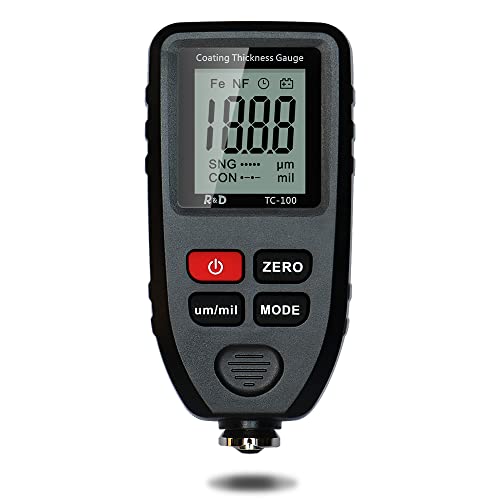
- Auto-detects steel and aluminum panels
- Good for checking used-car repaint clues
- Includes calibration foils and storage bag
Best For: Used-car buyers checking original paint on metal panels
Workshop-Grade Digital Meter
Precision Gauge for Automotive Coatings

- Clear digital readout for quick measurements
- Auto calibration plus zero and multi-point options
- Built for dusty, humid, changing shop conditions
Best For: Workshop and industrial users needing calibration flexibility
Advanced Used-Car Scanner
Rotating Display Paint Thickness Tester
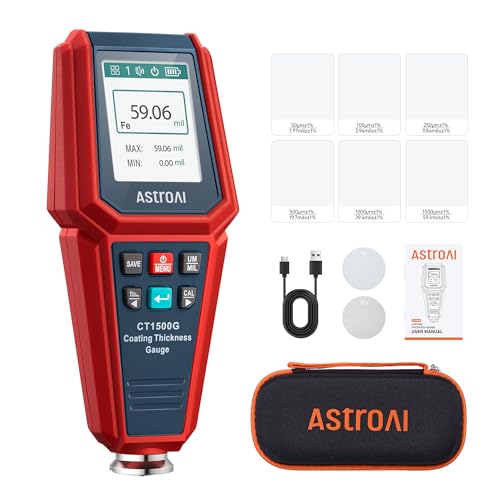
- Four-way rotating screen for easy viewing
- Stores 256 data points for inspection tracking
- Limit alarm helps flag abnormal readings
Best For: Inspectors who want display flexibility and data storage
Accuracy-Focused Inspector
Backlit Auto Fe/NFe Paint Gauge

- Factory calibrated and easy to start using
- High-resolution readings for metal panels
- Single and continuous modes for faster inspections
Best For: Accuracy-minded users checking steel and aluminum panels
Backlight-Ready Shop Scanner

- 0 to 2000 um range with Fe/NFe dual probe
- Stores up to 320 readings in 4 groups
- USB export and limit alarm support
Best For: Shop users who need data storage, alarms, and PC analysis
Inspection-Focused Vehicle Gauge
CM-206X Automotive Coating Meter

- 0.001 mil resolution for detailed comparisons
- Auto detects Fe, NFe, and Zn panels
- Ruby probe and backlit display suit field inspections
Best For: Buyers and inspectors checking paint consistency on vehicles
Factory-Calibrated Auto Checker

- Factory calibrated and ready after battery install
- 0.1 um resolution with 0 to 1500 um range
- Detects Fe, Al, and Fe+Zn substrates
Best For: Used-car buyers and pros who want fast, ready-to-use inspections
External Probe Shop-Ready Gauge
Fe/NFe Coating Checker with Data Storage
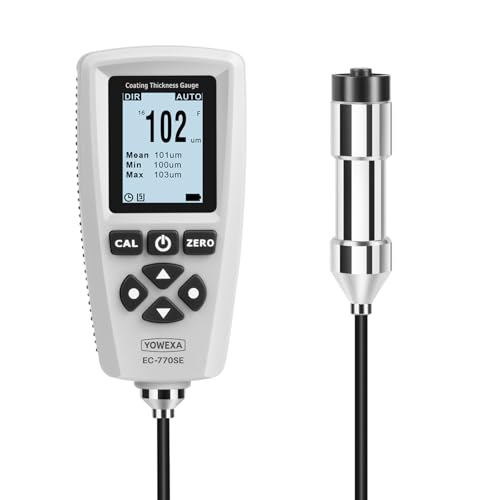
- 0-2000 μm range with ±2%+1 μm accuracy
- External probe reaches curved and recessed areas
- Stores 2000 readings with USB export
Best For: Shop technicians and inspectors who need logging and hard-to-reach access
Panel-by-Panel Inspection Gauge
CM-224Pro Automotive Coating Meter
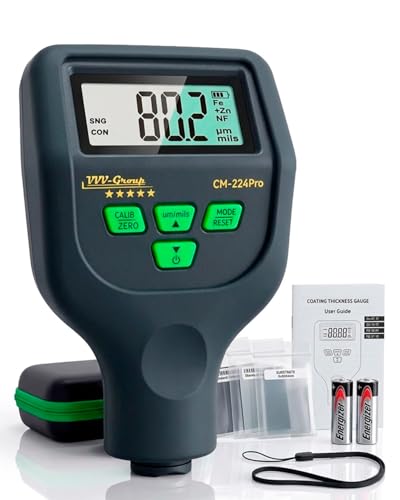
- 0-1500 μm range with 0.01 mils resolution
- Auto-detects Fe, NFe, and Zn substrates
- Built for repeatable panel-to-panel inspections
Best For: Dealerships and workshop inspectors who want fast mixed-material vehicle checks
Precision Report-Ready Meter
CM-208FN Industrial Paint Gauge

- 0-2000 μm range with multi-step resolution
- Auto Fe/NFe detection with integrated probe
- USB export and statistical readouts for reports
Best For: Car buyers and inspectors who need precise, report-friendly measurements
Used-Car Inspection Essential – Metal Surface Paint Checker for Steel & Aluminum
For buyers evaluating used cars, this is a practical choice among professional automotive coating thickness gauges because it automatically detects steel and aluminum substrates and measures coating thickness on metal panels. It is built for quick checks on painted bodywork, helping you spot uneven readings that may suggest prior repairs or accident work.
Best For: Used-car shoppers who want a simple, affordable meter for checking original paint on metal body panels.
Pros:
- Auto-detects ferrous and non-ferrous metal substrates.
- Helpful for spotting inconsistent paint thickness across panels.
- Includes accessories like calibration foils, substrate samples, and a storage bag.
- Backed by a three-year replacement warranty.
Cons:
- Only works on metallic surfaces, not plastic, fiberglass, or wood.
- More focused on basic inspection than advanced data features.
Overall, this is a straightforward metal-surface gauge for buyers who want a reliable way to verify coating consistency before purchasing a used vehicle.
Workshop-Grade Digital Meter – Precision Gauge for Automotive Coatings
If you need professional automotive coating thickness gauges for shop or production use, this digital meter stands out for its wide stated application range and clear numeric readout. It is designed for fast measurements on metal surfaces and adds automatic calibration plus user-selected calibration options for more controlled work.
Best For: Workshop users who want a digital gauge with broad industrial use cases and calibration flexibility.
Pros:
- Digital display with fast, easy-to-read measurements.
- Automatic calibration at startup plus zero-point and multi-point calibration support.
- Automatic recognition for steel and aluminum surfaces.
- Rated for use in demanding environments with dust, humidity, and temperature changes.
Cons:
- Notes focus on metal surfaces for coating measurement despite broader listed material support.
- No included storage accessories are mentioned.
For buyers who want a practical shop tool with calibration options and stable performance claims, this model offers a more technical feel than basic used-car gauges.
Advanced Used-Car Scanner – Rotating Display Paint Thickness Tester
Among professional automotive coating thickness gauges, this AstroAI model is geared toward detailed inspections with automatic substrate detection, a high-resolution rotating screen, and built-in limit alarms. It is especially useful when you want to compare panel readings quickly and read the display from different angles during a pre-purchase inspection.
Best For: Buyers and inspectors who want a feature-rich gauge with a rotating display and data logging.
Pros:
- Automatically identifies ferrous and non-ferrous substrates.
- Four-direction rotating screen improves viewing at awkward angles.
- Stores up to 256 data points for later review.
- Includes limit alarm and calibration support for tighter inspection workflows.
Cons:
- More features may be more than casual users need.
- Still limited to metal surfaces only.
This is a strong pick if you want faster inspection workflow, display flexibility, and more structured data handling than a basic spot-check tool.
Accuracy-Focused Inspector – Backlit Auto Fe/NFe Paint Gauge
For buyers comparing professional automotive coating thickness gauges, this CM-205FN emphasizes accuracy, fast operation, and automatic Fe/NFe detection for metal body panels. It is factory calibrated and ready to use, making it a sensible option for used-car checks, dealership inspections, and general coating verification on steel or aluminum parts.
Best For: Users who want a factory-calibrated metal-surface gauge with strong accuracy and simple operation.
Pros:
- High stated accuracy with 0.1 μm resolution.
- Factory calibrated and ready to use out of the box.
- Automatic Fe/NFe detection for mixed-body vehicles.
- Supports single and continuous measuring modes for quick checks or panel scans.
Cons:
- Designed only for metal substrates, not plastic or composites.
- Fewer convenience extras than models with rotating screens or data storage.
Overall, this is a practical, precision-first gauge for anyone who values reliable metal-panel readings without a steep learning curve.
Backlight-Ready Shop Scanner – ERAY Mil Thickness Gauge
If you want a professional automotive coating thickness gauge for garage, shop, or inspection work, the ERAY model focuses on practical data handling as much as measurement. It reads ferrous and non-ferrous surfaces, offers a 0 to 2000 um range, and adds backlit LCD visibility, limit alarms, and PC export tools for users who need more than a quick spot check.
Best For: Shop users and technicians who want storage, alarms, and PC-based analysis alongside automotive coating checks.
Pros:
- Fe/NFe dual probe supports common automotive and workshop surfaces.
- Stores up to 320 readings across 4 groups when powered off.
- Limit alarm function helps flag readings outside your set range.
- USB and CD software support data viewing and export on PC.
Cons:
- Requires 4 AA batteries, which adds more bulk than AAA-powered models.
- Focused more on data management than quick, minimalist operation.
Overall, this is a solid fit if your coating inspections need recordkeeping, alarms, and computer analysis. It is especially useful in environments where tracking readings matters as much as taking them.
Inspection-Focused Vehicle Gauge – CM-206X Automotive Coating Meter
This professional automotive coating thickness gauge is built for vehicle-by-vehicle inspection before purchase or resale. The CM-206X combines a wide 0 to 59.1 mils range, fine 0.001 mil resolution, and auto detection for Fe, NFe, and Zn surfaces, making it well suited for comparing panels on modern mixed-material cars.
Best For: Buyers, dealerships, and mobile inspectors checking panel consistency and possible refinishing.
Pros:
- 0.001 mil resolution supports detailed panel-to-panel comparisons.
- Auto detects Fe, NFe, and Zn substrates without manual switching.
- Ruby probe is designed for stable contact and reduced surface wear.
- Backlit display and compact case support field use in varied lighting.
Cons:
- Measurement range is narrower than some broader shop-oriented gauges.
- Battery type is AAA, so you may want spares for regular field work.
For used-car checks, this model emphasizes fast, repeatable readings and mixed-metal compatibility. It is a strong choice when you need detailed inspection rather than broader lab-style features.
Factory-Calibrated Auto Checker – CM-224 Auto Paint Gauge
For shoppers comparing professional automotive coating thickness gauges, the CM-224 Auto stands out for ready-to-use setup and high-resolution readings. It is factory calibrated, measures from 0 to 1500 um, and automatically recognizes Fe, Al, and Fe+Zn substrates, which makes it practical for used-car inspection and body-panel checks right out of the box.
Best For: Used car buyers, appraisers, body shops, and detailing pros who want quick, accurate automotive inspection readings.
Pros:
- Factory calibration means it is ready to use after battery installation.
- 0.1 um resolution supports very fine paint thickness checks.
- Auto detects Fe, NFe, and Fe+Zn for mixed vehicle body materials.
- Single and continuous modes support both spot checks and faster scanning.
Cons:
- Designed only for metal surfaces, not plastic or composite parts.
- Advanced calibration options may be more than casual users need.
This is a practical pick if you want a modern automotive gauge with minimal setup and strong substrate recognition. Its factory-calibrated design makes it especially appealing for buyers who want fast results without extra prep.
External Probe Shop-Ready Gauge – Fe/NFe Coating Checker with Data Storage
If you need professional automotive coating thickness gauges for body shop, used-car, or industrial QC work, this model focuses on practical inspection features rather than basics. It measures 0-2000 μm with ±2%+1 μm accuracy, automatically detects Fe and NFe metals, and adds an external probe for curved, recessed, and hard-to-reach areas.
Best For: Shop technicians and inspectors who need data logging, external-probe access, and clear Fe/NFe checks on metal panels.
Pros:
- 0-2000 μm range with ±2%+1 μm accuracy for coating inspection.
- External probe helps reach curved, recessed, and difficult metal surfaces.
- AUTO, MAG, and EDDY modes support Fe/NFe substrate identification.
- Stores up to 2000 readings in four groups and supports USB export.
Cons:
- Not intended for wet film, plastic, wood, glass, or concrete.
- IP40 ABS housing is more workshop-oriented than rugged outdoor gear.
- Best suited to metal coating checks rather than general-purpose measurement.
This is a strong pick if your workflow depends on recorded readings, calibration options, and access to awkward measurement points. The rotating backlit display and unit switching make it easier to use in the shop or field.
Panel-by-Panel Inspection Gauge – CM-224Pro Automotive Coating Meter
For buyers comparing factory paint to refinished panels, this is a focused option among professional automotive coating thickness gauges. The CM-224Pro measures up to 1500 μm with 0.01 mils (0.1 μm) resolution, automatically recognizes Fe, NFe, and Zn surfaces, and is designed for structured panel-by-panel inspection on vehicles.
Best For: Dealerships, inspectors, and workshop users who want fast multi-panel checks with automatic mixed-material detection.
Pros:
- 0-59.1 mils (0-1500 μm) range with 0.01 mils resolution.
- Auto-detects steel, aluminum, and galvanized surfaces.
- Designed for consistent probe contact and repeatable readings.
- Backlit display and carrying case suit daily workshop use.
Cons:
- Lower maximum range than 2000 μm models.
- Best suited to structured inspections rather than advanced data reporting.
- Operating range is aimed at controlled workshop environments.
This gauge stands out for straightforward vehicle evaluation, especially when you want quick comparisons across doors, hood, roof, and body panels. It is a practical match for teams that value speed, repeatability, and automatic substrate recognition.
Precision Report-Ready Meter – CM-208FN Industrial Paint Gauge
If you want professional automotive coating thickness gauges with stronger reporting and high-resolution reading steps, the CM-208FN is built for inspection tasks. It measures up to 2000 μm, uses automatic Fe/NFe detection, and offers statistical readouts plus USB export for documentation and workflow tracking.
Best For: Car buyers, detailers, inspectors, and technicians who need precise readings and report-friendly data export.
Pros:
- 0-2000 μm range with multi-step resolution for different thickness bands.
- Automatic Fe/NFe identification reduces manual switching.
- Average, minimum, maximum, and reading count help assess uniformity.
- USB export supports documentation and comparison work.
Cons:
- Designed for metal bases only, not plastic or composite surfaces.
- Integrated probe is best on flat and moderately curved panels.
- Not as focused on hard-to-reach access as external-probe models.
Overall, this is a solid choice when you need inspection-grade measurements and the ability to move results into a PC workflow. It balances portability, automatic substrate detection, and data handling for everyday vehicle evaluation.
How We Picked the Best Professional Automotive Coating Thickness Gauges
We prioritized models that are useful in real-world automotive inspections: dependable calibration, clear displays, Fe/NFe compatibility, and enough measurement range for painted steel, aluminum, and coated panels. We also looked for features that matter on the job, such as limit alarms, backlighting, stable readings, and fine resolution for spotting body filler, repaints, or inconsistent panel work.
Quick Comparison
Most of these tools fall into two buyer groups. Entry-level meters are best for basic used-car checks and occasional DIY inspections. More advanced Professional Automotive Coating Thickness Gauges add higher resolution, wider material support, and better data confidence for detailers, appraisers, inspectors, and body shop staff.
Fast Takeaway
If you mainly inspect passenger cars, a simple Fe/NFe meter is usually enough. If you need to evaluate mixed substrates, zinc-coated panels, or more technical refinishing work, step up to a model with broader detection modes and tighter resolution.
Key Buying Factors for Professional Automotive Coating Thickness Gauges
Material compatibility: Make sure the gauge reads ferrous and non-ferrous substrates. Many modern vehicles use both steel and aluminum, so Fe/NFe detection is essential.
Resolution and accuracy: Finer resolution helps identify small differences in coating thickness, while accuracy affects how much you can trust the reading. For professional use, both matter.
Measurement range: A wider range helps when checking thick repaint layers, clear coat buildup, or unusual refinishing jobs. For most automotive work, a 0–1500 μm or similar range is a strong starting point.
Calibration and repeatability: Look for easy zeroing and consistent readings. A gauge that drifts or requires constant correction slows inspections and reduces confidence.
Display and usability: Backlit screens, limit alarms, and simple mode switching help when working in dim lots, garages, or auction lanes.
Who Should Buy Which Professional Automotive Coating Thickness Gauges?
Used-car buyers: Choose a straightforward, easy-to-read gauge with Fe/NFe detection and an alarm or indicator for suspiciously high readings.
Detailers and auto enthusiasts: Pick a model with better resolution and faster response so you can document finish condition and verify correction work.
Inspectors, appraisers, and body shop professionals: Look for advanced Professional Automotive Coating Thickness Gauges with wider range, stable calibration, and substrate support for steel, aluminum, and coated surfaces.
Budget-focused shoppers: A simpler digital meter can be enough if your goal is occasional paint inspection rather than full diagnostic work. Prioritize reliability over extra features you will not use.
For the best results, match the gauge to your most common vehicles and inspection depth. A well-chosen meter is less about having every feature and more about getting accurate, repeatable readings when they matter most.